Listen
Podcast: Play in new window | Download
About


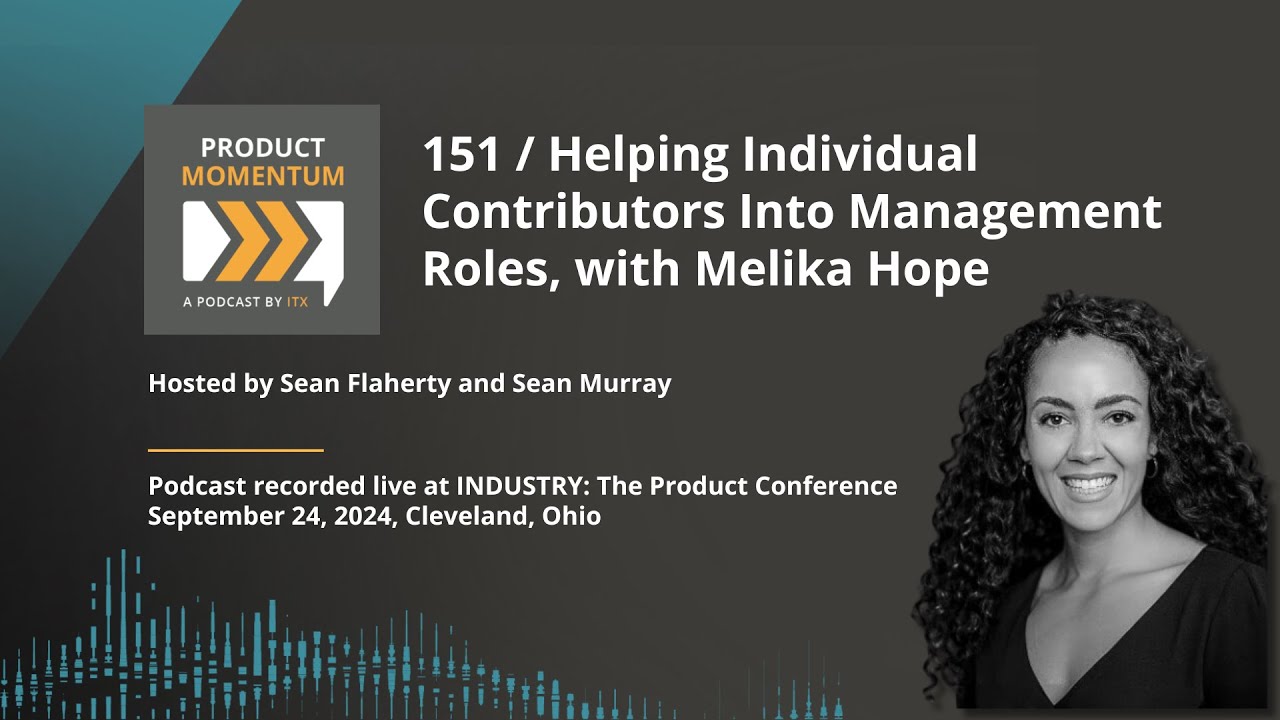
Melika Hope is Director of Product Management at Spotify, where she is recognized for her exceptional experience in product, business, and people leadership. She brings a strategic and analytical mindset to her work and leverages her integrated background in Finance and Product Management to develop and execute strategies that fulfill customer and business needs simultaneously. Formerly Director of Product Management at Twitter and Intuit’s Head of Product for the Americas, Melika places great emphasis on data-backed prioritization, customer empathy, and strong execution to drive success.
Recommended Reading
Turn the Ship Around: A True Story of Turning Followers Into Leaders, by L. David Marquet.
If you’re a product manager who’s making the transition from individual contributor (IC) to people manager, you not only need to be nailing your job, Melika Hope advises. “You have to be showing up as a leader.” Opportunities for practicing leadership aren’t confined to managerial roles, she adds. ICs can exhibit leader-like traits every day by taking on a challenging strategic task, coming up with a creative solution, and solving complex problems that impact the business.
Melika Hope is Director of Product Management at Spotify; after delivering her keynote and INDUSTRY Global, she sat down with Sean Flaherty and Sean Murray for a lively discussion about what it takes to make the transition from individual contributor to people manager. Turns out there’s plenty to consider.
Showcasing Leadership Abilities
Melika advised ICs not to wait for formal opportunities to present themselves before showcasing their leadership abilities. Instead, she adds, “ICs should look for ways to contribute meaningfully to their teams and organizations. Solve problems proactively to demonstrate your value and potential for higher roles.”
Melika uses impactful anecdotes to encourage organizations to consider new career paths for individual contributors who excel in their roles but may not wish to manage people. “I find more folks actually aren’t as interested in becoming [people] managers anymore,” she says.
Taking Control of Your Future
What’s more, with widespread layoffs making it difficult for ICs to find new opportunities, “there’s a sense that if I am an IC, I have control over the work that I’m doing and the results I’m delivering. People are feeling more comfortable with that.”
Are we witnessing a culture shift beginning to take hold? The notion that leadership is better defined by actions and impact rather than titles. Be sure to catch the entire episode with Melika Hope, recorded live at INDUSTRY Global.
Looking for related content? Check out Product Momentum’s episode 90 with Liz Li: Amid the Great Resignation, It’s Time to Productize Your Career
Podcast: Play in new window | Download
Sean Murray [00:00:19] Hey, everyone. I’m Sean Murray.
Sean Flaherty [00:00:20] And I’m Sean Flaherty.
Sean Murray [00:00:21] Welcome back to Product Momentum, a community of product people and a marketplace of ideas where leaders and learners come together to shape our way ahead.
Sean Flaherty [00:00:28] Our production team is the best in the industry, and we are dedicated to producing high quality content from thought leaders across the product development space.
Sean Murray [00:00:36] Check us out on your favorite listening platform or if you prefer the video experience, you can find all our latest episodes on the Product Momentum YouTube channel.
Sean Flaherty [00:00:44] Let’s get after it.
Sean Flaherty [00:00:47] Hey Sean, we’re here at Industry. We just had an opportunity to interview Melika Hope.
Sean Flaherty [00:00:51] Yeah, it was awesome. It resonated with me because it actually is representative of my career. What we talked about, right, moving from kind of like an individual contributor into some form of a management role. And like, the challenges that go along with that.
Sean Flaherty [00:01:04] Yeah. She has some cool insights; having been a part of a very large Fortune 500 company that builds software for B2C. And then she also has been in multiple companies that do B2B work as well. And the differences, the contrast and the similarities between those two environments. It was fun.
Sean Flaherty [00:01:20] Yeah, a lot to take away from.
Sean Flaherty [00:01:21] Yeah. Fun episode. Let’s get after it.
Sean Murray [00:01:23] Let’s do it.
Sean Murray [00:01:27] Melika Hope is an international-minded leader based in New York. She is recognized for her exceptional experience in product, business and people leadership. With a strategic and analytical mindset, Melika leverages her integrated background in finance and product management to develop and execute strategies to fulfill customer and business needs simultaneously. She places great emphasis on data-backed prioritization, customer empathy and strong execution to drive success. Melika is here at INDUSTRY helping product people position themselves as emerging leaders, ready for anything that comes at them. Thank you so much for being with us.
Melika Hope [00:01:58] Thanks for having me.
Sean Murray [00:01:59] Yes, your talk was great. What really inspired you to focus on helping individual contributors transition to management roles?
Melika Hope [00:02:08] I mean, I love being a people manager. And in addition to my teams, I do a lot of mentorships with young PMs, and it is the number one thing folks ask me about. Like I’m trying to become a manager. Why am I not able to make that leap? Why is that milestone like so hard to hit? And so, I was like, okay, like, naturally I seems like a lot of people have this question.
Sean Murray [00:02:30] Okay. Find the need and fill it. I like. Right. What do you think Some of the most crucial behaviors that individual contributors have that people who are looking for to fill manager roles, what are they looking for from those individual contributors?
Melika Hope [00:02:45] Yeah. Like one of the things I emphasize in my talk is like there’s obviously the basics. Like you have to be nailing your job, like everyone expects that. But it’s are you showing up as a leader? And I talk about in that conversation I just had about how when I was getting frustrated, I realized I wasn’t showing up as a leader. I was in this attitude of, someone should come to me and offer me opportunities because it should be obvious that I’ll be a great leader. Instead of showing up as a leader and saying, Hey, this is why I’m the right person for the job. Here’s my vision, you know, and showing up with authority. So, I think that’s one of the big things that some folks miss. And then there’s, you know, some of the more obvious skills, like, do you have you been practicing your coaching and mentorship and that type of thing?
Sean Murray [00:03:31] Okay. Yeah, we’re big on behaviors.
Sean Flaherty [00:03:35] You know, you one of things you said it was, I thought, very practical is that not everybody can be a manager. I mean, people got to do the work. And there’s nothing inherently wrong with being an individual contributor throughout your career. And some of the best people I’ve ever worked with that had no desire to be a manager of people saying they’re just really good at their work and they want to be the best at their work. And, you know, as an employer, you’ve got to think about that. There’s got to be career paths for those people as well. Talk a little bit about that.
Melika Hope [00:04:03] I mean, one of the best PMs I’ve ever worked with. We were senior PMs together and he stayed at that level for his entire career. Like he retired out of SPM level. Now, for him, he didn’t care about the title. He was getting a little, you know, raises every year, so he was still getting compensated. So, he was perfectly satisfied. I do think a lot of folks, though, still want more. They still want to work on more challenging problems. They still want to get the recognition that comes with promotion. And I think you’re starting to see with larger companies that they are making that IC path go pretty high. I’ve seen IC levels that are equivalent to director, some even VP. So it’s definitely possible. And companies are starting to take note and understand that, like we shouldn’t just be pushing all the higher performers into leadership. It’s not the best decision for the company. And a lot of those folks burn out of it and end up leaving it anyways after not doing a great job anyways.
Sean Flaherty [00:04:57] Yeah, there’s a lot of talk about the work around the work, you know, and having too many layers and too much management and, you know, we got to something we got to be careful about. Obviously, there’s a lot of overhead.
Melika Hope [00:05:06] Yeah, absolutely. And you do see like there’s very few roles, I think, that are just managing folks like the expectation. And that’s why I emphasize leadership as well. The expectation is that you’re leading, you’re being strategic. You’re providing high level, IC work while also managing.
Sean Flaherty [00:05:21] Like a player-Coach sort of thing.
Melika Hope [00:05:23] Yes, and no? Like, I think that when I think about a player coach, at least I feel like they are doing the same work as the team, and I don’t think that is necessarily always the case. But yeah, like the principle I think of that term to apply.
Sean Flaherty [00:05:38] I always thought of the product leader role, product owner, a product manager or whatever you want to call him, is almost like an anthropologist. You know, you have all these all these really smart people in your ecosystem. You’ve got smart leaders funding your budgets. You got smart people on your teams that you have to kind of steward and honestly some of this is like cat herding. And then you got to produce a product in the world. And your users are generally pretty smart too, especially in the B2B world where I spend a lot of my time. But we have to understand people and we have to understand the kind of the landscape of how humans are interacting in and around our systems as a product leader. So I think as you kind of grow in your career, this product, these people skills are kind of an important sort of substrata across the board.
Melika Hope [00:06:22] Absolutely. And like so I think you’ve got all of these inputs, as you just said, the number one most important one is always the customer. Like they will, they will guide you. I like to often say like you don’t prioritize, the customer prioritizes for you, but it’s not as simple as just asking them what they want. And this is a skill that I spent seven years at Intuit, and they nail teaching their product managers how to do this, which is like observe. And so, you combine. Yeah, we would still talk to customers all the time. We’re asking them questions, we’re asking for feedback, but they kind of pioneered that Follow Me Home concept where I would go to a small business owners office and just sit and watch them work all day. And I might ask, why are you doing that? Or why did you think to do that? Because a lot of the times they will do actions and or in a interact with the product in ways that seem normal to them but are completely different than what you expected as the product manager. So, we often fall in the trap of thinking, the way we think is how everyone is thinking. But it’s like, absolutely not. And that is a great way to kind of uncover those little gems.
Sean Murray [00:07:25] Behaviors, behaviors, looking at behavior.
Sean Flaherty [00:07:27] Are they behaving?
Sean Murray [00:07:29] You talked about how like individual we’re seeing individual contributors at like the directory level in some cases. Right. What are the expectations of somebody that’s going to be an individual contributor at that level? What do you think that those what do you think those people are tasked with on their either day to day basis? Or just like what are the main goals for those roles?
Melika Hope [00:07:47] That’s a great question. I don’t know because I have never managed someone at that level. I think that like I would be giving them the most challenging strategic tasks and to be delivering on the most complicated challenges that you have as an organization. So if there is a space that you haven’t been able to nail, if there’s a customer, you haven’t been able to satisfy, a product that you haven’t seen become profitable, I would give that type of a task like a really open ended, broad strategic task to one of those individuals to say, Hey, okay, like you want to you want to provide the same value that a director provides to this organization, give us a solution to this problem. And they may not necessarily be the executioners, but you are definitely going to be looking more at strategic work at that level than pure execution.
Sean Murray [00:08:33] Okay. I asked that because I do think that there are probably people listening who are saying like, I have somebody is really highly talented that I feel like could do more, but we’ve maybe we haven’t been able to figure out the management track for them. Is this an opportunity to pull them up and maybe have them work on something like that? Right.
Melika Hope [00:08:50] I think it’s like rethinking the model of how the organization runs. As we innovate for products, we need to innovate internally to how we operate. And that’s one of the ways that we can think innovatively. Like maybe we would have always given those challenges to a certain type of person. Now let’s find ways to to switch things up.
Sean Murray [00:09:10] From the other direction, too. If I’m in an organization, I am an individual contributor and I want to do more. What are some what are some practices that I could use to like pitch like, Hey, I can do this right? If you give me the time, scope and budget, right?
Melika Hope [00:09:25] It’s doing things on your own time to prove that value that, that senior PM I mentioned before, who is one of the best PMS I ever worked with. He got into product because he was a customer service agent and he went to the product leader and asked him, What are the things that you need to get done that you don’t have time to do in your day? And he stayed hours late every single day and did those actions. So, when they needed a product manager, they were like, Well, obviously we’re going to give it to this guy.
So, I think it’s you know, I’m working with an engineering leader right now who was trying to solve a data question, did a huge investigation talking to folks from other teams and came up with a presentation solving a complicated problem that wasn’t tasked to him. It’s not within the purview of our part of the business, but he just got curious and found a solution that’s going to make an impact on the business. And so, it’s you need to be creative. You need to be curious, and you need to see those opportunities that the business hasn’t solved and try to get creative about finding solutions to them or at least propose solutions to them that seem to make sense.
Sean Flaherty [00:10:33] You had a long, storied history as a product leader. I looked at your LinkedIn profile, I’m like, every one of these companies we’ve heard of you’ve been doing some pretty cool things in your career. I mean, one of the burning questions I have for you, for me is at that level in big companies, there’s a huge difference between building products for the B2B space, versus the B2C space. And you’ve been in both of those environments. What do you see as the key differences? Like what’s similar? What’s different?
Melika Hope [00:11:04] I mean, definitely what I noticed at first, like I was at Intuit for seven years, B2B SAAS, as we discussed. And then I went to Twitter, so very much B to C, and it was, you can’t just talking to customers, isn’t it? You’re relying way more on like A/B testing and looking at wider data to make decisions. That one took me a long time to kind of wrap my head around. No, I do think there is still space for direct customer interaction. Like I’m really passionate at that. In any environment, speaking directly to your customers is the way to get the insights that you’re looking for. But that one, that one was, for me, the biggest thing to adjust my thinking.
Sean Flaherty [00:11:43] You’re collecting data in a very different way. Interesting. What about similarities?
Melika Hope [00:11:49] I think there’s more similarities and differences. I was actually on a podcast last week talking about going from startups to large companies. The product craft is the product craft. I think we overcomplicate it and we overthink it. You’re still trying to deliver for your customers. You’re still solving complex problems, you’re still struggling with a small amount of resources, trying to solve really big problems. Like none of those things change. Some of the tactics in the day to day will be different, but I think always keeping that mindset of, you know, the craft is the craft is really, really important.
Sean Flaherty [00:12:20] It’s interesting that at the end of the day, we’re all building products that people use. It’s all the same set of problems.
Sean Murray [00:12:27] Yeah, right. In your talk, you, you were really your talk was geared towards moving from individual contributor to manager. In that initial transition to manager, what are some of the like the early mistakes that you think you see people make who are new in the management game?
Melika Hope [00:12:45] I mean for me and I mentioned this on stage, it was I wanted to be like a cool boss. So I really focused on being liked rather than am I giving the right coaching. And I was also managing one of my former peers. And this happens a lot where you’re on a team and then suddenly become the leader of that team. And that can make it really challenging to give tough feedback. And you often get resistance from those folks that you are managing. And so I think like deciding what your kind of management persona is, how you want to show up. It takes a bit of trial and error and probably more error at first. And so that I think is a big adjustment. Like what is the how do you want to show up as a leader? How do you want people to see you as a leader? And do you have like the wherewithal to actually behave in that way I think is really challenging.
Sean Murray [00:13:38] Yeah. In my experience, I’ve been trying to really focus on motivation and I want to be that of I want to be like motivational leader. We have goals and setting them right how we like, okay, your job is to get to this standard, right? So trying to stick with motivation is our as our key factor, right? How is the landscape of people management changed? You know, we’re coming we had the had the pandemic remote work was a big focus. We’re starting to see more hybrid work or, you know, some pretty heavy handed approaches to back to the office. What are the trends that you’re seeing in people management?
Melika Hope [00:14:10] Right. Yeah, that wasn’t so interesting because I worked in international markets almost my whole career. Like the remote piece isn’t nothing new to me. So that was actually a good positive for me that I was already really comfortable with it. What I’m finding now, managing some of the Gen Zers or the Gen Zeders is, I would say as a Canadian, coming into the industry, I find more folks actually aren’t as interested in becoming managers anymore. I get a lot of folks saying like, I’m, I’m comfortable in that IC stage and I think some of it is probably coming from this desire for more control over your destiny and control over your career. Like we are in a really tough landscape in tech right now. Layoffs are happening kind of across the board, and it’s taking folks a really long time to find new opportunities when they are laid off. And so, I think there can be a sense that if I am an IC, I have control over the work that I’m doing and what I am, the results that I am delivering, and people feel more comfortable with that.
Sean Murray [00:15:14] Interesting that safety is the reason why people are staying in this kind of comfort are going to stick in this IC role.
Melika Hope [00:15:20] Yeah.
Sean Murray [00:15:21] And I think I do think as a product leader, one of your jobs is to make sure the people in your ecosystem are growing. They are learning because, you know, our market’s going to change, our ecosystems are going to change, and we have to remain adaptable. And the only way you can remain adaptable is if you’re learning, growing, stretching, trying new things. Experimenting. Yeah. You know, we all exist to create a different future, to create a product that didn’t exist before. This is essential to our role, right? So got to stretch, people.
Melika Hope [00:15:47] Yeah, absolutely.
Sean Flaherty [00:15:48] All right. Hey, what are you reading these days? What’s. What do you. How are you stretching yourself? What are you learning?
Melika Hope [00:15:53] It’s funny. We were just talking about this backstage, so I get this question a lot. I do not spend my leisure time learning how to do my job better. So I’m reading a fantasy novel that is like all I do. I’m a huge gamer and a huge fantasy novel reader in my spare time.
Sean Flaherty [00:16:09] Awesome.
Sean Murray [00:16:10] I think you need to like, you need to learn outside of, like your professional space. So. There’s nothing wrong with…
Sean Flaherty [00:16:16] There’s a lot of things you learn outside the professional space that it’s like you’re not. You don’t know when it’s going to happen, but you find a way to apply it in the professional space as well.
Melika Hope [00:16:23] Yeah. And one of my, like, one of my managers at Twitter who was really great, he when I told him that, he was like, I’m going to buy you some books and you’re going to read them and apply them. But so he bought me a book about like a Navy general who like, was able to change the composition of his team and like how they operated together. So it wasn’t so much like a book about product management, but it was a book about leadership. And I did find that really inspirational. So I am trying to like kind of push myself in those labor market.
Sean Flaherty [00:16:54] David Marquet, Turn the Ship Around. Yeah. Great book. But yeah, seen him speak too, he is a great speaker. Awesome. How do you define innovation?
Melika Hope [00:17:01] That’s a great question. I think that there’s been times in my career where I’ve been pushed to be more innovative and it felt kind of like a buzzword in those moments, like innovate for innovation’s sake. I think as long I think efficiency is really closely linked to innovation. Are we finding ways to solve problems in ways that are more efficient? Would be it with our time, with our resources and what have you? Are we finding new ways to solve the world’s problems better? That’s probably how I would define it.
Sean Flaherty [00:17:34] All right. So, for you, innovation is about efficiency and making the world a better place.
Melika Hope [00:17:38] I think so. But I mean, don’t hold me to that because I haven’t really thought about a definition.
Sean Murray [00:17:44] I like that reaction. So, we try to keep people on their toes here. That’s fair, right?
Sean Murray [00:17:52] Well, thank you for joining us. Been a great episode. Your talk was amazing. There’s a lot of energy here at Industry about it.
Melika Hope [00:17:57] So appreciate you. Thanks for having me. It was a pleasure.
Sean Murray [00:18:00] Yeah, really unique topic. Thanks for being with us today.
Melika Hope [00:18:02] Thank you.
Paul Gebel [00:18:05] Well, that’s it for today. In line with our goals of transparency and listening. We really want to hear from you. Sean and I are committed to reading every piece of feedback that we get, so please leave a comment or rating wherever you’re listening to this podcast. Not only does it help us continue to improve, but it also helps the show climb up the rankings so that we can help other listeners move, touch and inspire the world, just like you’re doing. Thanks, everyone. We’ll see you next episode.