Listen
Podcast: Play in new window | Download
About


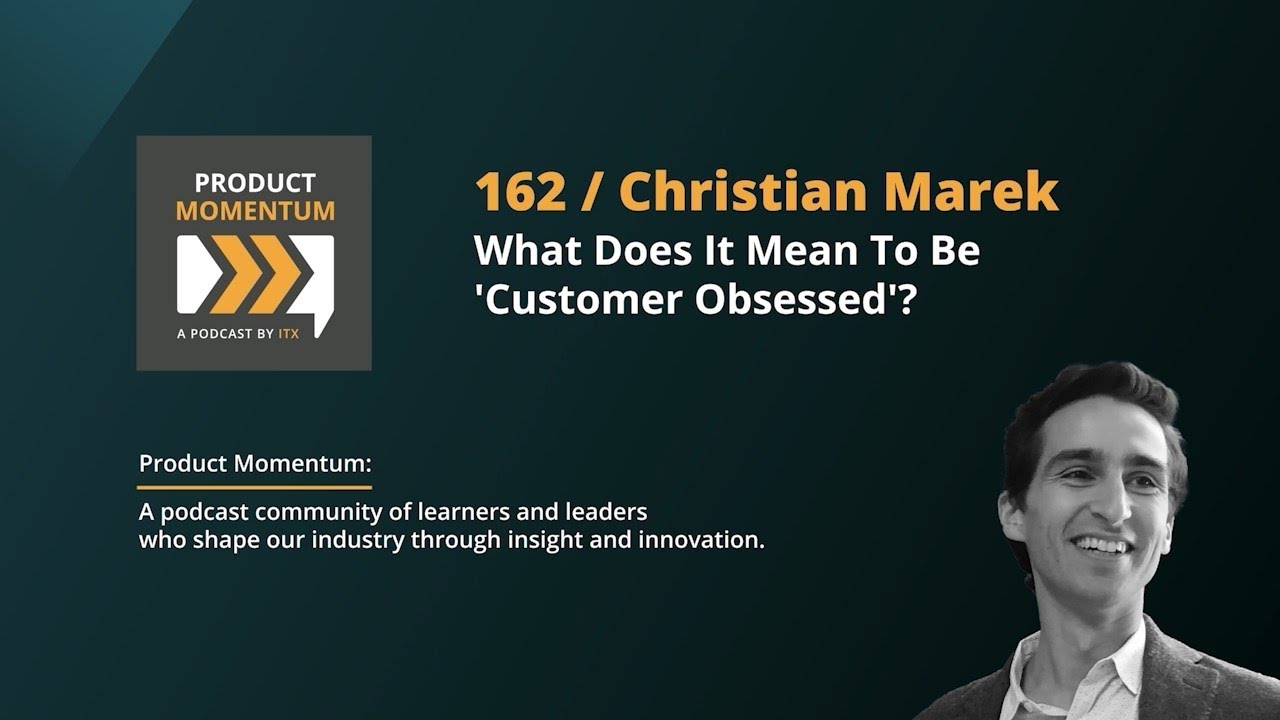
Christian Marek is Vice President of Product Management at Productboard. He has extensive experience in technology, finance and the intersection of both across leading companies, including Facebook, Google and Docusign. Christian’s professional achievements highlight a commitment to delivering impressive outcomes and fostering innovation. His ability to align vision with execution has been key to driving product success, whether through enhancing efficiency, improving profitability or achieving ambitious organizational goals.
Recommended Reading
Stratechery, by Ben Thompson.
The Pragmatic Engineer, by Gergely Orosz.
Christian Marek is Vice President of Product Management at Productboard. He has applied his years of experience in technology and finance while leading product management efforts at Facebook, Google, and Docusign. In this episode, Christian joins co-hosts Sean Murray and Dan Sharp to explore how AI tools are revolutionizing product management by enhancing customer obsession and meeting user needs effectively. Here’s what we cover:
What does it mean to be “customer obsessed”?
And how do I know if I am? Customer obsession is more important than ever before, Christian says. He shares three critical questions to help you determine whether your organization can call itself, “customer obsessed.”
How AI supports Product Managers
Many PMs see AI as a tool that drives efficiency, helps teams go faster, and reduces waste. And it does. But when properly integrated into your workflows, AI tools also enhance decision-making by streamlining your team’s collection of customer insights. Product managers can leverage AI to quickly analyze customer interactions and feedback, allowing them to identify key problems and prioritize features based on data-driven insights.
Next-level Product Management
The role of product managers is evolving with AI, enabling them to focus more on strategy and vision rather than just feature specifications. “PMs who embrace AI,” Christian says, :will be able to scale themselves significantly and to think more about their organization’s vision, business strategy, and high-level execution.” Product managers are quickly adapting to this growing level of influence and enhancing their contribution to team and organizational success.
Obstacles to AI Adoption
Companies often face hurdles in adopting AI – sometimes due to internal resistance and the need for cultural shifts regarding data sharing and privacy. Ask yourself: is my company, and my company’s data, prepared to take advantage of AI’s capabilities?
ITX’s Product + Design Conference returns to Rochester, June 25-26. Be sure to check out the complete list of workshop facilitators and keynote speakers on our P+D Conference landing page!
Podcast: Play in new window | Download
Sean Murray [00:00:09] Hey everyone, welcome to Product Momentum. I’m Sean Murray, Director of Product Management here at ITX.
Dan Sharp [00:00:15] And I’m Dan Sharp, a Product Manager at ITX. It’s our privilege to continue the Product Momentum journey, a platform that celebrates the thinkers and doers who are shaping the future of software development.
Sean Murray [00:00:25] Our goal is to introduce you to industry leaders, innovators, and practitioners, and bring you their insights, advice, and innovations. We talk with experts from product strategy, UX research and design, security, engineering, leadership, and more. We’ll discuss how their approaches to problems help empower teams and build trust. And we’ll explore trends, tools, and techniques that your team can use to deliver the software solutions your users need today. So tune in, stay curious, and join the conversation.
Dan Sharp [00:00:53] You can catch us on your favorite listening platform, or if you prefer the video experience, you can find all our latest episodes on the Product Momentum YouTube channel.
Sean Murray [00:01:01] And if you like what you hear, be sure to subscribe, like, comment, and share. That way, we can be sure to provide you with the best podcast experience.
Dan Sharp [00:01:13] Sean, we just had a tremendous conversation with Christian Marek from Productboard. He’s bringing a lot of awesome insights into the practical use of AI.
Sean Murray [00:01:23] Christian is one of us. That’s why people are gonna like this episode. Christian is of us, he’s building products every day, he’s making strategy decisions, he’s make trade-off decisions, he’s shipping amazing AI products on a regular basis. He has insight in AI and product management that no one else has brought to us yet. This was an amazing episode. One of us! All right, let’s get into it. Let’s do it.
Sean Murray [00:01:55] All right, hey everyone, we are here with Christian Marek. He is the Vice President of Product Management at Productboard. He’s got extensive experience in technology, finance, and the intersection of both across companies, all of you know, including Facebook, Google, and DocuSign. He has recently been intensely customer-focused and is bringing new AI tools to market to support user needs at Product board. Christian, welcome to Product Momentum.
Christian Marek [00:02:19] Thank you, super excited to be here Sean and Dan.
Sean Murray [00:02:22] All right, we’re gonna launch right into it. So it’s 2025, a lot of new things happening. How are you defining customer obsession in 2025 and how really has AI helped you transform your understanding of that concept?
Christian Marek [00:02:38] Yeah, totally. So I think customer obsession in 2025 and in the years to come is going to be more important than ever. And I think it really comes down to three things. It comes down. Hey, is your strategy actually customer centric or are you just quote unquote, just driving business value, which might be fair to you, for example, like on a cost cutting journey, but I feel like for building really amazing product, your strategy needs to be anchored in, Hey, what’s the goal of the customer, what is the customer metric you’re trying to move? And really deeply anchored in that. I think the second piece is for an organization to be customer centric is like actually what programs do you have in place that enable that? Do you have a product development life cycle that encourages customer centricity? Do you a voice of customer program that makes it really easy for everyone in the organization to access customer insights quickly without having to take to like 10,000 PowerPoint decks? And then the third piece is simply around culture. Like is leadership setting the example for the rest of the product or for the arrest of the teams in the organization to be customer-centric? Are they bringing to customer examples? Are they holding people accountable to being customer-centered? So I think those are the foundations. And I think in the age of AI, this is becoming ever more important. Like I’m very curious what, what you see, but what we see in our end is that code and product gets developed that much faster, so it’s that much easier to get features out. But what’s becoming more and more important is actually like making the right product decision so that the feature you actually getting out there is the right one that meets the customer need. And so you just don’t like clutter your UI all over the place. And so that’s really where customer obsession and AI come together and where it plays an even greater role in making these right product decisions. And why I think every organization needs these foundational pillars of like the right strategy, the right programs, and the right culture in place to make sure the best product decisions happen.
Sean Murray [00:04:36] I think in our experience with AI right now, what we’re specifically seeing is reduced waste. I don’t know. We’re seeing some uptake in speed of delivery, but the decisions that we’re making are better. And conversations that we are having earlier in the process is better because of AI initially. So I think that’s what we are really seeing.
Christian Marek [00:04:57] Yeah, I think it’s absolutely that too. And you know, a part of it is that customer insights and customer data is becoming simply that much more accessible and scannable with the help of AI. So yes, absolutely.
Dan Sharp [00:05:09] Before we dive in, I’m more about using AI to boil down customer interactions and customer data. You mentioned one of the pillars of just being customer-obsessed is having that kind of discovery framework, that mindset. Do you have any tips that you might offer for folks where maybe their company level is less mature from getting customer feedback?
Christian Marek [00:05:34] Sure, sure, sure. Yeah, yeah, absolutely. And I think, I think everyone can play a role, like no matter if you’re in product management or in product operations, like what are product managers out of there? I think the most practical thing you can do is like actually like look into how can you sort of start a centralized customer feedback, customer collection process, and try to get it in one place. Um, you can start basic and just use tools you already have in house. You can tools like Productboard that allow you to really easily. Get the data all in a single place, pull in from data stores in your organization, and just act on that really quickly. For the product ops folks out there, I think the thing that they could do is really look at what is a big business pain point in my product organization that the product organization is trying to move towards and trying to solve and actually establish a very foundational program around it that figures out what are the key data sources that we need for customer feedback? How do we get them into the hands of the product managers. How do we apply the right strategic lens on it so that they don’t have to sift through like 30,000 pieces of feedback, but really get the insights they need to get the job done more effectively. So I think those are two key levers that PMs and product ops folks that are out there can pull to just like become more customer centric and get access to that feedback and insights data really quickly.
Dan Sharp [00:06:55] Love that, and thanks for bringing up product operations, like it’s definitely a really important growth area for the discipline. Yeah, so right now, we’ve got our data sources and we’re collecting our customer data. What advice do you have for PMs who want to utilize AI to kind of find those insights and figure out what the most important problems are?
Christian Marek [00:07:15] Yeah, totally. So I mean, look, what we see, or the problem that we’re seeing in the industry and that PMs are having today that either they’re in very large organizations, like in enterprises, where there’s just a ton of data and there’s no way you can read all the App Store, Play Store, G2 feedback, whatever it might be. The other spectrum of the problem that we are seeing is in S&P. Where you actually know you may not have the luxury of a product ops function that sets up a voice of customer process for you. And so, you know, there’s obviously, you know, really, really amazing tooling out there. Like what we offer at Productboard, which is Productboard Pulse, that basically takes all the feedback data and your organization and from Salesforce, from Zendesk name integration of choice here, puts it all in a central place runs AI on top of it to allow you to get these insights, to like figure out like, Hey, here’s the next thing that I should build. Or even like engage with the feedback corporates and ask questions like, hey, I have this feature idea. Is that a good idea? Which customer has talked about this? Should I go reach out to them? Okay, so I think that’s very powerful, very actionable things that DevTeeqs can do.
Sean Murray [00:08:24] We have a model that we, we have a model that champion at ITX called the relationship ladder, where it talks about how you really want to build with your users, you want to bill trust, then get them to loyalty and then get them to advocacy. Are there advocacy being people that are going to defend you in the wild? If you’ve had the argument over Android, over iOS, you are an advocate for one of them, whether you like it or not, right? You’re defending, you’re defending that, you defending that operating system in the wild. Um, or the, you know, they will self promote for you. So is there a way that AI can help you at least do some of this user segmentation?
Christian Marek [00:08:59] Yeah, absolutely, right? Like I think so, I think, I think so too. And like sentiment is something, you know, in Productboard specifically that we actually track, like, hey, who has a positive sentiment, who has a negative sentiment? And then what you can actually do is like you can build a segment around that specific sentiment. You can check out what are their specific pain points of that specific segment. Like, say, for example, like usability, the top thing that comes up for your specific product and then you as a PM can act accordingly. And so this is, I think, like where it goes back to what we talked about earlier, like having this product strategy in place that kind of guides you like, Hey, what are the things you’re focused on as a business? Um, because then you can choose like, Hey, here’s the segments I care about. Like, Hey to your point, like, do I, do you move people from the trust loyalty bucket and by advocacy bucket? Like that’s the thing I really care about, so let me drive on that. And let me use Productboard Pulse or other products to do that. Or do I care more about like. Actually, like just, you know, doubling down on the folks that are already like those are like fundamental business decisions is super, super interesting topic. That’s super cool.
Dan Sharp [00:10:02] So I’m wondering, as you kind of get the segment in, and you’re in discovery, how can we then use AI to support some of the decision making to figure out, OK, what ideas are going to be the ones that are going resonate super well? And also, with that, how do we make sure that we’re not losing our human product manager touch in there?
Christian Marek [00:10:27] Totally, totally, totally. Yeah, I think there’s, typically what we see is people, product managers, take two approaches. Level one is either they check out like, hey, here’s the feedback across the board, and they’re like, hey, what are the themes, the things that are popping up sort of like on a bottoms up basis? Like say like, going back to the example earlier, you see usability pop up as like a key theme that your customers are getting feedback on, and then you drill in from there and you figure out like, here here’s what I wanna build. The other way, and I think this is more towards what you mentioned, Dan, is like, hey, I as a PM, I super experienced, I just came off this customer call, I have this idea, I really have great conviction in, let me actually like test that with the help of AI and simply ask the questions like, hey, here are three ideas I’m considering, one, two, three. Now, can you help me get customer examples and potentially ARR tied to it so that I can like sort of like do an early prioritization? And what we think, what we have in Pulse, what is really powerful is that as you create these themes that might match these ideas that you’re putting together is you can actually like stack rank them by ARR impacts. You can, for example, see like, Hey, here are the open opportunities and the total dollar value tied against a certain idea, and then you can make the prioritization decision accordingly. And you can obviously also slice and dice by sentiment and other things. And that really allows you to make these prioritization decisions. Based on data and the AI just helps you do that in literally minutes as opposed to, you know, weeks, days, or whatever it might’ve taken to do that. And in, in the traditional way.
Dan Sharp [00:11:59] Love that. I think there’s also just like so yeah, so much potential to support those like monetary decisions and help us prioritize. That’s that’s super cool.
Sean Murray [00:12:09] As you’ve been ramping up new customers on the Productboard platform and they’ve been using your AI product, are there things that you’ve noticed where customers wish they had come into the process saying, I wish I had this skillset before I started to use AI or realize, or conversely, is there anything where they realize that they didn’t have a skillset that AI is starting to help make up for them?
Christian Marek [00:12:33] Interesting. So I think the thing that we’re noticing is, and we’re trying to make up for on their behalf, right? Because AI is like, AI and particularly LLMs, the technology has been around for two years. And I think a skill you kind of need to have in the interim is you need to be somewhat good at understanding the concepts behind writing prompts. And so today, we obviously help you with that. By giving you a prompt library and all that kind of stuff to facilitate it for you. But that’s really, I think, step one of the journey. Because ideally, if you build a really great AI product experience, you don’t have to worry about prompt engineering. Prompt engineering is like, if think about it, it’s not like writing code is not as complex, but it’s like a deep skill that you need to develop. But the more you extract it away, the easier you make it, the more accessible the product becomes. And so that’s the approach that we’re taking, where it’s like, say like a user. Has a specific goal in the product, you get a certain kind of feedback. And we recognize that, say, the prompt isn’t like, you know, perfectly formatted or does not quite yield the results. Then basically what we do behind the scenes is two things. Number one is we augment the prompt itself so that we are more confident that we can feed it into the LLM on behalf of the user that it actually yields to a higher quality result. Of the second thing that we’re doing, based on the agentic infrastructure that we have in the background, is we’re trying to intelligently add the right context to the prompt to the LLM, so the user gets a better outcome as a result. So to your point, yes, users, or customers that come in, would have probably appreciated, like, hey, yeah, help me write prompts, et cetera. And that’s the first thing they come to us with, and give us the prompt library and all that kind of stuff. And we’re doing that today. We have white papers and I don’t know what, But like the dream experience is actually like, hey, you don’t have to worry about that. We recognize when there’s something that is like not awesome or that you need help with, and we augment it for you in the background. And that’s really what we’re striving for. So that, you know, you can get even more out of like the LLM and the data and all the context you have in Productboard without actually needing to do like work.
Sean Murray [00:14:50] The prompt library is excellent because one of the things I was wondering is, do people know the right questions to ask? Not necessarily, not necessarily just the prompt and the way that you should be asking the machine the question, but just the actual context of the question itself. Like, hey, I’m at this point in the product life cycle and I have these questions around market focus because I’m trying to build initial segments or I’m try to figure out like who my initial target audience is. If you don’t have the right context for those questions, You could be the greatest prompt writer in the world, but if you don’t have the right context to your, your, the output of the machine is not going to be, it’s not going be useful. So I think that that, that library is, is a game changer. Where, what, where are people struggling right now in terms of being able to adopt AI is it, is it really around just prompt writing or is there, do you think that there’s just like, is there I know there’s a lot of push to start AI now, right? We know there are going to be efficiencies. Let’s get. Let’s get dirty, right? Let’s make mistakes fast. We’ll fail fast and then we’ll figure out how to use it. But where are, if people are failing fast, where are some of the initial failures in trying to adopt AI?
Christian Marek [00:16:01] Yeah, I mean, we see, I think generally in the market, we see two things. So we see number one, companies that are super excited about AI that want to jump in and potentially end up pursuing a direction that, you know, they’re actually not ready for. Where they’re like, Hey, Hey guys, we want to talk to you. Like, let’s do the demo, show us what your cool product can do, product leadership gets super excited, but because the company is more traditional in nature, it actually breaks down as soon as we go into like the conversations with like privacy in other groups in the organization simply because the org is, is not ready for it. So that is, that is super unfortunate. As then, you know, goes to adoption, I think what customers need to, and what a market needs to become comfortable with is a certain degree of like giving your data to a large language model, because that’s ultimately what’s, what’s going to happen. And there’s mitigating factors there that some customers are taking that we’re which is like, some start running. Locally hosted large language models, which is a great way of like, you know, not actually passing a data into the cloud somewhere feeling like you don’t have control over it. But I think like the biggest adoption hurdle that we’re seeing is customers get really excited about the promise of AI because like they think it can deliver on which we see for customers that successfully adopt it. But then as it gets into the comprehensiveness of like actually like providing the data for it to be successful, that’s oftentimes where they face internal hurdles and challenges. And where it takes longer to realize the value simply because they need to go through this process of like, you know, adjusting your organization to this, you know new world that we’re moving into.
Sean Murray [00:17:37] Yeah, customers, the people who are making mistakes sometimes are expecting the straight output from the AI to be the product or something that’s shippable or something, that can go straight into content, but actually it’s just supposed to influence the quality of your content, right?
Christian Marek [00:17:51] Exactly.
Dan Sharp [00:17:55] Right to AI is obviously becoming more and more prevalent like in our discipline, as it elevates our role as product managers, how you see the discipline evolving in the next couple of years.
Christian Marek [00:18:10] I think it’s a really exciting time for product management, to be honest with you. Like, I don’t just say that, like I’m fundamentally convinced about it. Like, if you think about like the typical, like IC PM job in the non-AI age is a lot of feature-specking, product understanding, and like driving cross-functional alignment. Better yet, you know, if they go talk to customers, but that’s like, unfortunately, like because like the first three take up so much time, usually the thing that gets lost. I think there’s going to be like a fundamental shift where PMs that who embrace AI will be able to scale themselves significantly and basically be able think more about like vision of the business strategy and high level execution as opposed to having to like expect every single feature anymore. And like the prime example for that is like, imagine like you have a tool like, like Productboard that has like all the context of your features where So you go then go in and write a feature spec. Like we think we can do a really good job. That’s like 80, 90% there that you really just curate at the end and make sure that it’s right. But that like gives you so much time back and you can focus on all these like higher, other, other higher priority initiatives. And with that, you know, PMs can also take on a more commercial lens on the business. Actually think about not just like, Hey, how do I ship the feature? How do I get this out the door? But like also what is the revenue that it is going to drive? And that, can you know puts them then on a closer level with like, say For example, like. They go to market or sales organizations. So overall, I think there’s gonna be a transition from the PM being like the creator. Like if you think about it, like in a museum context, as a metaphor where they like almost like create the artwork together with the engineers and designers, like really the curator that kind of oversees like everything that’s happening and they’re gonna use agents and other resources in the organization to actually help them do the job. Because like, once you sort of like democratize like these. Knowledge and the expertise behind writing feature specs and all those details to other functions like hypothetically sales engineers and guess what the PM is sort of like becoming the conductor of saying like oh this is a great feature step we should actually like pass this over to engineering and designing to build this as opposed to having to do it yourself but that allows the PM to like just take that high order function so that’s why I’m super excited about the role and that’s where I really hope like people really embrace the PM discipline now who haven’t and they were treated more as a project management discipline because I think it will truly make businesses better. I’m gonna bring love to that.
Sean Murray [00:20:41] So for our listeners, you heard Christian say IC PM, right? So individual contributor PM. We’ve got an episode, a few episodes back with Melika Hope. She’s from Spotify. She talks about the rise of the super IC. So if you are in product management, you do not need the only way forward. It does not need to be to become a manager of other product managers. There is an IC concept out there. Listen to our episode of Melika Hope. Thank you for touching on that Christian, because that’s a key drawback for us.
Dan Sharp [00:21:11] I really love the idea, too, of AI taking some of those tasks away. A ways back, we talked to Christian Idiodi, one of the struggles we all face is product managers. There’s so much time spent doing that there’s no time to think. And by hopefully letting AI take some of the tasking away, you have more time to just spend thinking about strategy, thinking about what the good ideas are. So that’s super helpful.
Sean Murray [00:21:38] Do you think that this will be, this really represents an opportunity for product managers to reconnect with the business and really understand how the business is running, right? What’s making money, how we priced.
Christian Marek [00:21:49] And I think that’s a super interesting and appealing part of the job. Like most of the PMs that I mentor that are, you know, in the IC individual contributor PM track, like they actually, they want to do more because they’re actually excited about like the premise of like a really shaping, not just the product, and that’s the cool part about it, to shaping the commercials of the business and like they inherently want to work more cross-functionally. But to your point, the busy work is kind of like. What slows it down, but like, once you take that out of the equation, when the possibilities are endless.
Sean Murray [00:22:22] Christian, thank you so much for being here today. I want to give you an opportunity to just talk about what are the cool things that are coming up that people should expect from Product Board.
Christian Marek [00:22:30] Yeah, yeah, yeah. For sure. Happy to, happy to. So, do you guys, the folks are familiar with Product Board? Like, we are basically an AI-first, end-to-end, customer-centric product management platform. And so, we’re really leaning into the AI-First future with product management. Today, we already have Product Board Pulse in the market, which is our voice of customer product that helps aggregate all the customer feedback and organization, extract insights really quickly from that, helping PMs to shape what’s in the roadmap. But there’s a lot more coming in terms of like, really the agentic AI future, where PMs can rely on agents to help them do other tedious jobs in their day to day. Like say, for example, like a PM needs to go through a discovery cycle and schedule customer calls. Super tedious today. You need to figure out like, hey, who are the right customers to talk to? You need figure out, hey how do you get to the call with them? You need check with the CSM and say, okay, but what we’re basically building is really that agentic support crew. For product managers to take these mundane tasks and really enable them to focus on what’s matters, which is vision and strategy and actually getting in front of the customers and collecting the data that the organization doesn’t have yet. And that’s the direction that we’re super excited about. And I just gave you like the example of what it would look like in a discovery cycle. You can imagine the same in beta customer management, capacity planning, using AI. So, There’s some really powerful things that we’re very excited about that you can expect from us in the near future.
Sean Murray [00:24:01] That’s awesome. I, uh, thank you. And I, I think the future sounds bright for product board, a couple of takeaways from today, Dan’s going to hit us up with our last question. I think one of my initial takeaways was verify that your strategy is customer centric, right? Do you really, are you delivering things that are important for your business or are you’re delivering things are important to your customers? Make sure that your, strategy is customer centrick. I think also be ready as a company to adopt AI. Understand what you want to get out of it, but don’t dally because the future is kind of now, right? You need, you need to start integrating AI into your processes or into your products. The future is bright for product managers, right. I think Christian said it. Everybody can, everybody can never have to write a product spec again. Uh, AI can take care of that for us. We could just, we can just take that task right off the list. Everybody we’re all set. Uh, so the future leading my path. AI is actually making a brighter future for product. Overall, just build your business acumen. This is actually this growing your business acumen, understanding how your business makes money, understanding your contribution. Are you, are you generating new revenue? Are you reducing the cost of serve? Are you protecting revenue? The more that you understand that the more that you’re going to be prepared to grow within, uh, within the product role. And that sounds, that is something that’s kind of been echoing through all of our, all of podcast seems it’s just like an undertone, like the venture capital money is Right? You need to get out there and generate your own revenue now.
Dan Sharp [00:25:38] So I always like to wrap up the podcast with what’s quickly becoming the product momentum momentum book club. You know, what, what are you reading these days? What are we reading these days? Sorry. Or listening to if you’re.
Christian Marek [00:25:49] What am I reading and listening to these days? That’s a good question. I am reading a lot. I mean, I think like, I’ve like the thing, let me start with the things that stay consistent and the things that I have added over time. So I’m a huge fan of Stratecary by Ben Thompson. It really like is non-hyped content that tells you what’s happening in the tech industry and talking about like thinking about like strategy, vision and market understanding. I recommend it to every ICPM that, or every PM I speak to, manager PM, individual contributor PM would not. I’ve also started reading more engineering books to be honest with you, like pragmatic engineer, that’s a shift. I haven’t like traditionally read that, but I’m really trying to understand what AI does for engineering. And so like there’s the pragmatic engineering sub-stack, I think it’s what it’s called that it’s been a lot of time on hugely, hugely valuable, and then like on a personal front. I’m a huge fan of, of mindfulness and like thinking about like, you know, quality of life and better life. So reading a lot of books in, in, in that regard because it’s a topic that I’m personally super excited about. And also recommended to PMs out there because PMs and managing PMs and like leadership roles are super stressful. It’s just a reality. And like, You know, at the end of the day, shipping features is great and building great products is great, but I think work, I think a good balance is life is equally as important. Also, I just got to the blog story.
Sean Murray [00:27:14] Christian, thank you so much for your perspective on AI and product management and really where this is heading and what’s available to us now and how to get started. Thank you for what you brought to the community today.
Christian Marek [00:27:27] Awesome, thanks so much for having me, Sean. It was great to be here.