Listen
Podcast: Play in new window | Download
About
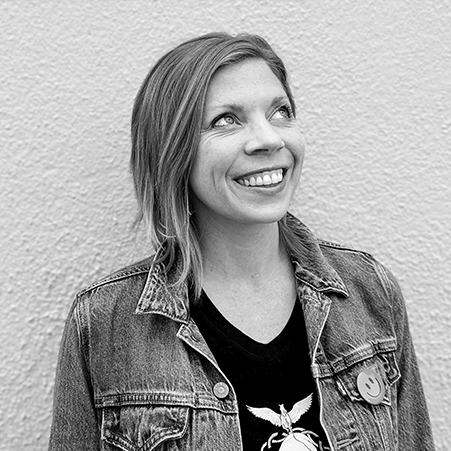


Sophia Prater is the CEO at Rewired UX, the creator of the Object-Oriented UX Certification. She is also the host of the OOUX Podcast and creator of the ORCA Process. Sophia has consulted for and trained teams at Google, Facebook, Autodesk, Athena Healthcare, Mastercard, Credit Karma, CNN.com, Macys.com, and many more.
With her trainings, Sophia helps UX designers and digital product professionals expand their capacity for complexity, zero-in on risky assumptions, capture requirements visually, deepen their cross-functional collaboration, and launch better products.
She lives in the mountains of North Georgia with her husband and CTO Luke, surrounded by wineries and waterfalls.
Recommended Reading
X-Ray UX: From Chaos to Clarity with the ORCA Process, by Sophia Prater. Available in mid-July. Click here to add your name to the wait list.
The Accidental Taxonomist, Third Edition, by Heather Hedden.
Sophia Prater is CEO of Rewired UX and the creator of the Object-Oriented UX (OOUX) Certification. In this episode of Product Momentum, Sophia joins Sean Murray and guest co-host Jon Daiello to discuss OOUX and the many ways it can help product teams deliver better design, more efficiently than ever. As Sophia explains, “OOUX is like the backbone of the design process that allows all these other disciplines to hang on to.” And the ORCA process – that is, Objects, Relationships, CTAs, and Attributes – is the ‘how’ of the OOUX philosophy.
Jon, a Senior UX Manager at Paychex, shares Sophia’s enthusiasm for integrating OOUX principles into his team’s design practice. Together, they explored how OOUX is reshaping the design landscape and empowering product teams to deliver exceptional user experiences.
Here’s what you’ll learn:
Breaking Down Functional Silos with OOUX
OOUX provides a structured approach to design that breaks down functional silos by focusing on the objects and relationships that users interact with. OOUX encourages cross-functional collaboration by creating a shared language among the trio of product, engineering, and UX.
“Object-oriented UX is gonna help designers communicate with our developers and PMs. And it’s actually going to help us internally as a team. If we don’t understand internally what the objects are, if we don’t have a shared language on what the things are, then how are we gonna make it clear to our users?”
ORCA: Boosting Process Efficiency Through Understanding
One of the standout benefits of OOUX is its ability to boost process efficiency. Not only does OOUX promote that reusability of shared artifacts, but it helps product teams save time and resources by building only those things that users need and want – and by not buildingthe things users do not need or want.
“The ORCA process is a tool for understanding,” Sophia explains. “Understanding the scope and making sure it’s really clear. Understanding the mental model, the data structure, and all the constraints – technical and otherwise. ORCA allows us to truly become systems thinkers,” she adds. “That’s what the world needs. We want to be creating real solutions that solve real problems. Our system lies within a system of systems. So we need people thinking in systems. And that is what the ORCA process gives you.”
Slowing Down to Go Fast – with Less Waste
When product teams dedicate time early in the process to define objects, relationships, and processes, Sophia says, they not only reduce the risk of costly errors later in the cycle. They also quickly discover “all the stuff they don’t need to do.
“OOUX helps you get everything on the table, with everyone looking at all the puzzle pieces collaboratively,” Sophia says. “When we do that, we realize we don’t even need half of this stuff — the stuff that’s just gonna drag us down. When we got rid of that, we realize we can go so much faster.”

Jon Daiello is a Senior UX Manager at Paychex, leading design teams across Platform, Design Systems, and UX Strategy. He’s passionate about building strong designers, sharing insights on his website and other platforms.
ITX’s Product + Design Conference is just around the corner, on June 25-26. Get your tickets here, on our P+D Conference landing page!
Podcast: Play in new window | Download
Sean Murray [00:00:09] Hey everyone, welcome to Product Momentum. I’m Sean Murray, Director of Product Management here at ITX.
Dan Sharp [00:00:15] And I’m Dan Sharp, a Product Manager at ITx. It’s our privilege to continue the product momentum journey, a platform that celebrates the thinkers and doers who are shaping the future of software development.
Sean Murray [00:00:25] Our goal is to introduce you to industry leaders, innovators, and practitioners, and bring you their insights, advice, and innovations. We talk with experts from product strategy, UX research and design, security, engineering, leadership, and more. We’ll discuss how their approaches to problems help empower teams and build trust. And we’ll explore trends, tools, and techniques that your team can use to deliver the software solutions your users need today. So tune in, stay curious, and join the conversation.
Dan Sharp [00:00:53] You can catch us on your favorite listening platform, or if you prefer the video experience, you can find all our latest episodes on the Product Momentum YouTube channel.
Sean Murray [00:01:01] And if you like what you hear, be sure to subscribe, like, comment, and share. That way, we can be sure to provide you with the best podcast experience.
Sean Murray [00:01:13] That was an amazing episode. We had Sophia Prater on. She is the queen of object-oriented UX. With me for this episode is Jon Daiello. He’s from Paychex. He’s a senior UX manager, and he is helping to produce some of the biggest changes in the HR tech industry. John, what did you think about that episode?
Jon Daiello [00:01:33] Oh, I, so I’ve been following object-oriented UX OOUX for a couple of years now, and I’ve really excited to put more of it into practice and just sitting down and hearing Sophia’s passion about this is just fantastic. Um, it just whole episode, every step along the way, just reinforces good structure, good organization gives you good design on the outcomes and that good design leads to really great experiences. So it was fantastic. Love it. Can’t wait.
Sean Murray [00:01:59] Sophia’s energy is amazing. If you don’t know what object-oriented UX is, the next 25 minutes are for you. Let’s get after it.
Hi, everybody. Welcome to another episode of Product Momentum. I am Sean Murray, and I am here today with Sophia Prater. She is the CEO at Rewired UX, the creator of the Object-Oriented UX Certification and the host of her own Object-oriented UX podcast. So we are crossing streams here. This is great. She has consulted for and trained teams for all the top players in the game, and we’re really excited to learn about Object-orientated UX from Sophia today. Hi, Sophia.
Sophia Prater [00:02:42] Hello, happy to be here.
Sean Murray [00:02:44] Awesome. We also have a special co-host today. So Jon Daiello is a senior UX manager at Paychex. He’s passionate about creating an amazing design and Jonn has his own YouTube channel and is currently publishing his own articles on Medium. Jon, thank you for being here today.
Jon Daiello [00:03:00] It is awesome to be here. I’ve been excited about this for a while now, so.
Sean Murray [00:03:04] Yes, this is gonna be a great conversation. Looking forward to it. First though, for our users, or for our, well, yeah, users of the podcast. For our users of podcast. Give us an intro into what object-oriented UX is and why it’s important.
Sophia Prater [00:03:18] Yeah, so OOUX is simply a philosophy for doing digital product design that respects the fact that people think in objects. There’s a lot of good research on this, on how the brain works, how we process information, how we understand. And basically, nouns are way easier than verbs for people. You can see this in your kids, right? If you have kids, what words do you teach them first? You teach them the nouns first, all right? We can see this in how languages are built. We can seat us actually in our own perception.
When we walk into a place, the back of the brain, the visual cortex, and this is even goes for people with sight impairments, visual cortex is scanning the environment and it’s trying to figure out what are the things and where are the thing? And how are those things related to each other? All right, and how do I relate to those things?
Okay, this is all very tacit. And this happens when we go into physical environments. This is how our brains evolved trying to survive in places. What are the things here? Are they dangerous? Is anything going to eat me? Can I eat anything? And we bring this same thinking when we go to digital environments. We do, we do. Our brain doesn’t say, oh, this is a digital environment. I’m going to process this environment completely differently than how I have been processing environments for thousands and thousands, if not millions and millions of years.
So Object-oriented UX says, hey, people think in objects, let’s make our systems, our digital systems, let’s it really, really clear to our end users what the objects are. Let’s make sure our labels are clear. Let’s make sure that they look the same in the same places, right? That they don’t, we don’t have these things that we call shapeshifters where you have the same object that changes shape as it changes context. It makes it very, very difficult for people to process this information, right. So knowing that this is how the human brain works, let’s honor that so that when I go into a space, it’s the objects that I would expect in that space. So this is a lot of mental model work.
So if I’m a teacher and I’m going into some sort of application to help me with my students, all right, I’m gonna expect things like students and classes and assignments and lessons and tests. These are just the things in my mental model and I am gonna expect to see them there and I’m gonna expect those to have the relationships that they have in the real world as well. So I have students that are inside of classes. I have a student that might have many classes. I have class that has many students. We can get into cardinality here.
The bonus is this is how the developers, your developers are thinking like this too. They’re thinking in databases, they’re thinking about object structures. So developers and the entire tech industry really has a lot of object-oriented roots. So object-orient UX is saying, Hey! Designers, we can be thinking like this too. It’s gonna help us communicate with our developers. It’s going to help us build more naturally intuitive systems. And it’s actually going to help us internally as a team. Because if we don’t understand what the objects are internally, if we do not have a good shared language on what the things are, then how are we gonna make it clear to our end users?
And when you have a very complex system with dozens, if not hundreds of objects or concepts in these enterprise systems that I’m often working with. And you don’t get really, really clear on what the things are, then it’s going to be difficult to communicate within your team.
So for example, when I was working with, it was like a large airline based out of Atlanta, working with them on some B2B software, complex B2B software, we were having conversations on what’s the difference between a flight, a segment, a trip, a leg, right? All these words getting used interchangeably. Which is fine in colloquial language, but if we’re trying to build complex software, we gotta get clear on that. So this is about creating a shared language so that you can communicate better with your team, you can work better, you can better cross-functionally to build more naturally intuitive software. And it’s an absolute beautiful thing, makes everything easier.
Jon Daiello [00:07:20] That’s awesome. So I hear you saying it’s a lot about organization, making sure we’re getting our terms right, making sure that we understand what the things are in the real world and how they map to the system. So one of my first questions, as you mentioned working with engineers, developers, architects, people who are very technical, what do you see the difference between how developers and engineering might do object-oriented thinking versus the way user experience designers or product designers might do object-oriented thinking?
Sophia Prater [00:07:48] Yeah, that’s a great question because 99 out of 100 developers that you introduce them to OOUX, they’re going to be like, why haven’t we always been working like this? Like, like, yeah, of course, like, please, I will be really, really happy to not have to reverse engineer your screens to figure out the data model. Like that’s great. Let’s work on this together.
So when we can make the data models user centered, right, so actually, we actually are preventing a lot of we’re creating this like foundational almost like belief system on what we’re actually building and it’s built into the code. It’s built into the data structure and then we can build upon it, which is a gorgeous thing. We can work on it together. We’re bringing the developers in earlier, which of course, they’re all asking to be brought in earlier so that they can also inform us. On the wacky stuff that we’re doing, right? So they don’t have to be like, nah, it’s gonna take us six months, it’s going to be really, really difficult. So we can bring them in earlier.
They want that, we want that. Now we have a way to bring them in earlier, the big piece of like feedback or like kind of like backhanded compliment that I’ve gotten on OOUX is like, you’re kind of taking the fun part of my job away, which is like… But they say that, you know, tongue in cheek, right, of like. But it’s really good that we’re doing this together. But this kind of modeling part, like this is the really fun part from the development process, but like, yes, this is great that we are doing it together and make sense that from a certain extent in the beginning parts of that, it should be led by a UX designer or product designer or product manager. Content designer too. Content people are great to lead this process as well. When they are coming into the process, we need to make it very, very clear some terminology things, like what we call objects, I use the philosopher term of an object, they might call them classes, all right? So there’s a little bit of like terminology that we wanna say like, okay, you call these classes when you think of, and they sometimes call them objects too, and then objects are sometimes called instances. So like, what’s an instance, what an object? What do we actually, how do we actually define an object too? Because they are also going to have way more objects than we would have. So we’re looking at the user-facing objects, objects that users would actually see. All right, so we are modeling a mental model, and it’s very, very clear, and we need to make it very, very clear that we are not dictating execution from a technical standpoint.
Sophia Prater [00:10:14] Right. So I’ll bring in some technical concepts like we talk about junction objects a lot, basically where the relationship between two things has data as well. So we create like, okay, this object in context of this other object gets these attributes.
So a developer might call that a join table. And they’re going to have way more join tables like basically every single mini to mini relationship is playing out some sort of join table and they might not even be using traditional object-oriented programming. They might be using the new new something, you know, functional programming, stream programming, something like that. So like, to be very clear, like I’m not telling you how you need to actually execute on the development of this. You are the expert on that. And we are really just thinking about the user facing objects, the objects that users see and care about. And you will have probably 10 X as many objects to actually implement this thing.
Jon Daiello [00:11:03] Okay, so that makes a lot of sense. So for OO-UX, we’re really thinking of what’s the user gonna see, really that front of house, front of stage experience. And it’s not necessarily saying for developers, hey, this is how you need to implement it, but it gives them all the architecture of how the user’s thinking, that modeling, so they can sort of align those backend processes then and the backend modeling so that it actually works together seamlessly. There’s not a lot of reverse engineering to your point tech debt that needs to be undone later.
Sophia Prater [00:11:30] Yes, and I will say we have developers in our community that will use the OOUX, like the object maps, all our artifacts, the beautiful color coded sticky notes, they will use that to map out the full implementation architecture. Like you can, it scales beautifully to that. So if you want to do that, or what you could even do with like, we don’t really want to nerd out here, if we’re using something like Airtable or Notion to document this and you can give your objects. Not only like the front-end metadata and core content, but also back-end meta data and core content, you can start labeling objects as user-facing versus back-ended objects. You can just filter your view for just user-facing or expand it out to all of the objects. Because likely every user-facing object is also going to be an object that the developers are going to care about. They’re just going to have a lot more.
Jon Daiello [00:12:20] That’s awesome, that’s awesome. Yeah, one of the things that I’ve seen over my years just being both a designer and now doing a lot of design leadership is organization is very, very important. And one of drums that I have been beating, if you read any of my articles or see any of videos or been on my team ever, you will hear me talk about organization and information architecture. Make sure we understand what’s the information we’re actually dealing with and presenting to the user. So I’m kind of curious, can you help me understand a little bit? How do you see the relationship between object-oriented UX and the practice of information architecture and like, how do they fit together? Do they, does one replace the other? Like what is that relationship?
Sophia Prater [00:12:59] No, that definitely OOUX does not replace information architecture. I’ll tell a funny story though of my naivety early on, and I’ll give a shout out to Abby Covert who set me straight on this, but my first workshop at the Information Architecture Summit back in 2015, I was watching a lot of Orange is the New Black at that time, And so I named my workshop OOUX is the new IA.
Jon Daiello [00:13:24] Mm-hmm.
Sophia Prater [00:13:25] Just like, cause I also didn’t realize, I didn’t know exactly what information architecture was at that point. So it was very like, you know, I was just being cute and Abby was like, I don’t know how well that’s going to go over actually. So I just, I renamed it. So, and I’ve come a long way in the last 10 years and absolutely not. Like what object-oriented UX helps you do is it helps you to identify areas where you need detailed information architecture. Okay, so when we think about our little pink sticky notes, we’re gonna do color coding, which is where we put metadata. So I might have a, we put our objects on blue and I might an object like an event. All right, so let’s think about, are we talking about the ITX conference or are you?
Sean Murray [00:14:11] Oh yeah, absolutely.
Sophia Prater [00:14:14] So we might say, okay, we have an event at the ITX conference, okay? And we have tons of events, all right? And on a little, so we put that on a blue sticky note, event, alright? And then on a pink sticky note we put type. It’s gonna have type.
And in the beginning, when we’re running an OOUX session, we might be like, okay well there’s like a speaker session, there’s a workshop, like there’s happy hour, there’s probably some other types of, like I might just put a few of those types of events. But let’s say we really want to dig into that actual taxonomy of that. And maybe there’s even multiple tiers of taxonomy of that, and we can say, oooh, we need a lot more information architecture here. Or we have speaker as an object, and we might want to say speaker expertise, and we want some sort of tag cloud or something like that.
So we’ll just kind of pinpoint all of these areas like, huh. Need taxonomy work here, need structural work here. So OOUX, I feel like is this like macro thing that gets us into some of the detailed information architecture work, but gives a really, and this is true, I think of how OOUX has been, how would people go through my programs, what they say OOUX does for them, is it gives a backbone. For all these other disciplines to hang on to. So it really supports everything else. So it supports your content strategy. It supports your marketing. It brings it all together, but it’s not replacing it. It’s just kind of giving a nice, strong, foundational backbone to all of those pieces. So I’m very, very clear, this is not a new process. This is a thing that you can add to your existing processes that make them easier, that support them, that make those practices much stronger and more effective in the, in the long run.
Jon Daiello [00:16:05] I love that. I love it. I love that it’s you’re almost thinking of it like it’s another set of tools in your tool belt. It’s not going to replace disciplines like information architecture has been around forever. But I love these tools and I can see the benefit in when you get your map clear of what are the objects you’re dealing with. All of a sudden, like you said, things start to shine and pop. The relationships between things are much more clear. You can figure out almost from just your object map, which things are going to interact? How are you going to have calls to action between them? And so all of a sudden now it’s much more organized and it can move faster. So.
Sophia Prater [00:16:43] One other quick example of that. So, well, we need to just quickly talk about the ORCA process, because that’s the how. So ORCA is objects, relationships, CTAs and attributes, okay? So what you just mentioned, the CTA is the calls to action in the same way that this ORCA process, the how of the philosophy of OOUX, lots of acronyms flying around, but the ORCA, which is this like beautiful end-to-end process of figuring out what your object’s relationships, CTAs, and attributes are, it also will help you figure out what your interaction design is gonna be. It doesn’t do the interaction design for you though, but it gives you this inventory. It hears all the calls to action on the objects. And now all of a sudden, my interaction design is so much stronger because it’s so, it’s prioritized, it’s well directed, it’s linked back into the object that it’s being acted upon. So it just makes our interaction design so much clearer. And yeah, and more effective in the same way that it does that for information architecture.
Jon Daiello [00:17:49] I love it. That was sort of like floating in my brain of like, you know, I can see a map and I want to plot the paths between the maps. And that feels a lot like, you know interaction design because you’re trying to figure out how do you choreograph somebody moving through all of that. So I think that’s a, it’s a great way of explaining how it relates to some of those other really important disciplines.
Sean Murray [00:18:11] Hey, let’s take a quick break from our conversation to bring you the latest updates from the ITX product and design conference. This year is going to be the best yet.
Dan Sharp [00:18:20] Conference will be here before we know it, June 25th and 26th at the Rochester Riverside Convention Center here in Rochester, New York. The speaker list is tremendous. Day one will have exciting and informative product and designed workshops. Day two is keynote day with Usha Ayer, Ioana Teleanu, Sophia Prater, and Matt LeMay. And our friend Mike Belsito is gonna be coming back this year to MC the event so we know it’s gonna be fun and energetic. And when Mike takes the stage, there’s gonna over 300 product people like you in the audience.
Sean Murray [00:18:53] Keynote Day is a unique blend of product and design content that really has no equal in the conference setting. It’s gonna to be an amazing day where you outside of the keynote presentations will be able to choose your own adventure, and see spotlight sessions, work with your colleagues and Good to see live podcast recordings with Dan and I, where you get to participate and be the one who drives the questions. It’s gonna be an amazing day. If you wanna see more information about the Product and Design Conference, go to itx.com slash conference 2025. That’s itx dot com slash conference 20 25.
Dan Sharp [00:19:27] All right, let’s get back to conversation.
Sean Murray [00:19:28] Let’s do it.
Sean Murray [00:19:33] Quick selfish product question, right? So how does, how does object-oriented UX translate into something that product can use to help understand like the user journey and help actually start breaking down their requirements and doing their part of the, doing their of the work.
Sophia Prater [00:19:50] Uh-huh. So I’ve got a lot of PMs using object-oriented UX, actually, as it creates a beautiful PRD for you. So it is a way of organizing a PRD by a product requirements document. So a journey map, depending on how high level it is, because I’ve seen lots of journey maps. And some of them are very true journey maps, and sometimes they’re a little bit more task flow-like. So if we really are at that kind of jobs to be done, very like high level, this is how somebody flows through the transformation that they’re trying to create, not necessarily through an existing product, all right?
So you have like, how do I work through an existing solution? We can definitely look at that for sure. Or like, how am I like trying to just, you know, get from point A to point B? We can take all of that and that becomes an input into the ORCA process. So one of the first things we do in ORCA, this is like one of the benefits that I’ve heard people say is like, now I always know how to start a project, but before it’s kind of like, I get really overwhelmed by everything and there’s so much here, like now I always know where to start and that’s with noun foraging. So I can take all of the stuff in and a lot of that is task flows, journey maps. Screens that maybe a PM has sketched out or something like that, some loose requirements even. And I can start looking at the nouns. I can see the nouns that come up over and over and over again.
And this noun foraging really kind of evolves when you become more of an expert at it. It’s really language foraging. You’re looking for verbs too. You are looking at adjectives because adjectives are usually metadata. So we can take all of that mess, if you will, because it’s usually lots of documentation. And pull it into figuring out what the nouns are. So when we go through that, and when we start figuring out, okay, what are O’s, our objects, what are R’s, our relationships, what our C’s, our CTAs, what are our As, our attributes, we basically have a map of the user experience. But what we’ve done is we have objectified all of those elements. We haven’t just objectified the objects. We’ve objectified the relationships between the objects, which is a beautiful thing. We’ve objectified the tasks, the CTAs, which we do that with like user stories and such, but we also objectified, the parts of the objects, the individual attributes. And once we’ve objectified all of those things and concretize them, we have a little box around them, we can write requirements on those things. And this is an amazing thing.
So we have structures for writing the back-end requirements on every object. What is the privacy we need to have for this object? What are the permissions on this object, who owns these objects? Does the user own the data around these objects? Do they not earn the data? What kind of messaging do we need to show around that? So we can create all this backend documentation on the objects, but also on the relationships. What is the mechanics? How do these objects connect to each other? Is it an API that it’s at? Literally, we can get into the mechanics of those relationships. We can talk about the dependencies. All right, well, if somebody deletes an instance of this, do the nested objects get deleted too? So we can document that as well, because we’ve objectified the relationship between the two objects.
We can go into every single attribute, say, is this required field? Is this not a required field, what’s the max character length? We can into that level of detail. And yeah, creates a really nice color coded, easy to navigate, beautiful PRD. A PRD that people will actually love.
Sean Murray [00:23:21] I just like the opportunity to add another acronym in. I think we can get to at least two more, before we’re done.
Sophia Prater [00:23:27] Yes, we’ve got three at least right now.
Jon Daiello [00:23:29] Awesome.
Sophia Prater [00:23:31] I’ll give you one more right now, and that’s our requirements for, the way that we write requirements for relationships. We talk about, well, it’s more of a mnemonic than an acronym, but it’s my cat-sitting fire department. And that is mechanics, cardinality, sorts, filters, and dependency. And we write all of that just on every single relationship, or the most important relationships.
Jon Daiello [00:23:56] That’s awesome. Those details are like, oftentimes when you’re middle of a project and you run into one of those details unexpectedly. I can hear you already saying, well, that’s where my scope starts to balloon and we can’t do that. And for UX, oh, that a whole new flow that we didn’t account for. Well, we don’t really have time for that. So, um, I can, I could already start to see the benefits of getting a lot of this out on the table early. Um, you know, we’ve already talked about like tech debt. We’ve talked about, you’re making sure product requirements are clear. Um, I still feel like there might be some skeptics. They might hear this and say, all right, this is a lot of extra work. This feels like I’m gonna have to slow down to do these kinds of things. What other additional benefits do we really need to be thinking about that we might be missing where making sure that we slow down before we hit that curve so we can speed up and really get at speed going around the turn with OOUX. How else do we need to think about that? I mean, we need ship screens now. Yeah. OOUX is not screens.
Sophia Prater [00:24:55] No, you need to ship, I will correct you, you need a ship good screens now.
Jon Daiello [00:24:59] Okay. Tell me more.
Sophia Prater [00:25:01] All right, I mean go all day, just ship some screens, right? I mean, is that gonna get you your promotion? Is that going to make users happy just to ship a quantity of screens? And this is to bring up capitalism just a little bit. This is what we do, ship, ship, ship, ship, ship. Right, that we just say like, because it’s like we’re quantifying these things, instead of can we ship one screen that people freaking love that does the job of 20 screens, right? Like, isn’t that better, actually? Isn’t that actually even faster, less to maintain, instead of putting a bunch, because every feature that you put out, it’s really hard to take it away. Really hard to it away, all right? Because then you got the one person using another, and then you gotta maintain it and everything.
So, but what I will say is often the fastest way to get somewhere is slow. And sometimes we need to slow down to speed up. And you will, like, good luck designing something that people actually love that really fits into their mental model, that really fits into their life, that really creates something that the entire team can have shared pride around, which is a really important thing. Like, teams coming together, delivering something that they’re all proud of, okay? That is an absolutely beautiful thing, right? And something that people actually love. When we, to finish my thought, good luck designing that if you do not understand it. All right, so at the end of the day, I like to say that the ORCA process is a tool for understanding. Let’s just understand, understand the scope, making sure our scope is really clear, understanding what the mental model is, understanding what the data structure is, understanding what technical constraints are, understanding all of the constraints, all right, understanding even not just our particular product but the domain that our product sits in. So we don’t create a solution that creates 18 other problems in this world, right? So we are truly becoming systems thinkers that this is what the world needs, right. We don’t need a bunch of designers shipping screens. Like the world does not need that, okay. And we want to create, I’m getting a little heated now but we don’t want to be creating, right, just a bunch a screens. We want to creating real solutions that actually solve problems that take into context a wider system. To understand that our system is inside of a system of systems. So we need people thinking in systems. And that is what the ORCA process gives you. It gives you this way to do systems thinking, really practical way to come together collaboratively to do system thinking. And the cool thing is, is it actually makes you go faster. And it actually make you understand the stuff that you don’t need to do. Because when you lay all the table, and I can bring you some quotes of people saying this happening, oh my gosh. The amount of time that it saved us, and just getting everything out on the table, looking at all the puzzle pieces collaboratively, making sure we understand the purpose of all these puzzle pieces. We said, we don’t even need half of this stuff. This stuff is just gonna drag us down. It’s not gonna give us momentum as a company. And that can make you go so much faster. You can then concentrate your efforts on the really meaningful stuff and do it with full understanding, and then you’re gonna avoid so much rework. At the end of the day because you’re actually understanding what you’re doing.
Jon Daiello [00:28:27] I love it. I think, and I think that’s one of the greatest things that I have seen. So we’ve sort of been tinkering with OOUX and practices and we’ve had some training on it internally. And as we’ve seen it deployed on our projects, we have seen exactly that is that we don’t spin our wheels and waste our time on the things we ought not do, and what it does is it aligns everybody sort of around that common goal so that we can all get to value delivery more streamlined. And that’s been for us in my experience, it’s satisfied that need for me to see teams organizing. Without getting stalled into details of organizing because you can kind of, you know, kind of get too into the weeds, but it’s a nice balance of making sure everyone knows what’s up, know what we’re doing so we can focus on that value delivery.
Sophia Prater [00:29:09] Can I read a quote real quick? This is from Carolyn Sober James, and she is one of our star OOUXers. And she was working at an agency called Acumium at the time, a large agency doing big projects. And she’s had a client that they came in and they needed some custom software in seven weeks. And she says, custom complex software built top to tail in seven week thanks to OOUX. OOUX is a failure rate of exactly 0% across every project I’d use it on, regardless of how much the methodology I’ve been able to apply.
So that’s the other thing, it’s scalable too. And because they were able to spend, I think they spent like two days in workshops with the client, doing the object map, getting the requirements really, really clear and the scope really, really clear. The other thing is developers were able to get started on that while screens were being built. So developers and designers can be singing from that same sheet of music. And designers are no longer a bottleneck. So developers, because they were in that session, they were able to say, oh, I can go ahead and start working on that data structure. I can start working that API. I can clean up that database over there that we need to pull over while the screens are being built. And then they get the screens and they’re like, yeah, cool. That’s what we talked about. The screens aren’t like, oh, left field hit me like a ton of bricks, right? And now we gotta refactor the screens to make it work with what we’ve got. The developers were like, yeah, cool, okay. We’re ready for that.
Jon Daiello [00:30:36] I love it. I love that. I think it’s a great explanation.
Sean Murray [00:30:39] Sophia, I am so excited to have you at the ITX product and design conference coming up this the end of this month, June 25 and 26, the Rochester Riverside Convention Center, we are going to have an awesome time.
Sophia Prater [00:30:52] Now, I’m doing a lot at that conference. I’m all apart. I’m over that conference! Come see me there. Got a workshop, I got a talk, I’ve got a panel.
Sean Murray [00:31:03] Yeah, you’re we’re basically not gonna let you leave. I think that’s
Sophia Prater [00:31:06] I’ll be at the happy hours. Welcome to the run out. Yes, I’m very excited.
Sean Murray [00:31:12] I have some takeaways for our crew listening today. So one thing that I thought we talked about early, and we didn’t necessarily say this exactly, but I thought that one of the beautiful things about Object-Oriented UX is that it breaks down practice silos early, right? So early on in the process, everybody can get aligned quicker, right. So I thought, that was one great takeaway. I also liked, you talked about the reuse of artifacts. People don’t like to produce something that only works for one part of the process. We’re creating something that can be used by product and by engineering. Right. And it is something that everybody’s going to get value from the time spent becomes that much more valuable. Uh, I really liked your Abby story and I liked just the idea of like, I should, maybe I should test out this idea, but also not only did you test out the idea with Abby, you also received the feedback. Well, so kudos to you. Um, I thought that object-oriented UX has the opportunity to take kind of like loose requirements and really creates real understanding of the relationships between system objects. So that was great. One thing that as we got into the shipping screens conversation, I could see both of you cringing a little bit. It feels like in screens is like the UX version of how many lines of code has AI written for your company.
Sophia Prater [00:32:19] Yeah, or could you make it pop? Face your visual designer. Can you …[unintelligible]… on your screen?
Sean Murray [00:32:27] And then object-oriented UX is not slowing down. It’s really a new way to start, right? It’s a new to start. But also, by starting that way, and you said you understand what you don’t need to do, this is something that’s gonna end up reducing waste significantly in the future of your project, right.
Sophia Prater [00:32:43] Totally.
Sean Murray [00:32:45] Well, thank you so much for being here today. Last question is, we ask this all the people that come on the podcast, what are you reading today? What’s on your nightstand?
Sophia Prater [00:32:53] Okay, so what’s on my nightstand? Well, I’ll give one shameless plug real quick as I am reading my own book.
Sean Murray [00:33:02] Nice.
Sophia Prater [00:33:03] So I am, that is out, xrayux.com slash xray-ux. You can get on the wait list there. It’s gonna be out soon. So I’m doing a final read through of the book that I’ve been working on for the last five years.
Sean Murray [00:33:17] Congratulations.
Sophia Prater [00:33:18] Thank you. This is a labor of love with a lot of help, team effort for sure. But that is, I mean, we’re getting great feedback on that as well. So if you’re more of a reader than like watching course videos or something, that is going to be available very, very soon, maybe by the time this episode comes out. I am also reading Heather Hayden’s book that I got, I picked up at the Imperial Architecture Conference on the accidental taxonomist. So I’m learning a lot more about taxonomy and seeing how that plugs into OEUX. I am also reading a book. It’s basically a bunch of video transcripts called Dynamic Neural Retraining System. So it’s just a friend of mine gave me this. He was like, should you be interested in this? It’s fascinating. It’s about how it’s a training program for people that have these chemical sensitivities that basically it’s brain science. So it was interesting to me. And I’m sure there’s some application to OOUX, but it’s where there’s been a injury to the limbic system. So the limb system is in this loop. So the tiniest bit of chemical will send somebody into a spiral. Fibromyalgia is similar to this or people that have the electromagnetic problems where they literally have to like go live in the woods because, and they have a program to basically retrain your limbic systems, to retrain the associations. So it’s like very scientific manifestation. Of retraining your actual brain. So I am reading that, and I am working my way through within Who Run With The Wolves as well.
Sean Murray [00:34:49] Nice
Sophia Prater [00:34:50] Yeah.
Sean Murray [00:34:51] I always like when people mix in both like the professional and the, you know, your actual leisure time reading. That’s great. Also what your second book that you’re reading, it made me wonder if I’m reading the right things. That’s like the big book that I’m reading right now is I’m reading the third Harry Potter book to my six-year-old. Like that’s, that’s where I’m, that where I am at. Also a good book. Finishing Matt LeMay’s, finishing Matt Le May’s book, reading one of Luke Stiles recommendations, but also the third, Harry Potter.
Sophia Prater [00:35:15] Okay, so I’m working on the working on I should say we are playing with the Fist Red Rising book right now on audible. So I am listening to that on audible and we’re probably about to start the eighth Dungeon crawler carl lit rpg book. So I got my nerdy sci-fi in there too. Don’t you worry? Don’t worry. Excellent. I’m having fun But I do I do love the the nerdy books on how the brain works. It’s really fun for me
Sean Murray [00:35:44] All right, John, you’re hired. You’re coming back. Number one reason, number one reason is not just because John was great today on the podcast, but also because I explained in our pre-production call how sensitive I was because I was the only one without a cool microphone and John hate this microphone today, knowing how never knowing that I would not have the cool microphone in the shot today. So John, thank you so much for being here. You’re welcome. Awesome. We really look forward to seeing you in Rochester for the product and design conference. Thank you so much for being here today.
Sophia Prater [00:36:15] Amazing. I am excited to be there and yeah and meet some new future OOUXers and existing OOUXers.
Speaker 1 [00:36:27] Well, that’s it for today. In line with our goals of transparency and listening, we really wanna hear from you. Sean and I are committed to reading every piece of feedback that we get, so please leave a comment or a rating wherever you’re listening to this podcast. Not only does it help us continue to improve, but it also helps the show climb up the rankings so that we can help other listeners move, touch, and inspire the world just like you’re doing. Thanks everyone, we’ll see you next episode.