Listen
Podcast: Play in new window | Download
About


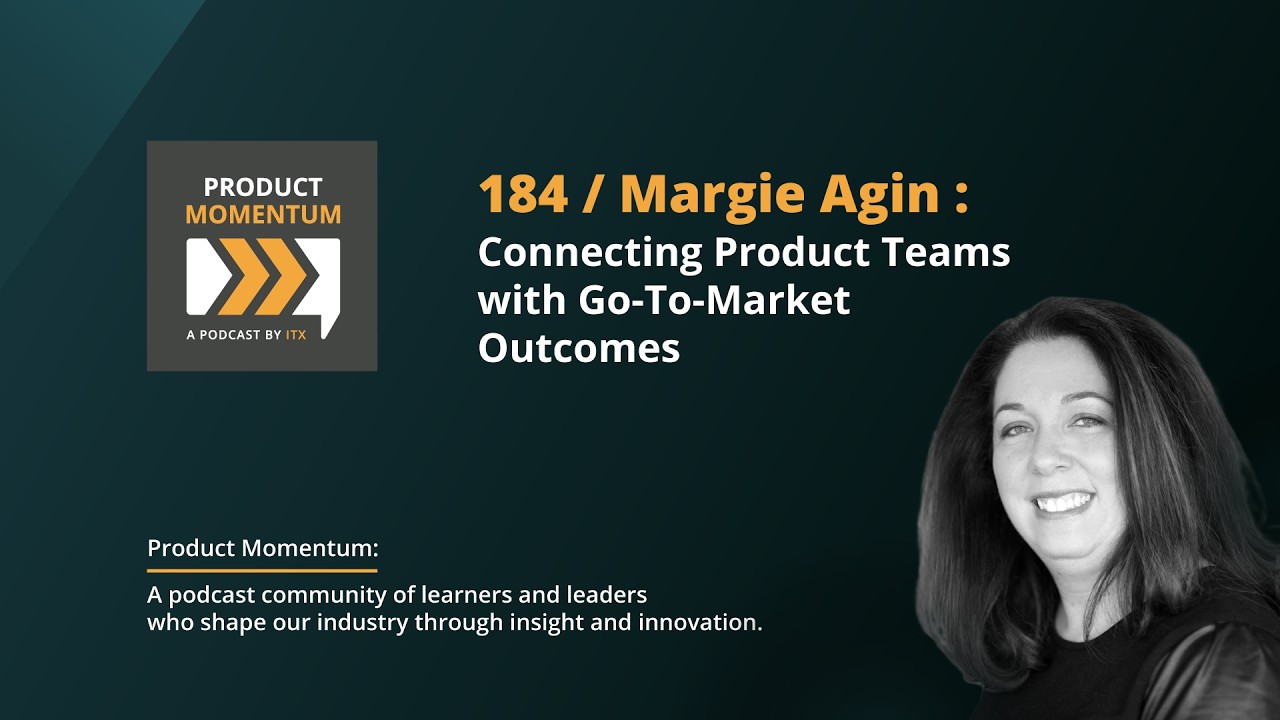
Margie Agin is a go-to-market advisor and practitioner for B2B tech scale-ups, particularly cybersecurity, IT, and OT. She translates complex technical topics into sales enablement tools and targeted campaigns so her clients get more meetings, demos, and sales.
Before founding Centerboard Marketing, Margie led demand generation efforts for the education technology company Blackboard and digital marketing for video conferencing leaders Tandberg and Cisco. She also taught marketing at Johns Hopkins University and wrote the book Brand Breakthrough, How to Go Beyond a Catchy Tagline to Build an Authentic, Influential and Sustainable Brand Personality.
Recommended Reading
Margie Agin is a seasoned go-to-market advisor for B2B technology scale-ups. She brings deep expertise across digital marketing, IT, and cybersecurity. As Founder and Chief Strategist of Centerboard Marketing as well as a former leader at companies like Cisco and Blackboard, she has built a career translating complex technical products into effective market strategies. In this episode (which marks her second visit to Product Momentum), Margie’s message is clear: go-to-market (GTM) is not a one-time event or a siloed function – it is an ongoing, cross-functional system that must connect product teams and broader business goals.
GTM: A Shared, Continuous Responsibility
It’s time to redefine go-to-market as a shared, continuous responsibility across teams, Margie says. Product managers in particular often feel disconnected because their fellow stakeholders in the organization misunderstand go-to-market as either a launch event or solely a sales function. Margie reframes GTM as “a coordinated cross-functional engine that spans product, marketing, sales, customer success, and even finance.” It’s a perspective that challenges product teams to actively engage in downstream outcomes and collaborate beyond traditional boundaries.
Business Context Drives Product Contribution
Fundamental to making this critical connection between product team and business outcomes is embracing the product’s fit within the broader business and portfolio strategy. Margie reiterates a message shared by recent guests that product managers need to look beyond their individual product scope and consider how their work contributes to company-wide goals like growth, positioning, and revenue. “Think about your product within the context of the business and how it fits into the whole portfolio,” Margie urges.
Know Your Targets: Clarity of Audience and Signals Improves Outcomes
Rather than trying to boil the ocean by targeting broad customer segments, teams should focus on specific attributes and behaviors that indicate a strong fit. Defining a precise ideal customer profile and identifying meaningful signals of readiness bring a level of clarity to your message that enables more effective messaging, prioritization, and sales efficiency. “It [your target] can’t just be like, everybody that has money,” Margie says. “It has to be somebody with a defined problem and defined attributes – beyond just industry or size of company.” For product leaders, this reinforces the need to deeply understand customer context and bring that insight into go-to-market planning.
In the Age of AI, a Strong Point of View Still Matters
Finally, even as AI accelerates execution, it does not – indeed, can not – replace the original thinking and nuanced messaging. Teams must still define what makes their product unique and why it matters. AI can enhance delivery, Margie adds, but it cannot generate true insight or perspective. “The difficult part is always what the difficult part has always been, which is figuring out what you have to contribute to the conversation that is unique.”
Margie Agin, in her own words:
[04:23] When I think of go-to-market, I think one of the most important aspects is that it is connected across different teams.
[08:22] Go-to-market is all about connecting the strategy to the execution to make sure everyone is on point with the strategy.
[08:53] Product teams need to think about how their product fits into the context of the organization’s whole portfolio.
[11:30] As a company matures, its go-to-market strategy lands in one of three buckets: problem-market fit, product-market fit, and platform-market fit.
[19:29] We can’t try to boil the ocean and sell to everybody, right? Target customers can’t be ‘everybody who has money.’ Customers have to have a defined problem and some defined attributes, beyond just industry or size of company.
[23:58] That type of deep, nuanced thinking…that human work…I don’t think at this point, is something that is solved by AI.
[26:40] AI can execute a lot of work on your behalf, but only you know what ultimately you want the result to be.

Andrew Knoblauch leads Sales, Partnerships, and Acquisitions at ITX. He believes the best technology partnerships start with genuine relationships, and that understanding a business deeply is what turns a software engagement into lasting value. Andrew connects organizations with technologists and product leaders while remaining invested in delivering strong business outcomes.
Podcast: Play in new window | Download
PRE-ROLL
Andrew Knoblauch [00:00:09] Margie, I wanted to talk about our first question about connectedness. I’m curious, why do product teams often feel so disconnected to go-to-market outcomes?
Margie Agin [00:00:20] Well, I think part of the answer to that kind of rests in how people think about what go-to-market even is. Some people think of go-go-to market as a one-time project. Maybe you’re just going to launch one product out into the market, right? And then you’ve gone to market and that’s it. Some people just think of it as sales, right, as the people that are carrying the and carrying the quota. When I think of Go-To-Market, I think one of the most important aspects is that it is connected across different teams. It’s a joint cross-functional engine, not a one-time project, but an ongoing system that involves marketing, sales, product, customer success, and also finance. So everybody has a role to play, and product is an important team member as part of functional group.
Sean Murray [00:01:17] For those of us that are listening that have kind of like limited experience in the go-to-market operating model, before you start investing in kind of marketing and sales execution, what are the core things that you need in order to have success?
Margie Agin [00:01:30] Yeah, well, we kind of hit on started talking about that. We were just talking about personas, you know, and understanding your audience. I always start there, right. And even before you get to the people within the organization, really thinking about the type of organization that’s going to be the best fit that, and then what the problems that those organizations.
Sean Murray [00:01:52] How can product leaders help shape messaging that’s… And not your near.
Margie Agin [00:01:59] Yeah, well, I mean, I’ll go back to really understanding what your customers are trying to accomplish. Not just their jobs to be done, but their business goals, the context that they live in, recognizing how hard it is for them to change. And your solution and your messaging around the solution has to be really compelling to get people to stick their neck out and take a risk.
EPISODE 184 W/MARGIE AGIN
Sean Murray [00:02:33] We had two guests today. We had Andrew, but we also had Margie Agen with us. Margie talked to us a ton about go-to-market strategy and the connection to product and business goals. It was an amazing episode. Andrew, what are your takeaways?
Andrew Knoblauch [00:02:46] I love the conversation. So much fun. The two things that I stuck out with, with me were the connectedness. How you take a product person and connect them to the go-to-market outcomes. And then later on the episode, we talked about the importance of having a really strong, distinct point. I loved it. Yeah. Got to have a point. Right? This is a great episode.
Sean Murray [00:03:14] Hi everybody, we are here today with Margie Egan. She is a go-to-market advisor and practitioner for B2B tech scale-ups, particularly cybersecurity, IT, and OT. She translates complex technical topics into sales enablement tools and targeted campaigns so her clients can get more meetings, demos, and sales. Before founding Center Board Marketing, Margie led a dynamic generation efforts. For the education technology company Blackboard and digital marketing for video conferencing leaders Tanberg and Cisco. She also taught marketing at Johns Hopkins University and wrote the book, Brand Breakthrough, How to Go Beyond a Catchy Tagline to Build Authentic, Influential and Sustainable Brand Personality. Thank you so much for being here today.
Margie Agin [00:03:59] Thanks for having me.
Sean Murray [00:04:01] We also have a special co-host today, Andrew Knoblauch, ITX’s Director of Sales, is with us today. We’re really excited to have you, Andrew, and you’re gonna kick us off today.
Andrew Knoblauch [00:04:11] Sean, yeah, good to be here. And Margie, I wanted to talk about our first question about connectedness. I’m curious, why do product teams often feel so disconnected to go-to-market outcomes?
Margie Agin [00:04:23] Well, I think part of the answer to that kind of rests in how people think about what go-to-market even is. I think if we ask the people on this screen, or we went out to 10 different people, we would get 10 different answers of what people think the term go-to-market refers to. So maybe just for one second, I’ll tell you how I think of go to-market. And as part of that, I’ll answer your question about why different teams. Product and others maybe feel disconnected from it. I think that’s because most people think, or some people think of go-to-market as a one-time project. Maybe you’re just going to launch one product out into the market, right? And then you’ve gone to market and that’s it. So some people thing of it that way. Some people think go-go-to market just as sales, right, as the people that carrying the bag and carrying the quota. And so they don’t see themselves in that definition. And when I think of go-to-market, I think one of the most important aspects is that it is connected across different teams. It’s a joint cross-functional engine, not a one-time project, but an ongoing system that involves marketing, sales, product, customer success, and also finance. So everybody has a role to play, and product is an important team member as part of that cross-functional group.
Andrew Knoblauch [00:05:56] You make those, you know, you mentioned marketing, finance, sales, seemingly those could be viewed as stakeholders, but how do you make them partners to the go-to-market team, the go-to-market outcomes?
Margie Agin [00:06:08] Yeah, I mean, that’s the million-dollar question, right? Is when you’ve got a cross-functional team, who’s the owner? Because if everybody has a stake in it, but there is no actual owner, then sometimes it’s really difficult to get, if you have a difference of opinion, or you just need to, they don’t have an outside point of view that is not biased or weighted towards one of those cross-functional areas, it can be tricky. So the most successful cross-functional go-to-market teams that I have seen. Are typically run by, let’s say not run, but owned by the CEO or the president of a company. Doesn’t mean that they’re in the weeds in every decision, but they have kind of oversight and ownership because they’re really, we think about it the only one, maybe there’s a chief operating officer, but generally that’s the only who sort of can balance across all of those different teams.
Sean Murray [00:07:03] That’s really interesting to me. I, I was surprised when you said that the CEO is like, is like is the best quarterback there. What are the behaviors that they exhibit in that role that makes them the best to carry that out?
Margie Agin [00:07:16] So, I think, and I kind of hesitated when I said run versus own, right, because you don’t want your CEO waking up in the middle of the night saying, you know, why aren’t we ranking for this keyword, right? We don’t, we don’t them saying, add this feature to the roadmap. We don’t want them totally in the weeds. But ideally, they can set a strategy for the entire company when you’re looking and go-to-market, really it all stems from. What are your business goals, right? You, how much do you wanna grow in the next year? Where do you think you’re gonna grow the most? Right? What are you gonna, how are you going to make decisions? How to prioritize what you’re going to do and not do. And probably everybody at that table has a slightly different perception of the answer to those questions, right. And they all come with their own data in their own, you know, their own dashboard. And if Warty’s is, you now, the loudest in the room. And the others aren’t listened to, then the decisions that you make might be skewed in one direction or another without considering all the downstream impacts. So ideally, the person who’s the owner of that team is the one who’s able to listen to all of the inputs, but then connect the strategy to execution and make sure everyone understands and is on point with the strategy.
Sean Murray [00:08:38] Is that the, is that, we talked in our, in our recall for this, we talked about kind of the business context. So what is that business context? Everybody should understand every product manager should really understand when approaching, you know, when, when approaching this go-to-market subject.
Margie Agin [00:08:53] So if you’re sitting within the product team, then you’re a product manager. That could mean, in some companies, it might mean that there’s only one product, right? And so you essentially are the voice of the entire product organization, right. In other companies, you may be one product manager among six or 20 or 30, and in which case, to you, your product is the whole world. So especially in that case. Think about the business context is to think about your product and how it fits into the whole portfolio. I don’t know, what are the, do you have specific goals? Does the organization have specific growth goals, sales goals, usage goals, positioning goals for your product? Maybe it’s a beachhead product, right? It’s like the one that people buy first to help the company get a foot in the door. Or maybe it. And add on to another product or it’s always sold with something else, or maybe it’s the one that comes in late in the game. So understanding the context of where you fit in the overall portfolio is important because ultimately you’re giving guidance to the sales, assuming it’s a sales led organization. Or even to the marketing team of how much effort they’re gonna put into your product versus the other products and how they’re going to explain how this product fits into the overall portfolio, the overall company story, the overall narrative. So that, I think, is the most important thing from a product manager perspective is figuring out if the company has specific goals for your product and if they don’t, why not? And who is responsible for setting those, how do those get set? So even asking the question, right, if you’re not told that, even asking that question and bringing that information and the perspective to the table, maybe something that a product manager can do as they sort of managed up to those around them.
Andrew Knoblauch [00:10:59] Really great. Yeah, there’s there’s the again, that’s the connectedness theme. There’s a lot you mentioned before, there’s so many people involved, stakeholders and team members as you go-to-market, but also how you go market depends a lot on your company size, where you are in. Yeah. Already level. And I guess I’d love to hear more about, you know, we talked a bit about the the maturity stages that you use and how they differ. And through the lens of What does a product manager need to know about those three stages? I’d love to hear more about that.
Margie Agin [00:11:30] Yeah, so you could think of companies in their go-to-market kind of maturity as maybe three main, they might fall into one of three main buckets. And there’s, you know, there’s nuances among all of these buckets, but the three main bucket, we’ll call the first one problem market fit, right? Then we have product market fit which is a term a lot of people use to be like, yeah, we finally, we’ve hit it. That’s our goal. And then ultimately, there’s platform market fit. So there’s some nuances among these different three areas. So let’s take problem market fit, in this kind of example, you’re still, you’re maybe a startup, right? Or you’re a small business, you’re kind of still in search of your big idea. You’re testing out a lot of things. You’re still. In early days and so you might not know exactly who your ideal customer is at this point, right, because you’re still pressure testing different groups within the organization. Your product, you may be more open to customization with your first sort of set of design partners. You actually need a lot of agility and flexibility at this stage to be able to change and apt on a dime, and it might be okay if your founder. You know, has one story that he tells to one prospect, and then different story that he’s telling you a different prospect. And he comes back to the shop and says, okay, guys, now we have to make this because we just got this big bank as a company and these are the things that they want. So that’s fine when you’re in problem market fit. As you grow at the point at which you then, for example, have multiple salespeople, the founder is not in every conversation. And you need to start scaling because maybe you just got a bunch of funding and now we’re, you know, we want to grow faster, that agility is going to kill you. You can’t be like changing the story all the time, changing the pricing, changing, the product specs, changing the, you know the packaging, all these things. So we need to have in product market fit, you’re ideally selling the same thing to the same people in the same way. That struggle point where companies have one foot in the old world, but yet they’re trying to move on to the next world, that’s where there’s a lot of conflict and friction. Because there may be some behaviors still that are appropriate for that first stage of maturity, but just getting in the way of growth when you need to become more scalable.
Andrew Knoblauch [00:14:19] In my head, I’m stuck. I’m a huge West Wing television show nerd, and there’s this whole thing at the end of season seven. Now this is post-Sorkin era, so don’t judge it, but there’s this whole thing where there’s, this romance to campaigning, right? There’s this beautiful romance on the ground campaigning. But then you go to govern and it’s meat and potatoes time. You know, it’s like grinded out time. And I’m feeling a little bit of that as you talk about product and we haven’t even gotten to platform yet.
Margie Agin [00:14:48] Yeah, I mean some people love that first stage and and and some companies stay there for a long time and actually That’s I mean god love them, right? Because it’s chaos, but they love it and would rather stay in that period of time for a Long time many of the companies that I work with who have gotten like a series b funding and you know They’ve got growth expectations Need to change because because of that so they have to start building systems Right, now we have to start actually making something that is repeatable and more predictable and that other people can execute other than the founding team. Right, so you have to give up some agility and power to be able to grow. So that’s, some people like that middle space. And then the third space, the platform market fit. At that point, not pit, at that point you’re. A lot of your growth, you’re already mature, you’ve already been in the market a while, so a lot of growth is really about expanding and it’s less about net new logos and more about expanding your base and cross selling and making sure you have retention. Net revenue retention becomes a much more important metric to you at that point. So just the metrics that you use, the motions that you used, the way that you put the prioritization tends to shift. At that point, and that’s when companies start adding on, they start thinking about long-term margin and long- term relationship and renewal.
Sean Murray [00:16:23] I’ve worked, so for me, my background is really large enterprise companies, right? I’ve only worked in one smaller, more nimble company in my time. I love the connections that you, that what you’re talking about has to something that we preach, which is the product life cycle. And that’s kind of easier if you’re in kind of, that’s easier to understand if you were kind of in that one, one product, I’m selling this one product and I’m trying to grow this, this product market share, right. When you’re in the enterprise game, it’s just So how does somebody change their mindset going from, all right, I know how to do this with one product, but now I’m working with an enterprise level platform with multiple offerings housed inside of it. How do I make the jump?
Margie Agin [00:17:09] Yeah, not gonna lie, that’s really, really difficult, right? I mean, yeah, because at that point, you’ve got different products in different stages. So you’re asking questions like, do they all have the same customer profile? Like, could be different buyers, different personas, different users, different use cases. If that’s the case, then ultimately you have different market, go-to-market motions, right. They recently have to run this sort of. Almost separate plays. The way that you market to people is going to be specific based on those decisions. And the way that the sales team is going to be talking about the product is going be different based on those decisions, so I think taking a really, really hard look at whether the buyer and the user are the same. If they are, then it’s much easier to package those things together and talk about them in one conversation, but if they’re very different, then. You sort of end up with like too many SWAT teams.
Sean Murray [00:18:13] I’ve been in that experience before where the buyer is oftentimes a single people or a small group of people, right? But the majority of your users are people whose sentiment is really going to drive your retention, right. So I like how kind of describing there like ultimately like you really need to know your segments and then you get into when you get into that larger platform game.
Margie Agin [00:18:36] It can’t just be like, security decision maker. I do a lot of cybersecurity work, right? And if you have a persona that’s like security decision-maker, maybe that’s the ultimate check signer, but really underneath that, you’ve got the architect, you know, you’re got the SOC guy, you got the person in charge of what’s more IT operations, so Really thinking about the nuances of this and then sort of mapping that across the portfolio is an important step
Sean Murray [00:19:12] All right, so for those of us that are listening that have kind of like limited experience in the go-to-market operating model, before you start investing in kind of marketing and sales execution, what are the core things that you need in order to have success?
Margie Agin [00:19:29] Yeah, well, we kind of hit on started talking about that when we were just talking about personas, you know, and understanding your audience, I always start there. Right. And it even before you get to the people within the organization, really thinking about the type of organization that’s going to be the best than what the problems that those organizations have. So getting really immersed in understanding who you think, it might be a hypothesis at this point, right, which you’re gonna test as you go along. But based on the initial conversations that you’ve had when you’re starting your research and you’re building your idea, who do you really think is gonna be your best fit customer? And not trying to boil the ocean and sell to everybody. It can’t just be like, everybody that has money, it has to be somebody that has a defined problem and some defined attributes, even beyond just industry or size of company. The more specific you can be, the more you’re going to really deeply connect with their problems and their messaging is going to resonate and your products are going to be truly relevant to solving those problems. So at least starting with a hypothesis and then gathering that data and that feedback to see how close you are and adjusting. That’s where I would always start.
Sean Murray [00:20:56] Andrew, how, as the director of sales, how did you feel about Don’ts Just Sell to everybody that has money?
Andrew Knoblauch [00:21:04] That’s a temptation. It’s a tough one, but no, you’re exactly right. Like you even, even to the level of what are the things they might care about. That sort of discussion, you probably can’t plug that into your normal targeting tools and use it, but as you get into conversations with people on the other end, the users of your product or the buyers from your business, you are listening for those signals. So I really love that point. Having those, having those deeper discussions.
Margie Agin [00:21:28] Yeah. And I mean, to make your job easier, right, to make the sales team’s job easier. We’ve got to give you some direction, some prioritization. We can’t just say, you know, you’re responsible for the Midwest. We can, but you’re a responsible for in the Midwest go. You need, you need some signals or some attributes. So looking often find that companies will stop at location and industry, maybe company size. And that is a good place to start, that’s fine. But if I also said, oh, the companies that also have this technology, right, that might mean that they’re mature or that we integrate well with it, or something about the fact that they have this tech stack, or it could be they just hired a person with a certain title, or someone with a certainly title, they just put out a job posting because they have a gap there. Cheap data officer is a really interesting one. Company suddenly is looking for a cheap data officer, that means they’re now taking data seriously, right? So if you have a data-oriented product, now you’re maybe having an in that you didn’t have before. So we’re looking for those attributes and also signals of readiness, that something has changed in their environment. A lot of times, this is publicly available information. We just have to know where to go. Capture those signals and then say, yeah, if I have a list instead of 10,000 companies, now I have the list of like my top 100 and maybe I even have my list of my top 20. So it’s really trying to make Andrew’s job more efficient.
Andrew Knoblauch [00:23:12] I certainly appreciate that. Well, the time says 3 26 PM Eastern. That means we’ve been on this call since three o’clock Eastern and we haven’t brought up AI yet. So I’m so proud of it because so far with AI, but now we have to. So we are.
Sean Murray [00:23:29] Contractually obligated to talk about AI, so Javi in post-edit, I hope you can make that a real check mark. We did it.
Andrew Knoblauch [00:23:35] Yeah, so like we talked about this in our prep call, there’s obviously it makes content creation faster. It raises the bar. It makes it harder to be original. And you said something that I wrote down at the prep call which was you have to have a point. You have to a point of view no matter what AI can’t take away the importance of having a point-of-view. Can you expand on that?
Margie Agin [00:23:58] Yeah, well, I mean, I think AI is making the execution part of all of our jobs easier, faster, and exposing things to us that we didn’t know before, think about before, but it definitely has its benefits. I mean even where you were talking about before like we were talking the signals, those might have been things that you were manually looking for before, or like you intuitively knew that, oh, so-and-so just moved to another company, I should probably reach out to him AI can now automate a lot of that stuff for you, but you still have to kind of do the thinking to know what those signals are. And similarly in the content world or in the messaging world when it comes to a point of view, AI can make expressing that point of view faster and sharper. I mean I’m a writer at heart and I’m using AI to you know, to make my writing sharper and tighter and, you know sound like me or sound like a client of mine, right? In ways that the execution is much faster. But the difficult part is always what the difficult part was, which is figuring out what you have to contribute to the conversation that is unique, that people haven’t heard a million times before, you know that makes people think, Maybe exposes a gap that they didn’t know was there. Maybe explains why you started the company in the first place or why this approach that you’re taking with this product is actually different, better, faster than something that they’ve been doing traditionally and why it matters. So that type of deep thinking is, I don’t think at this point is something that is solved by AI. It comes from a lot listening to customers and talking with the team and really thinking about like, what are we contributing to this world where we’re not just rehashing what’s already out there? And can we be a little provocative, right? If we want to be a bit disruptive or a little provocative, then let’s be loud and proud about it. Let’s figure out what we really stand for. And that still takes some work that I don’t, this human work that AI is not replacing us with.
Sean Murray [00:26:21] You know, one of the questions that I was going to ask was what’s, you know, we, I’m, I imagine there’s something a lot that’s changed with AI, but what hasn’t changed. And I think you really touched on that there in terms of, you’ve still got to have something that’s unique. You’ve got to has something that, that matters. So anything else fundamentally that hasn’t changed?
Margie Agin [00:26:40] Knowing what good looks like, like having kind of an exemplar, that’s a word that my kid’s school uses a lot, and it’s like, this is the sample, it’s our best case. So when you write your report or you do your work, you write your code or you craft your messaging, this what a good example looks like. And in that sense, you need to have sort of that toolkit of examples to feed the AI and to train the AI. And then the AI can execute a lot of it on your behalf, but only you know what ultimately you want, you want the result to be. And only you also like the workflow that you want to follow, the people that you wanna be involved, the decision-making process you wanna follow. You know, the review process, the alignment across all of these cross-functional people that we were talking about before, like AI can surface the information easily so that they can all see the same thing and have the one source of truth, but being in the room around the table and debating it and looking at it from different angles and agreeing or agreeing to disagree but move forward anyway, right, all this stuff is human stuff that is really where the hard work lies.
Sean Murray [00:28:08] This is good. This is the this is the million dollar.
Margie Agin [00:28:12] I think it’s a good thing for humans, right? I set the stage of how hard everything is, but like we still have a place, right. We’re not going away yet. So this is the part that we have to get better and better at is the alignment and the decision-making because the other parts of our job, obviously, right, are gonna be easier to outsource.
Sean Murray [00:28:37] All right, so for our last, like, million-dollar question, right, how can product leaders help shape messaging that’s direct, unique, and not generic? What are, like just some easy tips somebody could take away today and go, hey, I know the conversation I want to have with marketing and sales next based on the next thing that I’ve been helping to market.
Margie Agin [00:28:57] Yeah, well, I mean, I’ll go back to really understanding what your customers are trying to accomplish. Not just their jobs to be done, but their business goals, the context that they live in, recognizing how hard it is for them to change. And your solution and your messaging around the solution has to be really compelling to get people to stick their neck out and take a risk. I honestly find this more lately. I’d be curious if you guys feel this too, but I’ve had my business 13 years and I’ve been in marketing 30 plus and you always talk about driving urgency and all that, but I feel like lately it’s really hard to get people to change. There’s a lot of uncertainty. So I think just recognizing that and thinking, is this, have we done enough and have we told a good story that it’s worth the pain of having to change? How do we express why it’s really worth it?
Sean Murray [00:30:00] With our experience with one of our customers right now, it’s a platform for small businesses, right? So when you think about like the price of change, right, we’re talking about not only are you changing something for somebody who has to administer this product, but you’re also changing this one thing for somebody that wears a lot of different hats, because in the small business world, nobody is one thing, right. So I think that price of, that I really like, that would be my first, I’m gonna go to takeaways next. But my first thing is really understand the pain of the change that you might be introducing. Is it worth it? I love that. That’s an amazing takeaway. Here are my other ones from today. Go-to-market is an extension of business goals. We love starting with business goals, right? It’s vision and then your objectives. What are your time-bound business goals? I learned something brand new today. I had no idea what you were talking about when you said beachhead product. And I learned that I got to learn some lingo, right? So learn your go-to-market lingo. That’s a takeaway for me. Know your targets. So what is your ideal customer profile? And if you’re in the enterprise game, what are those segments, right. It might not be one ICP. It might be multiple, depending on the product mix that you think is most commonly available, right, don’t just sell to everyone that has money. Andrew took that one to heart. I was proud of his response there. Next job and put you on the spot. You have to have a point. I think that’s, I feel like almost every episode since we interviewed Phil Hornby, we’ve been referring to his like, we’re paid to have an opinion. And I think, that that’s like a direct corollary is, not only do you have to an opinion, but you also have to a point, right? Love it. And then, know what you have that’s unique, I think is the last thing that I, the last big takeaway that I have. I think a lot of people know maybe the problem that you solve, right, but maybe there’s. Other market entrants that have, that solve the same problem, right? So how are you going to defend your position? What do you have that’s unique? Thank you so much for being here today. Well, this is your second time on product momentum, right? Yeah, that’s right. Second time.
Margie Agin [00:32:08] 5 years ago, yeah.
Sean Murray [00:32:09] I love this topic because we’ve only had two or three other people that come to us and talk about go-to-market and how we need to connect at the product and how important it is. Right. And you can’t just throw things over the wall at sales. You have to have a plan and it’s really important to know that upfront. So how do we shift that left in our SDLC? So thank you so much for being here today and talking about this amazing topic with us.
Margie Agin [00:32:33] Yeah, it was a pleasure, a lot of fun. Thanks so much.