Listen
Podcast: Play in new window | Download
About


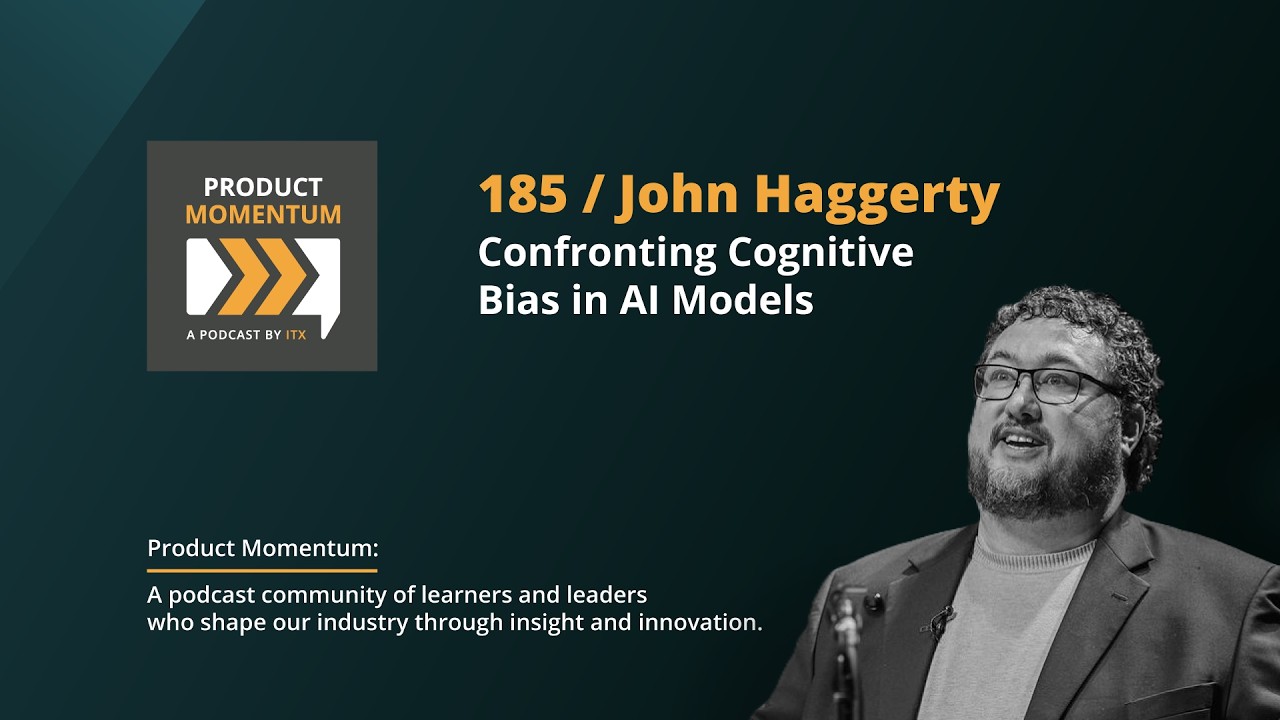
John Haggerty is a product leader with 25 years of experience building and scaling digital products at companies including Datasite, Prodege, and Highway.AI. He is the co-founder and CEO of BiasHawk, a cognitive bias monitoring platform that applies behavioral psychology frameworks to evaluate how LLMs make decisions. BiasHawk occupies a distinct space between demographic fairness auditing and generic AI observability, focusing on the decision-quality patterns that determine whether AI can be trusted in high-stakes workflows.
John also runs The PM Insider, a resource for product management professionals, and serves as an adjunct professor at Case Western Reserve University, where he teaches an MBA course on Building AI Products. He is based in South Minneapolis.
Recommended Reading
The PM Insider, from John Haggerty.
John Haggerty brings more than 25 years of product leadership experience at companies like Datasite, Prodege, and Highway.ai. As co-founder and CEO of BiasHawk, John leverages his expertise in product management, behavioral psychology, and AI to develop an AI-powered platform that acts like a behavioral clinical psychologist to diagnose cognitive bias and heuristics in other AI models.
In this episode of Product Momentum, John joins Sean and Dan to explore how AI is reshaping product work while also introducing new risks. John’s message is clear: as AI accelerates execution, product leaders must confront the invisible risks that come with AI and double down on critical thinking, context, and judgment to deliver quality decisionmaking.
AI as an Accelerator, Not a Replacement
AI is dramatically compressing the time required to execute product work. Tasks that once took months can now be completed in hours. As we discover every day, speed does not eliminate the need for thoughtful product management. John argues that it merely shifts where product managers can and should focus their energy.
“As AI expedites the execution process,” John says, “it also allows us to automate the areas of our work where we really need to be involved in cognitive thinking, reasoning, and creativity.”
The Hidden Risk: Bias in AI Decision-Making
Large language models inherit the same cognitive biases found in human thinking, John adds. These biases influence not just outputs, but the reasoning behind decisions we make.
“It’s not what the decision is or what the output is, it’s more about how the AI model arrived at it.” This distinction is critical for product teams. Without understanding how AI arrives at conclusions, teams risk introducing flawed logic into their products, especially in high-stakes areas like hiring, healthcare, and financial management.
Monitoring AI: A New Responsibility for Product Teams
To address these challenges, John launched BiasHawk – an AI platform designed to monitor and evaluate AI systems for cognitive bias. The goal is not just testing outputs, but continuously assessing decision quality over time.
“We all understand that these systems are designed to evolve. They’re designed to change. They’re designed to drift. But who’s monitoring that to make sure that decision quality stays where it’s supposed to be.” As AI continues to evolve, the role of the product manager becomes even more critical — not less so. Execution may be faster, but judgment, context, and ethical responsibility remain firmly within our human domain.
John Haggerty, in his own words:
- [06:50] AI is compressing execution time, allowing us to automate some of the tasks that we do as product professionals: cognitive thinking, reasoning, creativity.
- [10:22] There’re lots of really good AI tools out there right now, but what there isn’t out there is anything that tests the fairness of our decisionmaking.
- [16:04] Great. You’ve used AI to improve productivity by 20%. But what happens when that breaks? What if there’s bias and heuristics in these LLMs. Who’s catching that?
- [17:55] Critical AI systems have the same blind spots, the same bad habits, that we as humans have. And why not? They’re built off of the flawed content we created.
- [21:41] I don’t think a LLM could ever get depressed. But we have standard behavioral assessments that we could administer to an LLM — to find out where it falls with these biases and with the decision-making process it’s using.
- [27:40] As humans, we’re make mistakes. Because AIs are built on what we know, those same mistakes are being repeated. Now we have AI learning from AI, and those mistakes are being amplified.
- [30:59] The ‘why’ will always need to come from a human. At the end of it all, that’s what Product is.
Podcast: Play in new window | Download
Dan Sharp [00:00:09] You said something interesting there about using the AI tool and our intern, our genius in a box for supporting, especially product discovery activities. I’m wondering what your take on the idea that the AI models are kind of trained to kind of come up with solutions that are down the middle.
John Haggerty [00:00:27] Well, first, I will say they are not giving you things down the middle, which is part of the whole reason I built BiasHawk. So yeah, they’re really good tools out there right now for when you’re looking at LLMs and testing them for say demographic information and demographic groups. But what there isn’t out there, what I discovered over the last couple of years is there isn’t anything out there that actually tests the fairness of the decision making, the cognitive decision making behind the scenes of the LLM. Not what it decided, but how it decided. How it made a decision.
Sean Murray [00:01:02] We you are one of the first people that we’ve had on this like hey You also have to be very aware of these bias of the bias that exists within these systems Give us sure just give us like practical examples of like a bias that exist within these
John Haggerty [00:01:15] So you know how, like when you ask Siri or Alexa for something, and sometimes that answer just feels a little off, even if you’re asking Claude or ChatGP anyway, that it like, it gets stuck on an idea and then tells you something confidently that turns out to be completely wrong. Now I want you to imagine companies using the same kind of generative non-deterministic AI to decide whether they approve your loan. How they are handling customer service complaints, or whether this is a good job applicant. Those systems have the same blind spots, the same bad habits that we as humans have, because it’s built off of our content, what we’ve created. They can be stubborn, they can be swayed by the first thing they hear, they can double down on wrong answers. What I’ve been working on for the last two and a half years, is what I would call a quality inspector for those AI systems.
Dan Sharp [00:02:15] Right, we were on the test of the model and we find that maybe the bias is drifting outside of what we would consider acceptable. What do we do then?
John Haggerty [00:02:24] So let’s say you’ve built your customer service chatbot on OpenAI. We’ll just use that as an example. So you’ve used ChatGPT, OpenAI’s API, to make calls, and you see the responses. Well, you have a standard training model there, and how you do your prompt, what you’ve build up, and also the parameters and hyperparameters around which you are making those calls. You are you set this monitor in place you start seeing the drift and you start seeing changes that’s when you can go back and make changes to your model to your to your hyperparameters to adjust how the model is called that’s where you may need to retrain the the subset you have or synthetic data uh there’s lots of ways to go about making those changes.
Sean Murray [00:03:14] And I think that we were earlier talking about how, you know, where does product become more valuable? Right? We cannot pass off judgment to the AI. That is where like human intrinsic value is gonna be the most important moving forward regardless of the role that you’re in.
John Haggerty [00:03:30] The why will always need to come from a human, because it needs to be able to pull together everything that’s being said, everything that is being not said, what’s between the lines, what was done, how it was done. Not just the factual side of it, but the emotional side of it to what will resonate and the storytelling around it. Um, so that the decisions around why will need to come from a human. And at the end of it, that’s what product is.
Dan Sharp [00:04:19] Sean, we just had a really awesome, thought-provoking conversation withJohn Haggerty. Love to hear what you got out of it. There are a lot of podcasts about AI right now.
Sean Murray [00:04:30] But there’s not a lot of podcasts that are talking about this topic at all SoJohn’s been working on understanding the cognitive bias that exists within Exists within AI models today. He’s got a product that he’s working on to help surface them in a deterministic way I think for this episode you’re gonna need a couple of things. You need a chair and a thesaurus Maybe a dictionary, right and some patience and maybe you’re going to have to rewind a few times because what we talk about Is really unique and I think this is gonna be a great one for everybody.
Dan Sharp [00:05:00] Yeah. Really loveJohn’s excitement and enthusiasm for really diving into a challenging area of AI. So let’s do it. Let’s go. All right. Joining us on the pod isJohn Haggerty. We’re really excited to have you back.John is a product leader with 25 years of experience. He’s been scaling digital products companies such as Datasite, Prodege, Highway.ai. He runs The PM Insider. He is an entrepreneur with a company that he has co-founded and is running called BiasHawk, which is a cognitive bias monitoring platform. Applying behavioral psychology frameworks to evaluate LLMs, which I’m really going to talk to you about today. He is also a trainer and teacher. He conducts the MBA coursework at Case Western Reserve. I had the pleasure of sitting in a workshop with him a couple of years ago, which I think was the first time that anybody taught me about what prompting an AI was. So, John’s the real deal. Super happy to have you back with us.
John Haggerty [00:06:09] Thanks, Daniel. Sean, so glad to be here chatting with you guys again. This will be a fun conversation today.
Sean Murray [00:06:14] I’m excited to hear about this tool you’ve built.
John Haggerty [00:06:17] Or do you want to jump in?
Dan Sharp [00:06:18] Yeah, let’s, let start with, you know, everywhere we look, hey, a new AI tool, AI is happening, developers are going to write code, build entire features before you’re done, you’re thinking about what even a story could be as product people, right? We’re getting inundated from all directions. How do we as product managers kind of find that time that we need to, to just be able to think. And evaluate and do good product work.
John Haggerty [00:06:50] Oh, how do we find the time? We don’t for Star Wars because product is a, you know, 120 hour a week job, we don’t get the time. What we do find is that AI is compressing that execution timing dramatically. And it’s allowing us to automate some of the tasks that we are doing as product professionals where we are operating like machines. And allowing us to automate and get into where we really need to be involved in cognitive thinking, in reasoning, in creative thoughts, adding context, all of those things come into play. It is also, you know, your, that time period between idea to shift, the expectation is shrink that going from, you know, used to be what years to quarters. To months, now it’s hours, if that, and so how do you actually take time to do the research, to do deep thinking, to do planning, to do customer interactions, and the market interactions, the market analysis, all those things that come into play, well, that’s where you can leverage AI to help you execute on that. I know, I have a funny story about your guys’s podcast, and I’m gonna use it here to highlight this. So, about a year ago… I was driving home from work and I’ve listened to your podcast in the car and I had that moment where when I told the story to some of my buddies, it’s like you’re a musician, you’re an artist and your song comes on the radio. So you guys were talking with someone and you quoted me in that episode and when I talk about using AIs as your intern and how you think about them as an intern. And so that’s the same here with product managers. You have an intern. You have a really smart intern. The other analogy is the genius locked in a room with no windows. So you have a real genius intern that can do a lot of research. Doesn’t understand context, doesn’t understand your business, doesn’t always know what’s honest, what’s truthful, what right, what wrong, what you really need. Use it. But… Got to verify. You got to give a context. You’ve got to give it understanding. You know, Daniel, when we were in that workshop a couple years ago, that was all about, well, how do you prompt? How do you engine? How do you build a prompt to do the work? We’ve worked that workshop delivered it last year. And it went from, you know, prompt, what I would say prompt engineering 101 to now it’s 200. And its context engineering. And then after that, it’s gonna be, well, how do you like super-meta-prompt and using LLMs versus each other, with each other and versus each to make sure that you’re getting the factual information and the best information and the results based off of what you need.
Dan Sharp [00:09:47] You said something interesting there about using the AI tool and our intern, our genius in a box for supporting, especially product discovery activities. And I’m wondering kind of what your take on the idea that the AI models are kind of trained to kind of come up with solutions that are down the middle, right? And then how right as product folks then, you know, if we’re using the tools, but they’re providing kind of down the road solutions, do we by you’ll kind of find the solutions that are more exceptional, right? That might have more traction. You’re going to be more delighting to users.
John Haggerty [00:10:22] Well, first, I will say they are not giving you things down the middle, which is part of the whole reason I built Biashawk. So you know, they’re really good tools out there right now for when you’re looking at LLMs and testing them for say demographic information and demographic groups. But what there isn’t out there, what I discovered over the last couple of years is there isn t anything out there that actually tests the fairness of the decision making, the cognitive decision making behind the scenes of the LLM. Not what it decided, but how it decided. How it made a decision. So that doesn’t, I would challenge that assumption. What the LLMs do, what they are good at is giving you beyond the blank page and using it for that, getting that first few lines on the page to get you started or giving you, one of the things I like doing is, hey, I need an idea for this, give me five, spits out five, and then I can take that and run with it. Okay, what if I do this, combine them, Put things together and go on the, you know, the other side of it. You know, one thing that’s really is awesome is just meta prompting. I go into Claude and I’m like, hey Claude, I’m working on this. How would I go about prompting for this idea? And it gives me an idea of how to prompt for it. Then I go over to chat GPT or perplexity or what we, you know. Or if I’ve got llama running somewhere or Gemini. And like, okay, here’s what I need, using what Claude gave me. In the people that take my course now, they get access to my perplexity project that I built, which is a product manager focused prompt library. You put in there what you want and it spits out a markdown file, usually somewhere between 90 to 115 rows. Or 15 lines of a prompt, really detailed process organization structured from a product manager, product management in mind and building up what you want, but you just tell it what you want to do and it will return you, hey, here’s a prompt you can use within any LOM to get that as a markdown file. So, when you think about how we go about doing our work… It’s finding the areas where you can, you can get that leg up from automating part of it and then is it, is it getting beyond that billing page? Is it the review and analysis? Is it that digestion of information? Is it, the repetitive tasks like going about and one of the things I think about is how we do market analysis or competitive research, just the scraping of that information, pulling it together. Doing that first high level digest of what that information looks like. It’s a great way to set up a, um, an energetic tool to go do that for you. Especially if it’s going to scrape the, um. The alt text, uh, because then you get behind the scenes of what the, uh you’ve competitors actually thinking versus what you think they’re thinking. Just, you know, great little things like that. You can find out, um you use it going in gentic versus doing it manually. You know, there’s, there there’s a lot of other ways that you can, you can leg up, but get, you know, when you get behind the blank page, when you get beyond that blank page using a tool and LLM, whatever you, you know, whatever your, your go-to is, you are going to then need to add context, you’re going to need to and understanding, you going to need to ad scope to it and you’re gonna need to verify it. So it’s just, it’s the starter or the aggregator. Or one of the other ways I like to use it is the mirror. Hey, here’s what I’ve created. Here’s what i’m thinking. This is where I’m at. Where am I wrong? What are the questions I’m going to get from engineering, from customer service, from QA, from legal and compliance, from finance? Ask me those questions. Create the FAQ for me from this so I have it. Those are great ways to put, you know, to use it as that mirror to look back at you. Okay, this is what I put together for my PRD. Why am I wrong? Where are my gaps? Point out to me my inconsistent thinking. So when you’re able to bring it back and to check yourself with it, it’s great ways like that. Problem is there’s, you No. Some cost fallacy and other biases that exist within these LLMs that they want, chat GPT, really good cheerleader of all your ideas. For it to tell you it’s a bad idea, that’s a real struggle. But there are ways to go about it with how you prompt and what you put in, how you get to review.
Sean Murray [00:15:12] You said something earlier about compressing tasks, which I agree at a high level that is going to, that is happening currently and will be an expected norm in the future, right? Think for product people, what it means for us is that we have to identify what becomes more valuable, right? Think the people that are making, when we see like C-suite executives making poor decisions today about their workforce, right, like, hey, we’re supposed to be 20% more efficient, So we need 20% less people, right? Do you need 20% less people or do you need that 20% of their time back to help reinvest into the business, right? Because I feel like the companies that are not making these drastic labor changes are actually gonna position themselves better in market because they’re actually going to have the resources available to come up with the future of that business, right, and help push that business forward.
John Haggerty [00:16:04] Yep, great. You’ve improved productivity by 20%. Okay, what happens when that breaks? What happens when it’s wrong? What happens with that underlying concept of what you are doing goes off the rails? What if there is, you know, we already know that there’s bias and heuristics that exist in these large language models. If that’s being built in to all the decisions all the processes being made Who’s catching it? Who’s there to look for? Who is there to monitor it? Yeah, we do all the, when we put these systems in place, we do the testing, we the vetting, we all the checks that go into place. But if we’re using non-deterministic evolutionary systems, who’s monitoring it? These systems are designed to evolve. They’re designed to change. They are designed to drift. Who is monitoring that? To making sure that the decision quality stays where it’s supposed to be.
Sean Murray [00:17:07] So I’m glad that I’m, glad that you pointed that out because this is where I want this, this is why I really wanted our conversation to go, right? Cause we’ve heard so much about how it’s easier to create now more than ever. But I think also because of the new speed of business, it’s never been more expensive to get something wrong, right. Because while you are fixing your mistake, the rest of the market is going to continue moving forward in front of you, right, so I guess I, let’s go down and learn more about. You know, we, you are one of the first people that we’ve had on this, like, Hey, you also have to be very aware of these bias of, of the bias that exists within these systems. Can you give us like an example? Well, give us five examples. Give us sure just gives us like practical examples of like a bias that exist within these systems.
John Haggerty [00:17:55] So you know how, like, when you ask Siri or Alexa for something, and sometimes that answer just feels a little off, even if you’re asking Claude or ChatGPT anyway, that it like, it gets stuck on an idea and then tells you something confidently that turns out to be completely wrong. Now I want you to imagine companies using the same kind of generative non-deterministic AI to decide whether they approve your loan. How they are handling customer service complaints, or whether this is a good job applicant. Those systems have the same blind spots, the same bad habits that we as humans have, because it’s built off of our, on our content, what we’ve created. They can be stubborn, they can be swayed by the first thing they hear, they can double down on wrong answers. What I’ve been working on for the last two and a half years, is what I would call a quality inspector for those AI systems. Before a company turns on their AI loose on real customers, we’ve created a tool that actually runs through a series of tests to see if it’s reasoning well. If it, what are those bad habits that are baked in? Where do they fall? How prevalent are they? How often do they come up? And then provide options for how to fix it. So, you know, like there’s lots of different cases, lots of options I could go into, but like That’s, in a nutshell, what you’re seeing. It’s the, what exists today. It has to be a simple question. Would you rather have, this is the level of questions like I’m talking about with these systems, when I talk about heuristics and biases. Would you’d rather have a surgery that has a 95% survival rate or a 5% fatality rate?
Sean Murray [00:19:44] I don’t have a good answer.
John Haggerty [00:19:45] The math is the same, right? Yeah, but which one would you rather have the doctor tell you? It’s a 95% survival rate, right Yeah, yeah, that’s just loss aversion. That’s all that is in our minds. It’s how how things are so These systems have those same type of things built into them Do we chase our losses with sunk cost fallacy? And how we go about that? Anchoring bias we always hear the other the first person that says a number loses in the negotiation Well these systems when you put a number in there, it’s gonna latch onto that That’s gonna become its anchor for how everything else is built around it Same thing comes over that first piece of information that first idea the first thing that comes in it’s going to glom onto that That is It’s not what the decision is or what that output is It’s how it got to it
Sean Murray [00:20:36] You, you mentioned, uh, you, you gave us a case earlier when we were talking about just trying to have one of these models agree that, or like tell you that your idea is bad, right? I thought I’d never, I had never thought of it that way before, but I don’t know if one, if one has ever told me that my idea was bad, it’s giving me direction on how to change, but it’s never said this was the wrong place to start.
John Haggerty [00:21:00] That’s the halo effect. It always thinks it’s a good idea. Someone once called ChatGPT like your overbearing aunt that just loves everything you do. Like that’s the way it comes across.
Dan Sharp [00:21:15] So, John, in the intro, we mentioned that you are co-founder, CEO of BiasHawk, and we’ll be discussing how the biases are being, you know, they get built in LLMs because LLMs are built by humans and were highly fallible. Really love to hear kind of what you’re doing with Bias Hawk and how you are, you’re kind of building out some of those tests to see how models are all of them over time.
John Haggerty [00:21:41] Yeah. So I guess I’ll get the Genesis story first before we go anywhere. So about two and a half years ago, late autumn of 2023, I was sitting in my doctor’s office and I was filling out my semiannual depression assessment. Um, one of those, you know, required, like, I think it’s a eight or 10 question, I know how, you’re a rate between zero to five, where you fall on these and fill them out. And I just had this like spark of inspiration. I was like, I don’t think a LLM could ever get depressed. But we have a lot of other standard behavioral assessments that we could administer to an LLM, find out where it falls with these biases, with these heuristics, with the decision-making process it’s using, and then track that longitudinally. These are non-deterministic evolutionary systems. You can’t do deterministic output-based testing. You can give it a standard set of data and then expect a standardized result out of it. That’s not how non-deterministic systems work. But you can test versus the process in how it makes a decision. So what we focused on is creating a platform that monitors these LLM powered platforms. It runs continuous automated testing right now against five core cognitive biases. I use Daniel Kahneman’s research in behavioral economics as the baseline for what we built out initially. So we’re looking at anchoring loss aversion. Confirmation bias, sunk costs, fallacy, and the availability heuristics. Right now, I’ve integrated with seven major LLM providers, but we have the option to integrate with kind of an open API call within the others. We built 60 bias test cases that are purpose-built for this. And then our testing accounts for the non-deterministic nature of those LLMs and does a deterministic analysis of their responses. So we can get statistically defensible results. So what I mean by that is we create a standard, we create the standard questionnaire. It does have some variability in how it asks the question and which questions it asks, sends that over to the LLM. The LLN will generate its non-deterministic response. That comes back and we use deterministic AI. So yes, it is AI on the end, but it is deterministic. So it is a decision for us that uses sentiment analysis and other machine learning text analysis to look at that response, looking for key themes, key words, phrasing, all those kinds of things to determine whether or not that bias is present and at what level. And then scores that and then tracks that score longitudinally over time to look for of CEMET.
Sean Murray [00:24:29] What are some of the most, what are some of the things that have stood out to you immediately, either that maybe confirmed some of the bias against the LMs that you already had, or some things that were just, knew that you didn’t expect from the results you got?
John Haggerty [00:24:43] Nothing I didn’t expect because it was about two plus years of research before we even started writing code on it. And I was doing manual testing before that of the systems myself. What I can say is, yes, it’s out there. All of these exist at different levels and different models have different prevalence of them. So there’s a different blend between the models.
Sean Murray [00:25:07] Okay, what are some of the good ones? Oh, sorry guidance
Dan Sharp [00:25:09] Yeah, so, right, we were on the test and model and we find that maybe the bias is drifting outside of what we would consider acceptable. What do we do then? Is that a choice where like, use another guy as a proper story, use another model? If it’s an internal tool, am I changing, like, you know, so look,
John Haggerty [00:25:27] So let’s say you’ve built your customer service. I mean, it’s a prime example. You built your Customer Service chatbot on, I’m gonna say OpenAI. We’ll just use that as an example. So you built it, you’re using ChatGPT, OpenAI’s API to make calls and you see the responses. Well, you have a standard training model there and how you do your prompt, what you’ve build up and also the parameters. And hyperparameters around which you’re making those calls. You are, you set this monitor in place, you start seeing the drift in it, you start to see changes. That’s when you can go back and make changes to your model, or to your hyperparameters to adjust how the model is called. You may also be seeing too many and over-dependent on certain problems. So you get that availability bias that comes into play with, based off the questions and what’s happening. That’s where you may need to retrain. The, the, the subset you have or synthetic data. There’s lots of ways to go about making those changes. And we, within our product, we actually create a list of, Hey, here’s some things you could do to help current to help solve for if you’re starting to see major drift or if it’s outside, if it is extremely prevalent.
Sean Murray [00:26:44] Broke from his concept of this idea. I think this idea as, as I’ve tried to expose myself to more models and more use cases, right? So I’m trying to actually build some of my own applications, right. I couldn’t spell Ubuntu two months ago and now I’ve got an instance running, right, running an app that I’m, that I am hoping to use with friends, you know, in the upcoming, um, and you know, and the upcoming a couple of seasons just to get people, just to give people using something and testing something that I’ve built, this is like a concept that I think is Super unique because it’s beyond just like here go and use this thing and trust it, right? And I think that right now especially with like the direction that we’re getting from the executive suite, right which is do AI You said something in our initial you said something that our initial call about this episode where you said that you keep hearing This phrase well ethics aside Right. Yes. Why do we keep hearing? Why do you keep here in that phrase?
John Haggerty [00:27:40] That’s a really good question because, you know, they’re there. We talked about where I keep hearing different podcasts, different keynotes, Ted X, whatever it is, the different speakers say, and they’ll talk about AI and they’ll talk about the word and they’re talking with, and then the phrase always comes up now, ethics aside, this is what it’s doing. This is why we’re doing it. This is how it works. Blah, blah, blah. And to the point, my co-founder and I are looking at starting our own podcast, literally called AI ethics or ethics aside. Um, sorry, two words, yeah, two words. And to talk about these, this topic. I think it is because it becomes a very difficult conversation and difficult things. We have avoidance tendency, so we’ll avoid it. You know, you do have the demographic bias, the fairness side of AI, how it treats things. You know we talked, I talked about that when I was at your conference almost two years ago now. We get a fireside chat on this. How is it making these decisions? You can talk Apple and their credit card and the fairness around gender fairness within it. There was the recidivism tool that was built. There was a health care system that were a health cost or a health analysis system that used data around healthcare spend as a proxy for healthcare need. And then the need for people of color, especially the black and brown community, were lower because of, not because of need, but because of social economic reasons and availability of health care. So the fairness side of it. Additionally, and what I’m bringing up and why BiasHawk was formed, it goes beyond just the fairness analysis into quality of the decision that’s making. How would we talk?
Sean, you said earlier we’re humans, we’re fallible, we make mistakes. AI’s are built upon what we know and what we’ve created and what done. That same mistakes are being repeated. And because now AI is learning from AI, they’re being amplified. So how do we monitor and watch for that in, in these systems, it is extremely difficult, it was extremely hard. And some of it, it’s hard to wrap your head around it. This is super meta. I’m literally talking about an AI system that serves as a behavioral clinical psychologist to diagnose the bias and heuristics in other AIs. Yeah. Super meta.
Sean Murray [00:30:22] You know, you mentioned when you talked about at the conference, one of the things you talked about originally was just judgment in general. And I think that we were earlier talking about how, you know, where does product become more valuable, right? We cannot pass off judgment to the AI. That is where like human intrinsic value is going to be the most important moving forward regardless of the role that you’re in, right, because you are going to have determine. How far you trust these systems, and where you are willing to put your name on something that was created with the use of them.
John Haggerty [00:30:59] You are the why will always need to come from a human. Yeah. Because it needs to be able to pull together everything that’s being said, everything that is being not said, what’s between the lines, what was done, how it was done. Not just the factual side of it, but the emotional side of what will resonate. And the storytelling around it. So that the decisions around why will need to come from a human. And at the end of it, that’s what product is. Why are we doing this?
Dan Sharp [00:31:41] Yeah, everyone feels like a comfortable circle, right? Like this is why we need to have that time to think, right. And now we need right now as product people where we need to know how bias, right, how bias is impacting ourselves and also be aware of how it is embedded in the tools that we’re using. Yeah, these are interesting times for us product people, aren’t they?
John Haggerty [00:32:03] It’s, it’s, there are always interesting times. There’s always something.
Sean Murray [00:32:08] When should we start looking out for the first signs of a bias hawk in the wild?
John Haggerty [00:32:14] Oh, I, if you’re interested, check out our website, drop me a note on the website or find me on LinkedIn. Um, I’m literally like, tell you guys, before we started recording, I literally filed the incorporation paperwork today, the, the like the next couple of weeks, we’re going to be doing public announcements about it and things like that. Um, so we’re just getting it started. We’re looking for those first, uh, we’ll pre revenue right now. So we’re looking at those first design partners to come on board with us who want to test this out, who want to try it, who wants to give it. Give it a go and see where their systems are at. So yeah, those things, it’s coming.
Sean Murray [00:32:49] That’s awesome. Congratulations on your new venture.John, this was awesome. Thank you so much for being with us today. Normally I go through takeaways, but I think the biggest takeaway for me was just how much I just didn’t know about this topic, but at the same time, equally like how important the topic is, right? As somebody that teaches his own workshops on AI now and promotes some of the work that I’m doing with AI. It’s just really important for us to understand the judgment that we need to execute when using these new systems.
Dan Sharp [00:33:25] Right? Yeah. I mean, I loveJohn, the, you know, you’re kind of facing some of these big challenges head on. Like, it’s really cool.
John Haggerty [00:33:33] It’s, yeah, it is crazy and like we didn’t even get discussion of how I built this, which is its own story.
Sean Murray [00:33:41] The next one for your third time we get you on for the third time. Yeah, right Awesome wellJohn, thank you again so much for being with us today
John Haggerty [00:33:52] Always, it’s always a pleasure hanging out with you too.
Sean Murray [00:33:54] Thanks for coming.