Listen
Podcast: Play in new window | Download
About


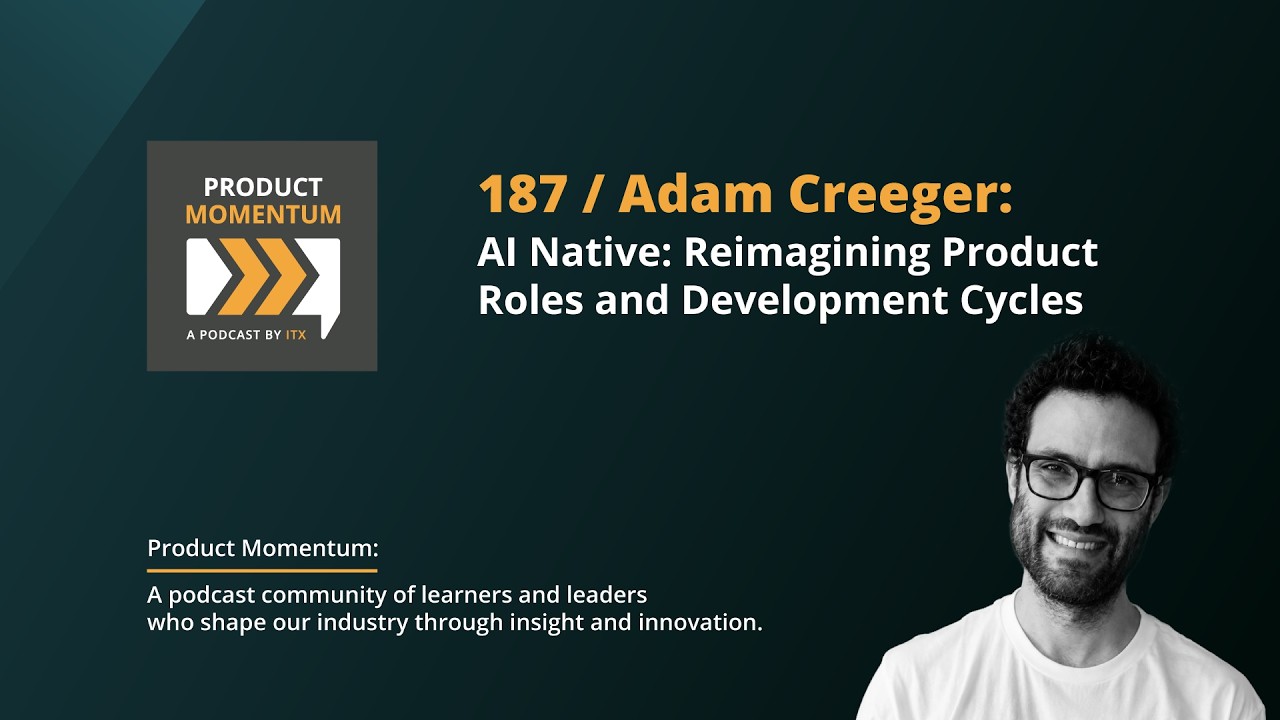
Adam Creeger is CTO of Slate, where he leads technology strategy and is driving the company’s transformation to become AI-native across product, engineering, and operations. He brings leadership experience from Meta, Greenhouse, and Frame.io, along with recent hands-on work building AI developer tooling through iloom.ai.
At Meta, he held engineering leadership roles across Facebook Video, where he helped launch Stars creator monetization and live co-broadcasting on Facebook. As Senior Director of Product Engineering at Greenhouse, he scaled the engineering team from 15 to 50 as the company grew from 80 to 450 employees, and he built the Technical Support and Professional Services teams. He later served as VP of Engineering at Frame.io, leading a 30-person engineering organization across product, video, and infrastructure.
Adam Creeger is the CTO of Slate and creator of iLoom (pronounced “il-LOOM”). His leadership experience at Meta, Greenhouse, and Frame.io not only informs Slate’s transformation into an AI-native organization, but also shapes the way AI influences product strategy, engineering workflows, and operational models.
Throughout his conversation with Sean and Dan, Adam argues that becoming AI native is not about layering AI features onto existing products. Instead, it requires companies to rethink how software is designed, built, and operated – from the ground up. His perspective offers a practical framework for product leaders navigating AI-driven transformation.
Here’s what else we learned:
‘AI Native’ Requires Organizational Reinvention
AI native organizations are willing to rethink every layer of their business, Adam says. Rather than adding AI features superficially, AI native organizations redesign workflows, team structures, and customer experiences around AI capabilities. He emphasized that AI transformation changes not only products, but also how people contribute inside organizations.
“To be AI native requires this deep exercise in re-imagination and not just imagination,” Adam continues. “In an AI native company – from the day-to-day operations to the ‘who does what’ – the roles and the owners of things are going to look very different.”
AI is expanding participation across teams, enabling designers, support teams, and non-engineers to contribute directly to product delivery. That shift signals a major change for modern software organizations.
AI and the Future of the Software Development Life Cycle (SDLC)
Our conversation then turned to an exploration of how AI is already changing the traditional software development lifecycle. Years ago, Agile development emerged because humans had historically struggled to fully reason through complex systems before implementation.
“I’ve realized that Agile was really a mitigation of a few things, mostly that we humans are limited in our abilities to reason through abstract concepts,” Adam says. “So when we thought about a software project, we didn’t have the ability to see around corners and understand the problems we’d face – until it was real, until you really started playing with it.
Turns out that many of those challenges are very solvable by AI, allowing us to go much deeper into the problem space without ever writing a line of code. In addition, AI-assisted planning allows teams to revisit some waterfall-style thinking, but with dramatically faster iteration and validation cycles.
Product Managers’ New Role: Communicate Context
Importantly, AI is actually elevating the role of product managers, Adam offers. Rather than acting primarily as tactical decision-makers, product leaders can (and should) focus on providing context that enables teams to make informed decisions independently.
“More than ever, the product manager has become a role about providing context,” he adds. “PMs should be elevated to a much more strategic role, understanding the long-term vision and helping to translate that to engineers.”
Adam also feels that PMs should be using AI to communicate ideas about the product vision much more effectively. That evolution creates a faster and more collaborative product environment. Teams can evaluate real implementations earlier, gather customer feedback sooner, and align around outcomes instead of specifications alone.
- [05:54] What it means to be ‘AI native’. Conceptually, it’s same as digital native from when the internet was born many years ago. In the abstract sense, I see AI native being about the folks and the companies that are either just starting in the age of AI where everything they do is shaped by the existence of AI and their ability to use AI.
- [15:08] Is waterfall making a comeback? Oh man, this is one of my favorite topics. Growing up in the industry, waterfall was always like the evil thing. But with AI-assisted coding or agentic coding, you can go really deep, create a much bigger scope, and deliver it much more quickly…and it resembles more of a waterfall mentality.
- [21:51] The PM’s primary role: providing context. The product manager more than ever has become a role about providing context. The most powerful thing PMs can do in an organization is provide context to other people.
- [25:49] Exploring Adam’s iloom tool, and how it can help. Hear a quick story from Adam about how he used his iloom tool to create — and demo — a new product feature during a call with his customer success team.
- [28:47] Swarms. What are they, and how do they work? A swarm is a number of AI agents working together in a very collaborative way with the potential of real-time communication between them.
- [35:03] Avoiding ‘AI slop’ to defend and elevate a brand’s quality bar. Slate is creating a tool that makes it very difficult to create AI slop. This is a valuable proposition to brands that care deeply about what gets produced in their name.
Podcast: Play in new window | Download
Sean Murray [00:00:09] In the intro, I mentioned that you are driving the company’s transformation to become AI native across product, engineering and operations. I’m really excited to understand what does AI native mean to you, both in like concept and in practice.
Adam Creeger [00:00:27] Yeah, the concept piece is probably the easier piece to talk about. You know, conceptually, it’s the same as a digital native from when… The internet was born many years ago. With any sort of wave of innovation you have, I think you have the folks that really thought about things from first principles in terms of that, like, innovation. And like, in the abstract sense, I see AI native being about, you know, the folks, the companies that are really either just starting in the age of AI, like they were born today, right? And so everything they do is… Shaped by the existence of AI and the ability to use AI.
Sean Murray [00:01:11] We’ve all been operating in this kind of like traditional SDLC model for a while, regardless of whether you’re, you know, regardless of either you consider yourself agile or you’re in waterfall or you’re doing modern agile, like your method, your framework doesn’t work, doesn’t really matter. We’re still operating in something where there’s initiation and discovery, right? And then development and deploy, and then you close. And we want to repeat this process and grow. How is that, how is the traditional SDL C changing in an AI native organization?
Adam Creeger [00:01:39] Oh man, this is my favorite topics. Um, so, you know, growing up in the industry, waterfall was you always like the evil thing. We can go much deeper into a problem space without ever like writing a line of code, right? So, you, know, I find myself doing a lot more planning with AI to the much deeper level that I would have done without AI now, obviously there are some things that AI can’t do. Probably not very good at predicting like how people react to your product. Like every AI will tell you have amazing BMF. You’re like this is the best idea ever! Like and so you know the challenges you should be taking on are much more complex than perhaps you would have done 2 years ago.
Sean Murray [00:02:24] That idea of being on a customer success call or hearing their concerns and having a working prototype at the end of that session is like that is the future, right? Yeah.
Adam Creeger [00:02:33] It’s, you know, and it’s, I dream of like a workflow where, you know, I have my transcription tool. Like recording the meeting and then it’s streaming and it identifies like a product need and it automatically spins up like an agentic workflow that then like builds the thing automatically. But you know, yes, like it’s a whole new way of working and that might and what I would like to is empower everyone.
Sean Murray [00:03:03] Another thing we’re hearing a lot about in terms of new ways of working is swarms. So what are swarms and how are they being used at sleep?
Adam Creeger [00:03:11] Yeah, I think, you know, it’s one of those, it slightly, it is slight marketing speak, but you know for me, I, I was a swarm of a lot of agents working together in a collaborative like way with potential like real-time communication between them. When I am tackling a very challenging problem, I won’t just have one agent do it because you know that there are all sorts of problems with like context window management or context management you know the scope is just too big.
Sean Murray [00:03:50] All right, Dan, we just got done with Adam Creeger. Amazing episode, but first, for our listeners or maybe our watchers on YouTube, don’t adjust the contrast of your monitor. I do have a black eye from playing rugby this weekend. I play twice a year and this happens sometimes. But our episode was awesome. It was amazing to have a technical resource on. We don’t normally have people with strong engineering backgrounds on the pod. So Dan, what did we learn today?
Dan Sharp [00:04:17] Well, we learned, Sean, that you can’t play rugby on the weekends anymore. That’s true. Fantastic conversation with Adam. Not often you get to have the CTO of a company like Slate join us. Learned, well, for one thing, what AI native really, you know, what it means, especially in the day to day. We learned about swarming AI agents. I would have a great conversation about how roles are changing with AI. Spoiler. There’s a world or a waterfall might be coming back and it might be a meaningful way to solve problems. So I’m really excited to get in the conversation. Let’s do it. Yeah, let’s do.
Sean Murray [00:05:01] Today we are with Adam Creeger. He is the CTO of Slate where he leads technology strategy and is driving the company’s transformation to become AI native across product, engineering and operations. He’s worked for a lot of companies you’ve heard of and now he’s even got his own tool in market for helping you make your ideas come alive called iloom. We’re gonna get into that later, but first, hi, thanks for being with us today.
Adam Creeger [00:05:24] Hello, great to be here. Thanks for having me on.
Sean Murray [00:05:28] You know, in the intro, I mentioned that you are driving the company’s transformation to become AI native, across product, engineering, and operations. I’ve been reading this term AI native for a while. You are one of the first like straight C-suite technical resources that we’ve had on the pod in a while, I’m really excited to understand what is, what does AI native mean to you both in like concept and in practice.
Adam Creeger [00:05:54] Yeah, the concept piece is probably the easier piece to talk about. You know, conceptually, like it’s same as like, like digital native from when like, you know, like the internet was born many years ago, um, with any sort of wave of innovation you have, I think you have the folks that really thought about things from first principles in terms of that, like innovation and the folks that like kind of sprinkle that innovation on top of what they’re doing without any more without any sort of more significant or fundamental like shifts in strategy.
And like in the abstract sense, I see AI native being about, you know, the folks, the companies that are really either just starting in the age of AI, like they were born today, right? And so everything they do is shaped by the existence of AI and the ability to use AI? Um, but it also applies to the companies that are realizing the full scale of what AI means for both like the product they build, the way they operate, um, the way people will interact with them. Um, and really like really imagine things and the ground up and in some ways it’s easier to start from scratch as an AI native company, because you don’t have to really build the car while it’s moving per se, but you are starting from scratch, right? Whereas if you. Have a company of product that’s out there in the market to make it like AI native, you have to essentially like change some of the fundamental aspects of the product of the company, but while continuing to serve and delight your existing customers and like employees even. So, you know, there’s that really it’s about, to me AI native is about allowing AI to So sort of transform every part of the business, every part of the company from, from like the way you operate, what you build, what use fell the way that customers can interact with your product. All of those things need to change, not just adding an AI chatbot to the side of your part. Like that is the classic non like AI native. I don’t have a word for the opposite of AI native AI invasive. I don’t know, I’m not sure, but… Yeah. Like it’s a, um, to be like AI native, it requires this, this deep exercise in re-imagination and just imagination. Um, and you know, it’s like, we, we are a creative tooling company for social media professionals and beyond. And yeah, like we could build a chatbot that like helps you generate AI content, right? That would be the most obvious way of sprinkling AI on top, but it’s really important to us that we don’t do that.
I can’t go into every single detail because it’s still under wraps, but like what we are doing at Slate is we are really examining what our customers want and we know our customers very well. I think that’s one of the things that gives us an unfair advantage in the space. What do folks, the social media professionals really want from AI in the context of creative tooling? We are embedding that throughout the product. We’re embedding it like we’re changing the way that. People could even interact with the product. We are changing the entire way we operate as a company. And, you know, we now we are embracing, like the ability for like non engineers to ship code, which is very more common. But I see like fundamental shifts in the roles of engineers, the roles like product managers, designers, even technical support, like people that are very familiar with the products, very with the customer but… Up until very recently have been able to make meaningful contributions directly to the product. All that is changing. And I think in an AI native company, like the just the day to day at the company who does what the roles, right, the owners of things are going to look very different.
Dan Sharp [00:10:03] Yeah, I like to hear more about that. Right. Most of the folks that I work with, they’re not AI native in the standpoint of they’re starting new companies born today, right. And they’re trying to react to, you know, where the industry is going. Um, really curious to hear, what advice would you have for those companies, coming from, ya know, your chair as a CTO who is going through that transformation slate, just to have, how do you tackle the changes to the product that you’re delivering, but also how do you kind of get the people on board?
Adam Creeger [00:10:37] Yeah, I think the advice I’d give people, like leaders looking to sort of like enable that change in their companies is look for the people that are naturally gravitating towards this change. Like don’t, in every company, you know, even if you have a, if you’re a small company of 20 people, you are going to have a few people that very excited about this. A few people that are very like, reserved and fearful. Right. And then like some in between, it’s going to be a spectrum. I would look for those people who are very excited and really interested in pushing the boundaries of what their current role is and even what’s possible at the company and forget as much as you can about their current position, right? So, and whatever kind of like preconceived notions you had about what the person in that role could do, um, because those people are going to break down the boundaries and… Like just almost like break down the cells of your company and become the DNA that like builds up the company from scratch because that is what is necessary. And you need to really also be mindful of those folks that aren’t quite so aggressively on board, right? You know, some of those people will come around, it’s about understanding what they’re afraid of. You know I think AI will fundamentally change the kind of jobs we do. I don’t I think it will. Do anything like kill software engineers. Like, you know, I don’t think that’s right at all. You know, it’s gonna replace software engineers in the same way that like email replaced paper. I didn’t. Um, you know, I don’t think that, um, we, like there’s either people have got that, that much to be worried about the thing they have to worry about, like we’ll say that the cliche is the thing you need to fear is like the fear itself. Like if you become paralyzed and, and close minded to all this, then that will be problem. But in terms of like, like allowing a company to change, I guess recognizing the people who can lead that change throughout the organization organically, I think is really important. The other one is to put clear incentives and guardrails in place so people know what they need to be doing. There is like the extreme version of this, which is the corporate leaderboards around token spend and token like, you know, the more the better, right? And some people spending like billions of tokens a month just to top these leaderboards. The Hogwarts house cup of, uh, of token manage token usage. Yeah. Like that is, that’s not the way to do it either. I think just incentivizing smart, uh like, you know, smart AI usage, um, measuring that being very transparent about what you’re measuring and why. Um, and again, allow the people to make their own choices.
Sean Murray [00:13:39] We teach, we teach something here called the it’s an AI fluency scale. It’s just a maturity model. But one of the things that we say is like one, the bottom of the scale, you find out when you, when we do this training, like you have some agency. There are other people with you that are not really super far advanced on their AI journey, right? We also talk about the top of the skill. One of your biggest, one of biggest things, if you reach like the teacher and trailblazer level on the scale is that you actually have a responsibility as a teacher. Right to make your training accessible or like make yourself accessible to people on the bottom of the scale you’re not going to be able to move somebody from like a two to a five overnight right there’s no way right there there’s there’s no way to reliably do that and like make sure that that person is a good foundation of their AI understanding so they don’t just start burning hundreds of thousands of tokens right so roles are changing we know that there is probably disparity in terms of like our AI fluency across organizations. We’ve all been operating in this kind of like traditional SDLC model for a while, regardless of whether you’re, you know, regardless of, whether you consider yourself agile or you’re in waterfall or you doing modern agile, like your method, your framework doesn’t really matter. We’re still operating in something where there’s initiation and discovery, right? And then development and deploy, and then you close and we want to repeat this process and grow. How is that how is the traditional SDLC changing in an AI native organization.
Adam Creeger [00:15:08] Oh man, this is my favorite topics. Growing up in the industry, waterfall was always like the evil thing. I remember like, you know, it was very much like agile, whether you call it like, yeah, I worked at a company that practiced extreme programming, which was like all pairing all the time, like very the opposite of a lot of traditional like SDLCs, um, I like very, you know, I have seen a big shift in how I want to work. When it comes to AI. And I think the thing that I have realized is that Agile was really a mitigation of a few things, which was humans are very limited in our abilities and we, it’s very difficult for us to reason about things when they’re abstract. Yeah. Right, so when we thought about a software project and like an app or, you know, a system, until it was real, until you really started playing with it, You. Didn’t really have much of a ability to understand all the problems you’ll face. And some of those are very solvable by AI and some are not.
But now with AI, we can go much deeper into a problem space without ever writing a line of code. So I find myself doing a lot more planning with AI. To a much deeper level that I would have done without AI. I don’t think that like what I could do now with Claude, right? And a good Claude level would have been possible like without AI in terms of just thinking problems through. I would’ve spent a lot more time doing it and done it to a lot lower quality. So we mitigated that by just building like in chunks, Like, choosing how much we wanted to discover at once. Design and build and test and then, you know, and I suddenly realized that like, actually like when the world of AI, like a waterfall is a much, is actually, it’s achievable. You can get really good results because when you go really deep into planning something, you get a lot, like you just explore the problem space a lot better. And you’ve got this very like smart, like coworker suddenly, but it’s not perfect and will absolutely lie to you. I’m absolutely mislead you unless you call it out. But they are still a really good thought partner. And you could do a lot higher quality planning, a lot of higher quality research. And the end result is much like bigger and in terms of scope and much more ambitious in terms of scope, but also much more well thought through. And it resembles more of like an accelerated waterfall than an intentional like de-scoping exercise that we did on the agile, where we’d say, no, no. Like the purpose of this sprint is very clearly this. It is not this. You know, agile, you spent a lot of time defining the boundaries of what you were trying to achieve in order to manage the amount of planning and like unknowns, essentially, whereas with, with AI sort of assisted coding or agentic coding, you can go really deep and like go create a much bigger scope and deliver it much more quickly, and it resembles like more of a waterfall mentality. And I think it’s, it’s going to be an interesting shift. Back towards the emphasis on planning that I think will happen, you know, once a week because it actually, I’m sure you planned but you intentionally limited what you were planning.
Sean Murray [00:18:44] Yeah. Are you, are you saying like, you think that maybe the time that we took to define the boundaries around MVP, we still need some sort of boundary, but that time is the time is compressed and actually that tiny you used to spend on being like, what are, what is out of scope? It’s not going to be spent on like, how do we actually deliver more in this like initial and kind of like, yeah.
Adam Creeger [00:19:06] And you can just go way deeper going way deeper and into even unlike your first version now obviously there are some things that AI can’t do it can’t it’s probably not very good at predicting like how people react to your product like every AI will tell you have amazing BMF you’re like this is the best idea ever like you should definitely do this what a winner right and so there’s so many reasons to limit the scope and ship something that even like insanely like detailed or, you know, like ambitious, but you, and again, AI is a good thought partner to help you come up with an MVP, but I certainly wouldn’t trust. Definition or its predictions of PMF. Like I think that’s something you have to evaluate for real, like just as you would before. Um, and in fact, I would still tell people if they’re thinking of a building a new product and a new service, the first thing to do is to try and find, to try to emulate it without any tech, like, you know, if, if they could do, if you could do it with a spreadsheet, do the spreadsheet, try that. And if the spree, if about it, to be honest with you, also, I also maintain that the kind of SaaS products that simply wrap a spreadsheet. Are the ones that will get away. Yeah. And so the challenge is you should be taking on a much more complex than perhaps you would have done two years ago. And actually, I think we’re in this learning phase now of everyone live coding their own products, launching it as SaaS because they would have been SaaS products three years ago, but now they’re not solving big enough problems to be a viable SaaS product on their own. So, you know, I think that… It is more important than ever to understand your MVP because it’s so easy to build stuff. But yeah, it’s because it so easy build stuff, you have to solve a problem that’s inherently very difficult and is not just some data crud style problem. It has to be something that takes real experience beyond which an NLM could provide.
Dan Sharp [00:21:10] All right, so it sounds like we’re not running our businesses through Excel anymore, but maybe Excel with Co-Pilot? Maybe?
Dan Sharp [00:21:21] But yeah, you said something that, you know, was interesting, right? And this idea with AI, like maybe the concept of waterfall is kind of coming back because of the way we can go deeper. Yeah, let’s go to something that Sean and I have been hearing talk about a lot. It’s like, yeah, the, the role of the product manager is in a lot of ways become becoming more important. Yeah. I’d love to hear your thoughts on, you, as product people, like, you know, how can we manage, you that they’re going deeper on the problem with all the other demands on us.
Adam Creeger [00:21:51] Yeah. I think, well, the good news is, is that you could have other, you could empower other people to go deeper too. Right. You, I think the product manager more than ever has become a role about providing context. You know, I think that PMs, the most powerful thing they can do in an organization is provide context to other people. I think a big anti-pattern that has existed for a while is for PMs to make all the decisions. In the short term is you know, fast decision-making in the long term, it becomes a bottleneck, right? Because only if you have one PM working with a team of like 10 to 20 engineers, for example, instead of being out instead of having 10 to twenty decision makers, you only have one decision maker. And then as the team scales, as a company scales, the knowledge just doesn’t proliferate that context is doesn’t proliferating. So I think PM is really the role that PMs should always be have been providing is primarily context coaching to engineers to help them make their own decisions, help get help them have the information and the techniques with which to do product management at a more tactical level, right? PMs I think now PMs, should be elevated to a much more strategic role, where it’s like really understanding the long term vision of the company or the product. And by helping translate that to engineers who are working on building out the product or making their own decisions, elevating them to own the business outcomes, not just like the code. Also, PMs should be using AI to communicate ideas much more effectively, or even ship initial versions of things. If you ask, this isn’t just engineers. I apply it humorously just to engineers, but like if you want an engineer to do something, like if asked them to do it, sure they’ll get it done, you know, but if you do it wrong, they will like fix it so quick. So you know having a PM, and I mean that with love, I’m the same, right? If someone asked me to do some thing, I’ll be like, oh okay, well you know if someone does it and I’m like no, no, it’s wrong, I will like somehow it activates another part of my brain. My wife hates this about me But I think PMs can move things along by shipping their versions of things. And that’s going to suddenly, again, we’ve seen this at Slate. Shipping a first version of something, whether it’s an engineer does it or a PM does it or a member of a technical support team does it, it suddenly creates these conversations that move things forward. And that is another tool that PMs have now that they’ve never had before. So to answer your question. I don’t think it’s just on the PMs to go deep on things, right? I think it is really about the PM’s to just provide all the context that’s going to enable other folks to go deeper, right, otherwise you will still be the bottleneck. And whether that context comes from your own deep research, a lot of context around like the business and what the business needs and the goals of the business, to just like communicating your vision in new ways to allow other people to understand what you want. That to me, I think, is how the PM role is going to change. It all depends on the type of PMs. I think a lot of the tactical stuff.
Dan Sharp [00:25:26] Yeah, I think you’re right on there. Right. About pictures worth a thousand words and a prototype that you can use AI with to communicate what you’re thinking is probably worth like 10,000 words. Um, so I think, yeah, it’s an interesting, it is an excitement direction, you know, skip the part where you build the thing, have the demo and then have everyone after hours of work realize that they hate it. Now we can do that in half a day, right?
Adam Creeger [00:25:49] Yeah. It’s crazy. And in fact, me, you know, it’s happening right now. Um, I, you know, I sort of heard of a, I was in a call with our customer success team and they, they talked about a common customer pain point that Slate has had for a little while and just like his beats while this thing has been on the backlog. And I spun up in the call, I spun up iloom, which is this agentic like coding tool that I’ve, I built on top of core code and it just in the background worked on implementing version one of this feature. And it did it. And with a bit of theater, I actually demoed it at the end of the customer success call. And that wasn’t the final product, right? It did a lot of the work, but it led to this whole conversation about what UI paradigm should we use for this? What does this mean for our customers if they could do this? Is this the right thing strategically? And it inspired a designer to come up with their own UI model for this. So they can sort And it’s great. And today we reviewed them and we were talking about the strengths and the weaknesses of both approaches. And we could just like give them to the team and give them to our own marketing team, our amazing social media marketers, just to play with and be like, which one which one feels like right for what you want to do? But yeah, they’re not Figma clickable prototypes. They’re like real versions of the product. Already in a meeting, like in the background, and then a designer bill themselves, like when they saw mine. And that’s a new way of working. And I love it. It’s great to be able to get such high value signal so quickly from such a broad group of people.
Sean Murray [00:27:32] Yeah, that idea of being on a customer success call, hearing their concerns and having a working prototype at the end of that session is like, that is the future, right?
Adam Creeger [00:27:46] Yeah. It’s, you know, and it’s, I dream of like a workflow where, you know, I have my transcription tool that is like recording the meeting and then it’s streaming and it identifies like a product need and it automatically spins up like an agentic workflow that then like builds the thing automatically. Now if you want to talk about token maxing and burning tokens, that is going to be like I’d win like 15 things a day and like maybe three of them would work, but yes, like it’s a whole new way of working and that might, and what I would like to do is empower everyone at the company to be able to do that, not just me and my toolkit.
Sean Murray [00:28:31] I want to make sure that we get to this question before the end of the episode, because again, we asked about the term of AI native. What does that mean? Another thing that we’re hearing a lot about in terms of new ways of working is swarms. So, what are swarms and how are they being used at sleep?
Adam Creeger [00:28:47] Yeah, I think, you know, it’s one of those it’s slightly it’s a slight marketing speak, but you know for me, I think it was swarm of a lot of agents working together in a very collaborative like way with potential like real time communication between them. You know, I also think of swarms of drones and I guess there are some similar heresies. But you know as like the way I use swarms is and I did not use it for this. In the instance, I just talked about on that customer suggest call but Um, when I am tackling a very challenging problem, I won’t just have one agent do it because you know, the, the there are all sorts of problems with like context, window management or context management. Um, you know the scope is just too big for one, like agent instance to really run and maybe some, some parts of the work you want to do with some different kind of model, uh, a different model rather. So, but I’m working on something really complex. I, you know, there’s a feature in iloom, which is like the, it’s a plan and epic. And you describe it, it really goes deep with you on the planning. This is perhaps similar to the brainstorm and functionality of like superpowers and the superpowers plugin, um, for code. And there’s also other equivalents, right? This isn’t not claiming this is like unique and innovative. It’s just a really key part of the process. Um, but the planning piece really goes down and asked a lot of question, right to my point earlier, it was more like a waterfall process. Where you really try and think through a lot of the problem space upfront, rather than just building it in C, right? You think through the problem space, think through that the tech choices, the data model. You know, if you’re working in, it’s very good in the Brownfield database, Brownfield code base, because you’ll look at the different repos and what they do and like understand where the best place to make these changes. And obviously scope out what those changes are and how to validate them. At the end of that process, you will have essentially one. Task, like an epic, per repo, right, and each of those epics will have a web of child issues within them. And those child issues are essentially a DAG, a directed acyclic graph, which shows you, essentially, like, it shows an agent how to execute these tasks, like which tasks depend on what, like a rock ordering, what can be run in parallel, what has to in sequence, and then when you basically… Each of these epics separately, you can do it at the same time or do them sequentially, it’s up to you. And each of that then spins up a swarm of agents for each epic. And that swarm will be multiple agents and their job is to execute each of those different issues in parallel and run through a really structured workflow, which is absolutely like the best way to tackle feature development with AI, which is each issue. And so each agent, and there’s maybe a swarm of 30, each agent runs through a research process where it analyzes the code base, it runs through planning where it takes that, sort of the results of that analysis, and it creates a plan to solve the problem at hand, the task at hand and only that task at end, but it then goes into implementation, it goes into code review, and then like finally at the end of each wave, there’s like a verification step where it makes sure. Everything works together and everything plugs together. So like every swarm operates in a wave and these the sort of the agents just chew through this very complex potentially like backlog of tasks. And you know, I’ve absolutely hit the board max 20 limits in like one session. Like my five hour limit was just like destroyed by having 25 30 Agents, go through this. But at the end of that, the result is incredible. The result is something that is not perfect, right? I don’t think anyone can claim to one-shot something of high complexity, but it is something that is leaps and bounds ahead of where you’d be able to get with just one or two agents working on something, and way further ahead than you could possibly get without the assistance of AI.
Sean Murray [00:33:11] Are you involved in designing like the workflow that you expect them to go through? Do you have to define that or is there, is something else driving the definition of the way that you them to execute tanks? You mean the swarm?
Adam Creeger [00:33:25] Like how I like, yeah, like it does. I mean, it is every, everyone’s going to implement this differently inside iloom, which you know, is, is what my experience of building it, like a lot of it is predefined. Like the, the steps that it goes through this like research plan implement like code of view, like there’s a verification set. That’s pretty like that’s predefined, but the inputs to that come in a two couple of ways. There’s the task definition. Right? So the task itself is the prompt. Then there’s also the workbook configuration. You could actually configure it to automatically review any of the steps with other models. So right now for complex tasks, I have Gemini review the plans it comes up with. And more often than not, there are meaningful improvements that get made. I also have Gemini do code reviews. I found that to be a really good model. Gemini 3.1 pro does a really good job of code reviewing. So you can customize it that way. Um, and then ultimately under the covers, it’s just all Claude code. So things like the Claude MD or rules or skills, they still get used. Um, so if you need to customize, um, what happens with, um. When we, you work in a certain part of the code base, that will still happen as per the Claud MD or the rules files. So the iloom workflow is fairly fixed, which is intentional. Like it’s not supposed to solve every problem ever. It’s just really helpful.
Dan Sharp [00:34:53] For each developer. Awesome. Adam, this has been super informative. I would have to hear what you mentioned, iloom. What’s coming from Slate that we should be excited about?
Adam Creeger [00:35:03] Yeah, Slate is like, we’ve got very exciting things in our way out. So first of all, it’s like a really, as I talked about in the beginning, building AI into the fundamentals of the product. Like I think it’s, you know, we are going to see like a major shift in the capabilities of Slate, how it’s used. And we are doing it in a way that is meaningful and beneficial. I think we are all at Slate very keenly aware of the risk of turning a creative tool into a slot factory. You know, we do not want people to be churning out AI Slop with Slate. The unique value prop of the product is to create content in line with like brand guidelines, right? And some brand guidelines are, can be expressed in very like tangible things like the colors, the fonts, right. But something that’s a lot harder is the quality bar that a brand has. Um, and creating a tool that makes it very difficult. To create AI Slop is like, I think, going to be a valuable proposition to brands that care deeply about what gets produced in their name. So, you know, we’re very keen on that. We’re shipping a lot more, like we are leveraging AI to really empower our engineers to ship a lot of features across the board. So I don’t want to go into too many details, but the kind of work you’ll be able to do with Insulate is going to grow. Like right now we occupy a particular piece of the workflow and we will be growing that position over this year significantly. We’re going to be doing a lot more with the product and a lot more collaboration and a little more media management. And on top of that, we’re also hiring more engineers as well. I do not believe that we should hire Like layoff engineers because of AI. Or even keep head cabin the same, I’m a big believer in, in doing a lot more with more. Yeah. Instead of just trying to do the same with less or more with the same. It’s like, no, I want to do like an order of magnitude more with more engineers.
Sean Murray [00:37:15] Yeah, that’s what our belief is to our belief is now is the time for investment, not the actual time to not to cut the workforce, right? Tell us about iloomn, what this is and how people should use it.
Adam Creeger [00:37:25] Yeah. Um, it was really built out of a, uh, a need that I had last year to work on multiple things at once with AI. Um, I would just, I just realized that once I got into this very like consistent workflow, it meant I went from talking to like pair programming with Claude and let’s say, Hey, Claude, do this now do this. And like, it, it wasn’t so interactive. I found myself hands off the keyboard for 10 minutes at a time. So I was like, wait, what else can I do in those 10 minutes? I could do other stuff. To work on other AI projects. And so I was doing like different things at one time. And then, you know, I did that and it was a lot of fun, but I’d end the day feeling very stressed and overwhelmed because I was context switching between all these things. And I was like, what can I do? And this is the kind of challenge I love. What can I do to like really make it much easier for people to context switch between uh, different agents that you have running and different workflows that you have running on different tasks. Um, and. You know, that came to this insight that like, basically it’s very easy. It’s very hard rather for it to understand, um, what the agent is thinking, but it’s a easy to ask the age of what it’s thinking. And so really like, there’s just no good place for it to live and so. The Illume workflow is all about exposing the agent’s insights, the agent assumptions, the insights, that risks and the decisions like to the user, right? In both real time, but also like storing it, persisting it. And it doesn’t persist it in like markdown files that just get like littered and like, you know, very difficult to manage over time. It just stores it on the pull request or on the issue that just driving the sort the task. Um, and so what that means is in real time, people can see what’s going on. You can see it then over time, you can go back and if you look at a PR that was closed three months ago and you’re like, why the hell did the AI build this thing, you’d be like, oh, it actually, oh it thought that that was the assumption. Okay. I got it. Well, like, Oh, we explicitly made a decision to do X, Y, and Z. Um, it’s the kind of things that I did this for myself, right? So I could switch easily between these different workflows. But what I realized was that they actually made it a lot easier for teams to use it too. So now, you know, I like teams, people like solo developers can use it. It’s a lot for solo developer. It works for me because I’m kind of like slightly old school. And I liked a lot of like, I liked myself to be disciplined and have process, but it really helps where teams where like, you know, instead of a developer pushing up a 3000 line PR that was written by code and it’s just like, here’s your PR go review it instead. The PR actually has a lot of information around. Assumptions, the assumptions that the AI made and the sort of what the AI was thinking and the thought process. So what you find is when you read that, you don’t need to dig into the code so much. Because often when you’re reviewing code as a domain expert, you’re like, okay, did they take into account this situation? Did they take into account that? How have they handled that? And if your PR documentation already has that information, you actually don’t have to look so much at the code.
Sean Murray [00:40:44] Uh, if you want to check this out, they go to I L O O M dot AI. So it’s a little one that AI I said, I loom because I’m from Western New York and any, uh, any syllable that’s driven by a vowel has to be hit as hard as possible, like that’s how we know how to talk.
Adam Creeger [00:41:00] That is the why that’s why the L is lowercase. So it doesn’t look like it’s an iPod
Sean Murray [00:41:04] Got it.
Adam Creeger [00:41:05] An iPhone. It’s like, no, it’s, you know, but it’s illuminates and illuminate. It’s not weirdly and also an intelligent loom.
Sean Murray [00:41:14] Thank you so much for being with us today. I got a couple of takeaways that I just want to recapture. I think that when we initially talked about AI native, you referenced that we really need to understand how roles are changing and that how your expectation of a role doesn’t need to fit a specific definition really anymore, right? So how are people’s roles or expectations around the roles changing within your organization with the adoption of AI? I think you even mentioned in our pre-production call, you had somebody who was like, in customer support who actually built something and was like, hey, we should, what, you know, how do we get, how could we actually implement this? I think that customers would find this useful. Like that’s the type of thing that we’re going to see.
Adam Creeger [00:41:52] Yeah, that has happened multiple times now, with your AEMs, support folks.
Sean Murray [00:41:58] Designers, yeah, so loving that. But like, that’s how you’re going to end up re-imagining your workflows. Uh, you also said that we should find people within your organization that naturally gravitating towards AI led change. We kind of reference those people as kind of like you recognize someone who is recognized by their peers as a trailblazer, like those are the people that you want to find in your organization because they’re going to eventually get you to organizational growth. But at the same time, don’t leave the people that are maybe earlier on in their AI journey behind. They still have a lot of useful knowledge, right? They still know the problems that your software needs to solve, right, and are still important parts of the way that you’re gonna deliver value in the future. Just because they’re behind on the technology doesn’t mean that they’re less important to the business. Yeah, I also, I really liked your idea around like this concept of MVP scope in the feature needs to be able to solve a bigger problem. Smaller problems like really define things that you can build a nice tight project around is not necessarily the way that we’re going to be executing work in the future. So think about solving bigger problems. And then what you’re seeing within slate is that product managers are having more success if they understand that their goals, the goal of their role is to provide context, but also to make decisions, right? So just because they’re providing context means that they are aligning people, but they’re also making decisions that are unblocking work.
Adam Creeger [00:43:22] Yeah, and ideally, it’s more like a type, perhaps a tiebreaker more than a decision-breaker. Like they should, you know, verify, it is like to trust by verified, you give a lot of context to folks, but just like make sure the output still aligns with the vision. Like it probably means that you miss some context, right? If not, but it doesn’t mean that you could just hand over decisions to other people.
Sean Murray [00:43:49] You’ll still ultimately as well. And then lastly, swarms are ways to use multiple agents to solve complex problems, but also to quickly burn through your token limits. So. Very quickly. All right, Adam, thank you so much for your perspective today. We really appreciate having a like a more technically adept mind on the podcast, because it’s something that we actually have not done enough of in the recent you know, in our in our last like 20 or 30 episodes. So thank you for bringing that to our audience. And we really appreciated having you here. And you’ll have a great day
Adam Creeger [00:44:25] Thank you very much. I’m glad you think of me as a technically adept or as a potentially inept.