Listen
Podcast: Play in new window | Download
About


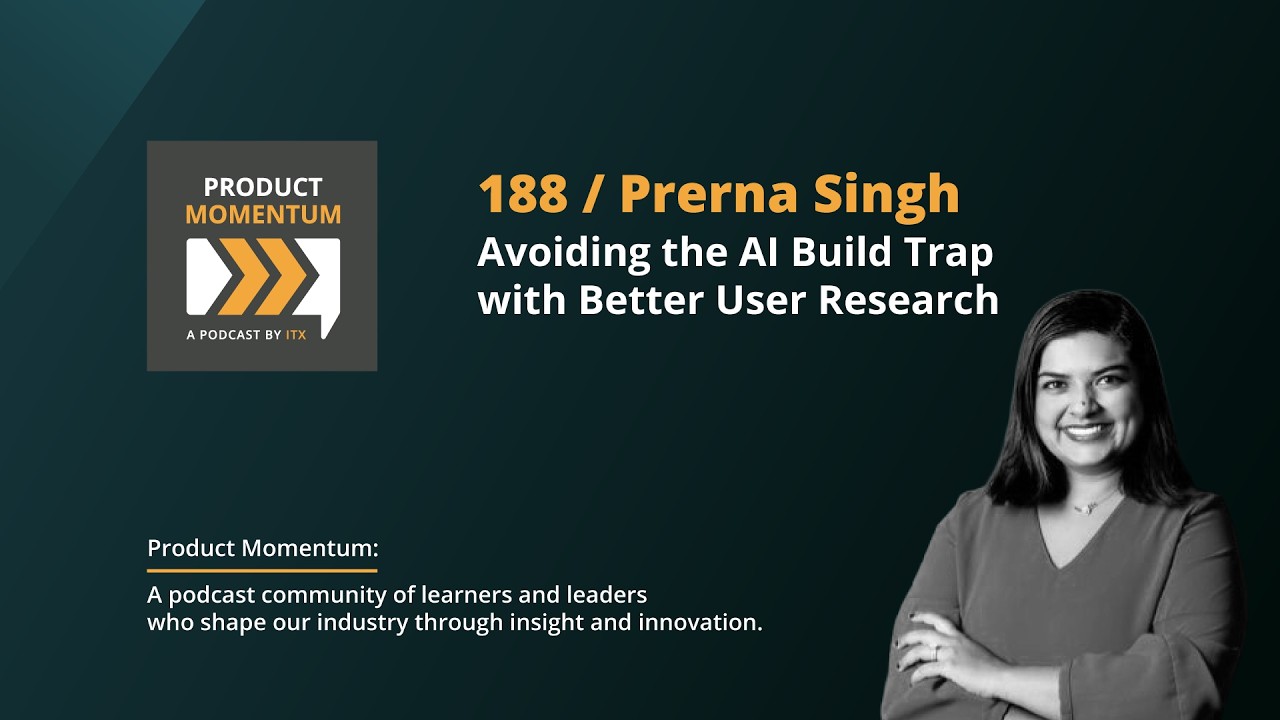
Prerna Singh is the founder of Scrappy to Scale Advisors, where she advises startups and mission-driven organizations on product strategy, customer insight, and scaling teams through periods of rapid change. Previously, she was VP of Product & Design at Meetup, where she helped evolve the platform from an IRL-only events company into a hybrid community experience.
A seasoned community builder, Prerna has started and grown countless communities throughout her career, from leading the NYC chapter of Women in Product to hosting the NYC Product Leaders Breakfast, a curated gathering for senior product and technology leaders. As a fractional product leader working across companies and industries, she brings a unique perspective on the trends, tensions, and opportunities emerging in modern product organizations.
Prerna Singh helps organizations build better products and stronger communities. As the founder of Scrappy to Scale Advisors and the former VP of Product and Design at Meetup, she has guided startups and mission-driven organizations through rapid change, customer discovery, and product strategy.
In today’s episode, Prerna explains why human connection and disciplined product thinking matter more than ever during the AI boom. While AI may accelerate product work, she says, successful teams avoid the must stay grounded in curiosity, customer insight, and authentic community building.
Sense of Community Addresses the ‘Isolation Problem’
What started as a casual gathering for fractional product leaders, Prerna’s Product Breakfasts quickly evolved into a broader support system for people navigating uncertainty and AI-driven change and the professional isolation that often comes with it. Many product professionals, she says, now feel overwhelmed by the pace of technological advancement and the pressure to keep pace.
“I don’t think there’s any catching up,” Prerna adds. “‘Catching up’ implies that there’s an end goal to this. And there isn’t. So that’s where I think Breakfast is the evolution of people coming together to share what they know and helping reduce that anxiety that isn’t just a knowledge gap. It’s also an isolation problem.”
First Principles, Supported by Human Interaction
Product professionals need environments where they can safely discuss their own vulnerabilities. The ability to openly admit uncertainty about AI and its impact, to exchange ideas, and learn together is the hallmark of authentic, in-person interaction.
“The IRL connection isn’t going anywhere,” Prerna continues. “We need that human-to-human interaction to have an outlet for where those vulnerabilities are gonna go. Otherwise, they’re just contained within us and we’re just spiraling in our own heads.”
Avoiding the Trap Starts with Better Discovery
Prerna’s extensive background in user research informs her belief in the importance of first principles in product management. AI tools, she says, make it deceptively easy to jump directly into solutioning without fully understanding the customer’s needs and the business’ problems. In her fractional product manager role, Prerna listens “for the thing that clients return to when they stop performing.”
“‘We need AI’ is a common mantra,” she says. “But what’s interesting for me is the kernel of truth that frames that statement. And it’s not what they want. It’s what they can’t circle back to – like there’s a hidden customer insight that we’ve maybe navigated around.”
Lean into Discovery, Prerna concludes. Product teams must remain disciplined about validating assumptions, conducting research, and identifying the real customer need before building anything. “Avoid the trap of jumping into solutioning.”
- [05:26] Origin story of the Product Leaders Breakfast. The original concept for Product Breakfast started from a place where it came out this concept of isolation. In the last 2-3 years, we’ve heard so much about AI and the way that it’s affecting our jobs.
- [09:36] Don’t feel like you need to ‘catch up’ to AI’s impact. I don’t think there’s any catching up. Catching up implies that there’s like an end goal to this — and, well, there isn’t.
- [12:00] The IRL Connection Remains Essential. This is precisely why the IRL connection isn’t going anywhere. We need the human-to-human interaction to have an outlet for sharing vulnerabilities; otherwise, they’re just contained within us and then we’re just spiraling in our own heads.
- [18:28] What it means to be a ‘fractional product leader’. The fractional product leader brings in a wealth of experience and is able to quickly understand the organization’s problems, the culture, the team and embed themselves as a force multiplier to help that organization achieve its goals.
- [26:43] AI’s support of user research and first principles. When we approach these challenges with a level of curiosity, we avoid using the first answer as the final answer. We need to dig beyond the surface level truth with user research. And this is actually where AI has been super-helpful because it’s allowing me to ingest lots of different signals to cut through the noise and figure out what that right signal is.
- [28:09] Spend time in the problem space. I think the trap is jumping into solutioning. This is another first principles thing where I think, again as humans, we have this tendency to want to jump right into solution as soon as we see a problem without spending time interrogating the problem.
Podcast: Play in new window | Download
Dan Sharp [00:00:09] Well, where I wanted to get started is this idea of the product leader breakfast. Yeah, I would love to hear, you know, what motivated you to start it.
Prerna Singh [00:00:18] The original concept for product breakfast really started from a place where it came out of this concept of isolation and I had just decided that I was going to do fractional product advisory work and I had gotten my first few clients. I recognized that like while that was going really well and it was nice to be able to engage in that work, I was really missing a concept of a team. And I was missing… Other peers that I could talk to. What’s I think really interesting is that it got started from this idea of isolation and in like sort of the fractional space and finding other product leaders that were also, you know, navigating uncertainty in the market.
Dan Sharp [00:01:03] Sean has done some, some workshops on AI and like one of the biggest takeaways, yeah, he talked about AI fluency, but it is that same theme of like, I feel like I’m not going fast enough.
Prerna Singh [00:01:15] Yeah. Even to make that a more sharper point, I don’t think there’s any catching up. Catching up implies that there’s like an end goal to this, and there isn’t. And so that’s where I think breakfast is a beautiful evolution of people coming together every single month to share what they know and helping reduce that anxiety that isn’t just a knowledge gap, it’s the isolation problem. This is precisely, again, why I think the… IRL connection isn’t going to go anywhere and why it’s so important. Like you need that, like human to human interaction to be able to, you need to have the human to him and interaction to able to have an outlet for where those vulnerabilities are going to, otherwise they’re just contained within us. And then, you know, where we’re just spiraling in our own heads. What I’m definitely noticing across the board is that there’s all this talk of AI and if you let AI do its thing, it’ll just keep. Spitting out stuff. It’s incentivized to keep giving you the next idea, to keep giving you that next prompt. But it’s really our human judgment that is about kind of funneling it to the right problem and to the things that actually need to be solved.
Dan Sharp [00:02:30] How, as product people, do you think we can avoid the trap of using the AI tool instead of doing our own thinking and our own kind of understanding of problem spaces, our own understanding of what the clients are saying?
Prerna Singh [00:02:46] I think the trap is jumping into solutioning. And it’s funny because again, this is another first principles thing where I think again, as humans, we have this tendency to want to, you know, jump right into solution as soon as we see a problem without spending time and interrogating the problem, I think that’s just gotten worse with AI where you can, it’s never been easier to like vibe code a thing before.
Dan Sharp [00:03:18] We just had an awesome conversation about Prerna Singh, hitting upon just the challenges we’re facing as product people and her role building community and product, love to hear what your thoughts were.
Paul Gebel [00:03:30] I think there, there were several takeaways. I always learn a lot listening to parents perspective. First of all, community and vulnerability is still a super power. Full stop. Uh, I think the other thing that I took away that I’m going to keep chewing on is that the idea risk is not getting it wrong. Risk is not testing what you’re building, kind of jumping into solutioning too fast, just because it’s so easy to get right into that solution mode without ever verifying that you’re solving an actual human shaped problem.
Paul Gebel [00:03:58] What about you?
Dan Sharp [00:03:59] Yeah, I think it was getting that stop sign in front when you’re thinking about a problem before rushing in and coming up with solutions. I think that that was a really big takeaway for me and a trap I think a lot of people fall into. So, let’s hear from her. Joining us today is Prerna Singh. She’s the founder of Scrappy to Scale Advisors where she’s advising startups and mission driven organizations on product strategy, customer insight, scaling teams through rapid change. Obviously there’s a lot of that going on right now. Before she took on this role, she was the VP of Product and Design at Meetup where she helped grow the platform from an IRO only event company into a hybrid community experience. Definitely something that mattered during COVID. Also, she’s a good friend of ITX and the Product Momentum podcast where, and she’s been hosting multiple product leader references in New York. In the past, she served as a workshop facilitator at ITX’s product and design conference in 2014, and was a previous guest on the pod. We’re really excited to have you back.
Prerna Singh [00:05:05] Thanks, Daniel. I really am excited to be back and to have, I think, a really fun conversation ahead of us.
Dan Sharp [00:05:11] Yeah. So, you know, where I wanted to get started is this idea of the product leader breakfast. Yeah. I would love to hear what motivated you to start it. You know, what kind of outcomes were you after when, you know, you’re, you were sitting around thinking, Hey, let’s have some breakfast with some other product folks.
Prerna Singh [00:05:26] For sure, and it’s a great question, so excited to start here. The original concept for product breakfast really started from a place where it came out this concept of isolation. I had just decided that I was going to do fractional product advisory work, and I had gotten my first few clients, I recognized that while that was going really well and it was nice to be able to engage in that work, I was really missing a concept of a team. And I was missing other peers that I could talk to. At the same time, I met my co-host at that time, Jorie, and she was also doing fractional work but more on the coaching side. And we both found ourselves as kindred spirits realizing that we had this beautiful moment of connection where we both were craving this, we had that this connection with each other and with others like us. So it kind of. Was born out of this need. And one day I just texted her and said, what do you think about like getting other product leaders together, maybe in the fractional space, to get together and just have like a casual breakfast? And I should say that the format that we had tried before, I led the women and product community in New York City pre-COVID. And this was a format that actually worked really, really well with female product leaders. And it was a very casual So It was a concept that I had done before and then bringing it back in this very specific space was serving my need and a need that, once we started getting these breakfasts out the door, clearly finding that product market fit where we had demand exceed our capacity every single breakfast. What’s I think really interesting is that it got started from this idea of isolation and in like… Sort of the fractional space and finding other product leaders that were also navigating uncertainty in the market. What’s really shifted in the last 12 months is, or 12 to 18 months I would say, is we’ve heard so much about AI and how some of the changes are being so, they’re so accelerated by what’s happening in AI and the way that it’s affecting our jobs. What I’ve noticed is that isolation theme. Is coming up over and over again, but in a different context. It’s coming up in the sense of, there’s so much shifting around us with AI that I feel isolated in my job. I don’t know who to go to. I feel, isolated in like the learning. And, you know, one breakfast that we recently had, I think we do intros in the beginning of every breakfast so that we ask everyone, you now, both what is their experience with AI, what are they doing? In. And the number of people that are like, I’m here because I feel behind is, it was remarkable. And what I’ve realized is that this breakfast format, there’s never been a greater need to get people together, especially when you’re looking at LinkedIn every single morning and being like, I am so behind. Everyone feels like they figured it all out and I don’t know what I’m doing, or I’m just trying to get my regular work done, let alone figuring out how to play with AI. And so that’s really where I feel like the product market fit and the need for breakfast has evolved from two years ago, where it started off as like me feeling isolated in my fractional job, but realizing actually that the market and the environment has been shifting so rapidly that this isolation feeling has just gotten worse and worse and worse as we continue to push this frontier of technology that we’re in right now. And so, that’s the kind of origin story and also how we’ve landed at, you know, the latest iteration of product roughest.
Dan Sharp [00:09:19] Yeah, I love the community building and yeah, I feel the same thing. Um, I know Sean has done some, some workshops on AI and like one of the biggest takeaways, uh, he talked about AI fluency, but it is that same theme of like, I felt like I’m not going fast enough. Yeah.
Prerna Singh [00:09:36] And I was just going to say the one thing too, is that, I think the comment that somebody had made was like, you know, I feel like I’m 12 months behind. And really the recognition of breakfast, someone at the very end was like I feel where there’s people here that are 12 months ahead and 12 months behind and what we’re just trying to do is close the gap between the people that are twelve months ahead, teaching the people that are twelve months behind and really. Even to make that a more sharper point, I don’t think there’s any catching up. Catching up implies that there’s like an end goal to this and there isn’t. And so that’s where I think breakfast is like beautiful evolution of people coming together every single month to share what they know and, um, helping reduce that anxiety. Um, that isn’t just a knowledge gap, it’s the isolation problem.
Paul Gebel [00:10:27] Yeah, I think you’re tapping into something that’s really core to a lot of the conversations that we’re having. I think what you’re first of all, I think the community building, the fact that it’s still very word of mouth and that people are willing to be vulnerable speaks a lot about your ability to bring kind of a critical mass together and build into that tipping point of going from a couple of people having coffee into a real community. The question that I think I’d love to hear your thoughts on is it’s never been easier to sound like an expert, post on LinkedIn that you alluded to. We’ve become very adept at identifying AI speak, AI slop. And I think as we’re getting more and more attuned to this very fast path to the facade of expertise, it’s becoming more important. Uh, more, more now than ever to really focus on the process over the product. Being vulnerable and learning out loud and being able to admit that while yes, I can put up a very contrived artifice of, uh, what I think an expert product manager should sound like in 2026. There’s still a lot of insecurity and vulnerability and learning that goes into the prompt ahead of time. So I’m curious on your thoughts on this, this kind of duality of product management that we’re in, where it’s very easy to sound like an expert and it’s kind of scary to share at the same time that I’m not an expert yet. And we’re all learning together.
Prerna Singh [00:12:00] And I think that it’s such a great point, Paula. This is precisely, again, why I think the IRL connection isn’t gonna go anywhere and why it’s so important. Like you need that like human-to-human interaction to be able to have, you need to have the human to him and interaction to be to have an outlet for where those vulnerabilities are gonna go. Otherwise, they’re just contained within us. And then, we’re just spiraling in our own heads, maybe even using Claude to like have a conversation Bye-bye. How to navigate this really uncertain period. But I think that what I love about, again, the format is it’s small enough that I think you don’t feel like you have to make this massive declaration, and it’s other people that are in very similar boats. And you just realize that, yeah, it’s a spectrum. No one has completely figured it out. Even the people that aren’t working on it are just tackling the next set of problems that come with. Continuing to more deeply engage with this new technology that’s in front of us. And so I think from that perspective, it’s one of the many different outlets that I think people should and definitely can be exploring and using to help kind of navigate the ever-changing landscape. Yeah.
Paul Gebel [00:13:16] Got a bit of a tactical question just out of curiosity in, uh, researching some of the things that you’ve shared online about the women in products pre pandemic. Uh, it seems like you had several thousand members and the Product Breakfast is a little bit more small and intimate of it. Uh, I’m curious, what lessons did you learn from your, your first community that you launched into your second? What, what things did you try to avoid? Or did you purposefully eliminate from the first community you built into the product breakfast that it is now?
Prerna Singh [00:13:47] There are some things that have changed and some that have not. The one key sort of north star that has not changed in this entire time and in both building communities and building community platforms at Meetup is this desire on ensuring that every event or opportunity to create human connection actually results in a human connection being formed. And so my internal barometer for any event that I’ve ever hosted in my entire life is that any single individual that comes to one of my events leaves having at least three names that they can follow up with and say, hey, it was great to meet you. I’d love to follow up. I’d like to grab a coffee. I wanna have a conversation about something that you mentioned. That was true when I was building Women in Product and we were hosting monthly 200 person events where we had panels, we had. Uh, lightning talks, we had, we explored lots of different formats. I think that North Star has not changed and it is more true today than it has ever been before that you can show up to an event and not having talked to anybody and that, you know, I think those events are sure they’re, they’re fine if you wanted to spend your time doing, you know, feeling like you met people, but they’re not, I think I’m on a quality perspective, you know, where you’re actually finding the value in. Having that type of opportunity. What I think has been interesting post-COVID is the format and how that gets delivered and how do you ensure that that consistently happens over a period of time. What I recognized from my time at doing the women and product building the women and product community is that it wasn’t consistent. I think it depends on your calibration, your ability to have conversations. The 200 person events are overwhelming. They were overwhelming for me and I was the organizer And I knew more people than, you know, most people attending. And one thing I wanted to make sure, especially, again, coming back to this feeling of isolation and overcoming that is that it’s hard to do in 10 people, let alone in front of 200 people. That takes a whole nother level of courage. And so I think kind of combining both the need as well as the outcome kind of led to this format on breakfast, which I think, you know, again, even over time we’ve been iterating, but the core. Way that we move through breakfast is it’s all also led by who’s attending and what’s top of mind for them. So I’m not sitting there being like, these are the five things that I think we should be talking about. But in fact, as people arrive at breakfast, everyone’s handed a card where they’re asked to write a question that’s top of mind for that. And I ask everyone to spend, you know, a few minutes as we do intros, thinking about what that question is. And then I get all the questions and I ask everyone to go get some coffee and get some snacks. Well, I go through those questions myself and I’m looking for themes and pulling them out. And then we have a discussion on exactly the things that people care about and what is top of mind for them as they have arrived. So not only are you going and coming out of this conversation, hopefully with at least two or three connections that you can follow up with, but having actually discussed things that were, They made it. You know, weighed on you as you entered, they’re now like, almost, you know you’re unburdened over the course of the breakfast to realize that these are maybe issues that aren’t just, you now singular to you or you might have found another idea. And I’ve heard that feedback too, from folks and they’re like, wow, I came in with so much anxiety about this XYZ topic and I’m feeling a whole not just lighter, but excited to go solve that problem now. And to me, that’s also another important calibration in addition to not just the connection, but feeling like, yeah, you’re here for a purpose, you’re meant to do work that is fulfilling. And if that breakfast can remind you of that, then it’s a job well done.
Dan Sharp [00:17:55] Yeah, there’s something powerful about going into a room thinking maybe you’re the only one, you know, with this problem and coming out maybe with a new friend who’s already figured it out or somebody else who’s facing the same challenge. And you know you’re not there alone that it always feels like a weight off your shoulders. Uh, what shift gears a little bit, right? So, um, in addition to your product practice, you have, yeah, you have your day job as a fractional product leader, you got first thing, you have four folks who are listening, who are unfamiliar with the concept. Oh, would you mind just giving a description of what a fractional product leader is?
Prerna Singh [00:18:28] That’s a great question. I’m still figuring it out myself. So, um, and I think depending on who you ask, you might get different answers, but I’ve always the way that I’ve thought about fractional is that it’s a product leader who’s bringing in a wealth of experience, um and is able to come in, understand the organization’s problems, the culture, the team and really embed themselves as a force multiplier to help that organization. You know, achieve its goals. And in a way that’s less of a consulting capacity where you may come in for a specific project or a specific outcome, where I see fractional leaders really succeeding is like treating the organization as their product or the product team as the product and really focusing on not just, you know delivering a project or delivering a feature but actually working on creating the core structures of that organization that allows it to succeed even beyond a fractional leader capacity, the tenure of a fractional leader. So that’s my interpretation of how I see fractional leaders being different than maybe a part-time or a consultant or a temporary head of product.
Dan Sharp [00:19:41] Awesome. Right. So, so, you know, with that role, obviously you have multiple clients, you have your product breakfast where you have a ton of product leaders coming in. Yeah. I’m curious, you what are, what are kind of the trends lessons that you’ve been picking up along the way that, you’d want to impart on people listening.
Prerna Singh [00:19:59] Yeah, it’s a great question. What I’m definitely noticing across the board is that there’s all this talk of AI. And certainly, there is so much that’s changing about the role of product, how we offer, how we do our own jobs. Just now, I got off the call with one of my PNs. And we were just talking about all of the ways that he has set up agentic workflows to make his life a lot easier from. Backlog grooming and ticket writing, and hours of work that he used to spend doing all this work now freed up to actually do the work that requires a human. And that’s really where, to me, the thing that I keep stressing back to the teens is where is the human in this process? And how do we not lose that piece of it? Because that is actually distinctly what makes really good products stand out from maybe the AI slot, Paul, that I think you had referred to before, that gets generated, right? If you let AI do its thing, it’ll just keep spitting out stuff. It’s incentivized to keep giving you the next idea, to keep getting you the prompt. But it’s really our human judgment that is about kind of funneling it to the right problem and to the things that actually need to be solved. So. My kind of new thing, and it’s come up in a few different breakfasts too as a topic of conversation, but the thing we talk a lot about and I talk a lot about is like, what are the first principles of product management? And you have to go back to your first principles. Who is your user? What is their problem? Like we cannot substitute AI, like vibe coding, prototyping in exchange for having a well-defined, well-evidenced problem that we are trying to solve. So from that perspective, those are the kinds of things that I get excited by because at the end of the day, I’m like, product management, I don’t think is going anywhere. I think it is here to stay. How it’s nurtured and where it gets, how it gets slotted in, I think certainly is changing. And we can talk more about that, but to me, the role of product has never been more needed and where and how it’s being shaped is the real exciting part.
Paul Gebel [00:22:26] I love that perspective. I think I’m hearing those first principles come through. I mean, I’m sure it comes from your training all the way back to human computer interaction and mechanical engineering, like you’re an engineer at heart, so you’re kind of dissecting the problem and putting it back together. I want to dig into the, the build trap a little bit, but before I do, I kind of want to tease where you are going out into a bit of a segue as we, as we jump into that. Just as you’re, as I’m looking at your portfolio of clients, you’ve got kind of activism, health, community building, obviously is a, is a major through line. Um, but as you building this fractional capacity into the voice that you found in, in build trap and, and the community building. What, what’s a good litmus test that product managers can ask? What’s it, what a question that product manager can ask to know. How their success is gonna be calibrated. I’m thinking about the lessons that you’ve learned from fractional product work. Is there a question in that first conversation with a new client or new engagement? Because you work with so many different sectors and there’s a consistency and a diversity that I see in your work. Is there something that you have as that litmus test to know how a product manager can be successful in such a wide range of work?
Prerna Singh [00:23:46] Let me make sure I understand the question. So you’re asking.
Paul Gebel [00:23:50] So there’s, there’s a lot of cross-cutting patterns that, um, uh, I, I see in your body of work it, what, what do you look for in that first conversation with a new client or a new engagement or a New Meetup to know that you’ve, you’ve found it, you found that thing that’s going to be the kernel of truth that a community can build around or the problem that you can discover and iterate on that’s actually going to solve something for the end user. Um, going, going all the way back to your, your first principal’s comment, which is what made me think of it.
Prerna Singh [00:24:22] Great question. Let me think about this. I think the way that you, to me, so my background is in user research, so thanks for picking that up, first of all. And that goes all the way back to both studying human computer interaction and then being a user researcher at Google for a few years before moving into product. And I think that when I, one thing I’ve started noticing as I’ve been talking to different clients, and especially in the business development part of this fractional role, is that I’m really listening for the thing people return to when they stop performing. So everyone in that conversation has that prepared version. They have their mandate, the pitch, like, we need AI. That’s my favorite one. We need AI, but what is interesting for me is like the kernel of truth. That surrounds that, you know, sort of framing. And that’s not what they want. It’s like what they can’t circle back to. And often that means that, you know there’s like a hidden customer insight that we’ve maybe navigated around. And it’s really interesting when you start asking why. Well, why is that? Why do you believe that? What evidence do you have? Then is like when you actually start to get more and more closer to the truth you know, again, it’s maybe the user researcher in here, where I’m like, I’m not, I’m curious until like I’m satisfied, you know what I’m seeing. And so that kernel is usually the gap between what’s sort of been the stated ask and like what the lived friction is.
Dan Sharp [00:26:05] He said something, you know, that the kernel of truth. Yeah. And it makes me think, right. As, as product people, there’s this increasing pressure, you know, more, more and more faster, faster, right? And I sure as a product person, how do we make sure that we’re not just doing more, and it’s worse, worse, and worse. Um, yeah. So I’m, I’m curious how we can apply kind of, yeah, find that kernel of truth as product, people to make sure they were. Keeping the business and then the area that we’re developing products on track and actually having a positive impact on where the business is trying to go.
Prerna Singh [00:26:43] I mean, I think it’s approaching it with that level of curiosity and not using the first answer as the stated answer as just the surface-level truth by continuing to dig deeper and deeper. Often what that means for me is I’m doing a level of user research as myself to really get that understanding, but also collecting as many different data sources as I can to develop my point of view. This is actually where I think AI has been really helpful because it’s allowing me to ingest lots of different signals to get down to, you know, cutting through the noise and figuring out what that right signal is. So from that perspective, I think it is both asking the questions, doing the interrogation, and then like being able to leverage, I think the tools that exist now, to be able to scale that interrogation across lots of difference sources to get a better sort of picture of what’s happening.
Dan Sharp [00:27:39] Yeah. And, and I’m thinking about the AI tool. You go, I read a blog post recently came out of academia, but I think it really resonated with the AI tools. It’s so easy to just like kind of type in, you know, tell me all the stuff, how as product people, yeah. It’d be a thing we can avoid the trap of using the AI tool at, instead of doing our own thinking and our own kind of understanding of problem spaces, our own understanding of what the clients are saying.
Prerna Singh [00:28:09] I think the trap is jumping into solutioning. And it’s funny because again, this is another first principles thing where I think, again, as humans, we have this tendency to want to, you know, jump right into solution as soon as we see a problem without spending time and interrogating the problem. I think that’s just gotten worse with AI where you can, it’s never been easier to like, vibe code a thing before. And you know the things that you would need designers and engineers for now you can do on your own. Not as a product manager, but as any person. And that’s really exciting. And when I first started vibe coding myself, I like, my mind was blown. I was like, this is insane. I can go build anything now. Like I don’t need my engineers and my designers. And then I started quickly like backtracking on that because I was, like, well, huh, this is a little bit of like a Pandora’s box where yes, sure I can do it, but there’s very clear limitations of my own knowledge of, you know, how to do this. At scale, or how would I even, you know, I take this idea, but how do I productionalize it to actually get it out to the masses? And you realize that, yeah, just because you can doesn’t mean you should, and just because you should doesn’t need you can. So it’s a really interesting place where understanding and calibrating your use of AI in the way that you actually do your work becomes even more, like, necessary, I would say. So. All that to say, I think we have a really tremendous opportunity in front of us to define what that looks like and make it, make it that better. Dana, I don’t know if I actually even answered your question.
Dan Sharp [00:29:48] No, I think you nailed it. I think it’s, yeah, there are two people. I think like almost you’d love to just put a stop sign above the computer when you start thinking about the problem and not jumping in and how can I solve this in 57 ways, but actually making sure you’re thinking through the problem. I think that was awesome. And yeah, anytime somebody mentions, just because we can doesn’t mean we should throw back to Jurassic Park, I think is always a good takeaway.
Prerna Singh [00:30:17] The I think the temptation just to make a clearer point on that is that You get it’s seductive in a way. It feels like you’re making progress because you’re now able to materialize your idea in a In a very concrete way in a that you might not have been able to before these AI tools existed now There’s a demo there’s a press release like you can make your board really really happy by showing them you know, a screenshot, I recently did this for one of my clients or I had prototyped the thing and they’re like, great, this is awesome. Like, does that mean like, when can we get this? And I was like, no, this was a three-year vision. Like I’m not, I’m not trying to sell you a thing that we can build tomorrow. And yet, you know it feels like, oh, well, this is, this a, you know, possibility now. And I’m like, but there’s actually like 10 different initiatives that we actually have to build in, in order to be able to even realize this vision. What I’m orienting us around is, does this vision align? The assumptions that we’re making with this vision, do those align? Because oftentimes, that’s the real information. I don’t need clarity on the vision itself. I need clarity on the assumptions that were making. And I need to validate those so that we are talking about the same things that we were talking about. An assumption with this one particular client is like, hey, is our business model going to be changing in three years? Is the way that we show our impact, going to change, the vision can be many different things, but these are the underpinnings of that vision. And the way of being able to build that prototype to have that conversation was the best use of that prototype, not to say that we’re gonna go build that exact thing. So the trap that I think people fall into is not recognizing like the utility of these tools to have the underlying conversations and falling into that trap of feeling like it’s progress. When all you’ve really done is just thrown a thing up and hoped that it was enough to show that something was happening.
Dan Sharp [00:32:19] Right the vibe code of the prototypes not the end. That’s the start of the conversation
Prerna Singh [00:32:23] Exactly.
Dan Sharp [00:32:24] Prerna, this has been so much fun. I learned a lot, a lot to take away from it. Really appreciate you coming and joining us today.
Prerna Singh [00:32:31] Thanks so much for having me. This was so much fun.