Listen
Podcast: Play in new window | Download
About


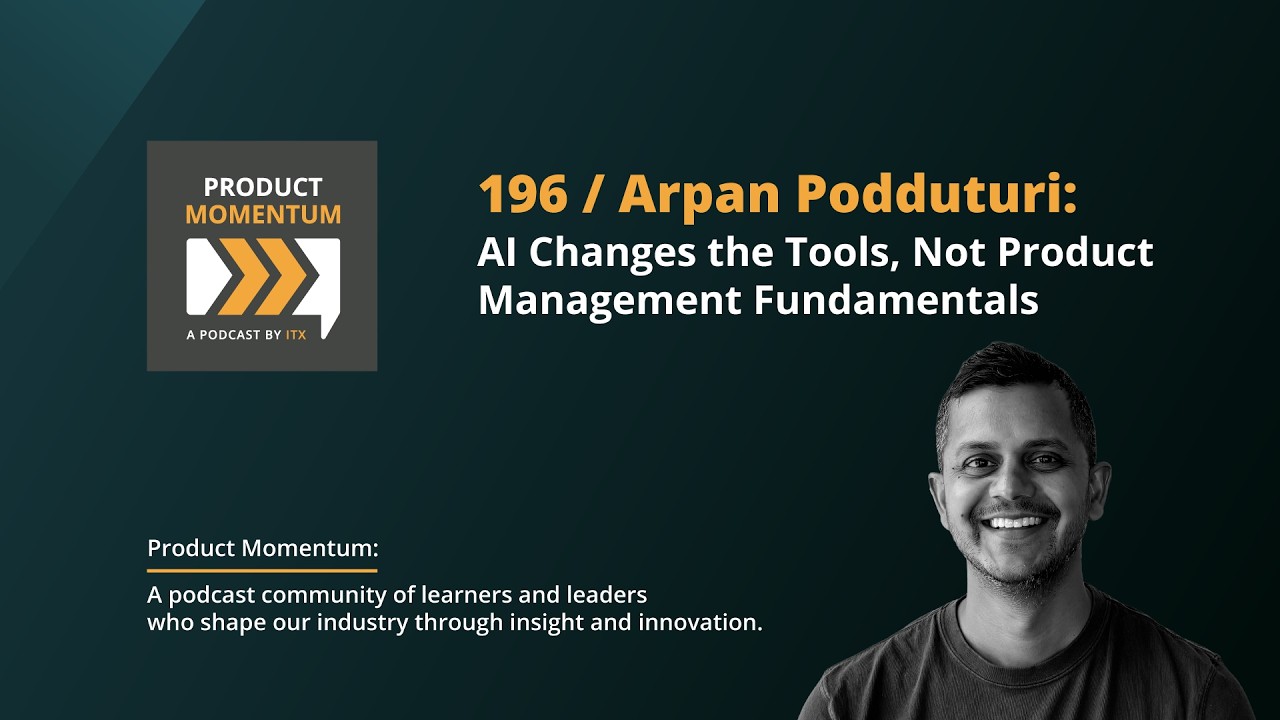
Arpan Podduturi is Vice President of Product at Samsara, where he leads strategy and development of physical AI products that help protect the frontline workers who make up 80% of the global workforce. Before joining Samsara, Arpan served as Vice President of Product at Shopify, overseeing Shop App and agentic shopping.
Prior to Shopify, Arpan led product management for Etsy’s seller businesses and mobile products as well as ESPN’s flagship mobile app—the world’s most downloaded sports app. He has also held product and design roles at Disney, Viacom, and the National Hockey League, and founded his own direct-to-consumer brand.
Recommended Reading
Good Product Manager/Bad Product Manager, by Ben Horowitz, Andreessen Horowitz.
Artificial intelligence is changing how product teams work, but not what good product management requires. As Arpan Podduturi explains, this remains true regardless of whether the AI integration involves physical products or software. Product teams in both environments face remarkably similar challenges: understanding user context, balancing trust and control, and delivering business value. Leveraging core product management principles remains critical to success.
Arpan Podduturi is Vice President of Product at Samsara, where he leads strategy and development of the company’s physical AI products. The Samsara product ecosystem is vast, serving back-office workers as well as truck drivers, machine operators, and front-line laborers.
His perspective is practical: regardless of context, product teams still need to understand customers, identify valuable problems, prototype possible solutions, deliver measurable outcomes, and build trust. AI hasn’t changed the job; it simply accelerates parts of the cycle.
Here’s what we learned:
Product Discovery (Still) Starts With Customers
For Samsara’s product managers, discovery means going where users actually work – including factories, mines, airstrips, and oil refineries. Their approach to discovery in these physical environments is not much different from that in traditional software discovery; Arpan refers to it as forward-deployed engineering.
“Our teams talk to users in their environment, and we work with them to figure out what problems they need help need solving,” he says. “It’s not necessarily new; in fact, it’s like the oldest song in the book.”
Trust Remains Essential to the Product Experience
When building tools that support physical safety, user trust is a core product requirement. The impact of AI integration is still a bit of an unknown – especially from the user perspective. Where personal safety is the desired outcome, Samsara product teams have to overcome a lot of suspicion about product performance.
“We sell trust,” Arpan says, “and the product is about building trust and it’s about helping people get home safely at night.” But as AI models assume much of the responsibility for the build, it’s imperative that humans are embedded throughout the product experience – from discovery through execution.
AI Hasn’t Changed the Job – Just the Set of Tools We Use To Do It
AI can accelerate development, but product teams still have to demonstrate that new capabilities are worth adopting. Whether using AI or not, Arpan says “product managers still need to identify value, understand the market, prototype quickly, work with engineering, tell the right story, and share the ROI with the customer. This is still the job. AI just gives us a different set of tools.”
- [08:15] We sell trust. Our product is about building trust, and it’s about helping people get home safely at night.
- [11:18] The software we build needs to conform to the business; the business should not conform to this software.
- [21:48] My highest level take on the way that product management has evolved over the last year and a half is that the PM job is the job.We still need to like identify value, understand the market, like prototype quickly, work with your engineering team, be able to tell the right story, share the ROI story of the customer. You still needed to do all those things. You just have a different set of tools.
- [28:33] The PM job hasn’t changed: building the right thing in the right way at the right time has always been the product person’s job. And it is now more than ever.
- [30:11] The product side and the craft side. So on the craft side, not a lot has changed. The tools are just better and everything is going faster. On the product side, there’s a lot that we are discovering on the agentic front. And we are going to see these kind of massive digital transformations of physical operations companies. That’s changing rapidly as people are starting to understand that AI touching the physical world is actually the biggest opportunity before us.
- [31:47] The curious PM can use AI to take advantage of the “product pit stops.” Decisions come with so much context now, so if you’re a curious PM you can get the answer without having to wait for the data person to pull the thing or you don’t have the meeting with the customer to talk to them and get their feedback on a specific question.
Podcast: Play in new window | Download
Arpan Podduturi [00:00:09] PMs at Samsara spend a ton of time on the road. You know, we are visiting factories. We are out in the field. We are on the airstrip. We are in the oil refinery. Like we are we’re like everywhere all the time. And I think, you know, it’s become like kind of this like, I don’t know, kind of in vogue thing to talk about forward deployed engineering and that sort of thing. Like Samsara’s engineers have been product managers have been doing that. Since the beginning, they were going and visiting physical operations companies and figuring out what problems do you need solving? And it sort of evolved from there.
Sean Murray [00:00:43] So an example of something that you’ve, that you built for the physical world, walk us through like the sleepy driver intervention agent, what ability that teach you about like designing AI for physical safety.
Arpan Podduturi [00:00:52] Yeah, I think that one’s an interesting one because, you know, there is a backdrop where everyone feels a little bit somewhat suspicious about having a second brain, myself included, like as I kind of do my work day to day, and I offload tons of context into Claude and it’s getting super smart and knows all the things I’m like, well, what am I like, where’s my alpha? Where am I adding value? And I think the, you know, in the physical world, we have to overcome a lot of suspicion about the product, you know, and so we sell trust and product is about building trust. And it’s about helping people get home safely at night. I mean, this is like It’s, it’s somewhat basic stuff. And I, this is kind of like my, um, highest level take on the way that product management has, it has evolved over the last, I don’t know what year and a half is like, it sort of all, all the things that like from good PM, bad PM, which is like my Bible for PMing, which was written probably in like the late 90s. You read that and you’re like, yeah, this is the job. This is still the job, you still need to identify value, understand the market, prototype quickly, work with your engineering team, be able to tell the right story, tell the ROI story with a customer. You still need do all those things, you just have a different set of tools.
Sean Murray [00:02:18] What’s next for you and what’s next for where you see this designing products, for the designing AI products for the physical world?
Arpan Podduturi [00:02:27] Yeah. You know, I think there’s kind of two ways to answer it. One, from a craft perspective, I think, you know, we are all. We’ve all been kind of climbing this mountain in terms of like learning how to use the tools and all that stuff. And I come back to like, you know, the job hasn’t changed. You do need to just kind of be a connoisseur of all the things that are effed up about your customer’s experience and go and fix them. That’s like the, that is the job and building the right thing in the right way at the right time has always been the product person’s job and it is now more than ever. On the product side… You know, I think there’s a lot that we are kind of discovering on the agentic front and we are going to see these trends, these kind of massive digital transformations of physical operations companies. So, you know, it’s just the mission stays the same and the tools get better and the craft stays the same.
Sean Murray [00:03:37] Dan, we just got off with our Arpan Podduturi. That was a super unique conversation for us, right? I’m really excited for our listeners because this is a whole new perspective than we normally provide.
Dan Sharp [00:03:44] Yeah, you know, it was really cool getting to talk to a product leader whose focus is designing and developing solutions for workers out there doing physical jobs, right, like driving trucks. Super cool to hear that perspective. Also the perspective that, hey, as product people, we really sell trust, right. That’s the product. So some really awesome stuff in the conversation. I learned a lot in the 30 minutes. So let’s get after it.
Sean Murray [00:04:10] Let’s do it.
Dan Sharp [00:04:18] Joining us on the pod today is Arpan Padduturi. He’s the vice president of product at Samsara where he’s leading product strategy and development of physical products that help protect frontline workers. Before that, he was working at roles in such household names as Shopify, Etsy, ESPN, and others. We’re super excited to have you here today, Arpan.
Arpan Podduturi [00:04:39] Thanks for having me, pumped to be here.
Dan Sharp [00:04:42] So why don’t we jump right in to this idea of Yeah, AI for you know, physical products. Yeah, Sean and I spend a lot of time, you know working with companies and talking about you know kind of b2b b2c AI solutions that are more GPT-based more you know aimed if somebody’s sitting in a desk.
Arpan Podduturi [00:05:01] Yeah.
Dan Sharp [00:05:01] So first key to say it kind of tell us what it means to be developing AI solutions for physical in the physical role.
Arpan Podduturi [00:05:07] Yeah, you know, so it’s a… Bunch of different things, but we have models that run on the edge and they’re very focused models that do like kind of custom detection. So they find things that frontline workers are doing that are dangerous. So if you’re driving a vehicle and you are speeding or vaping or, you know, falling asleep, like we have AI that detects that and alerts the driver that they are doing something dangerous. And we’ve got those kind of use cases across industries and across. Different type of frontline workers. So there’s a lot that happens locally on the edge and fires in real time. And then we have AI that also just helps the kind of back office, the overall organization run more efficiently. It streamlines a bunch of workflows, kind of does the things that you’d expect it to do. So we sort of touch every aspect of a physical operations business from the kind like. People who are working in the back office crunching on a computer to people that are on an oil refinery doing really hard physical labor tasks. So pretty fun to touch all of it.
Dan Sharp [00:06:18] So as a product manager, are there differences in how you do discovery when you’re working directly with a frontline person, supporting their physical labor versus somebody sitting at a desk doing an electronic workflow?
Arpan Podduturi [00:06:34] Yeah, I mean, PMs at Samsara spend a ton of time on the road. Um, you know, we are visiting factories. We are out in the field. We are on the airstrip. We are in the oil refinery. We are, on the mines. Like we’re, we’re like everywhere all the time. And I think, you, it’s become like kind of this, like, uh, I don’t know, uh, kind of in vogue thing to talk about forward deployed engineering and that sort of thing, like as far as engineers have been product managers have been doing that since the beginning. Like Sanjit, our CEO, and John, our CTO, basically built the company that way. They were going and visiting physical operations companies and figuring out what problems do you need solving? And it sort of evolved from there. And we’ve just kind of taken that playbook and like rinse repeat several, several times over again. And, you know, have, have built out this product suite now.
Dan Sharp [00:07:25] It’s funny you mentioned the four deploy AI engineer, cause every time I see that’s like, but. That’s how you’re supposed to, how can you talk to users? It’s not a new thing, right? That’s just going and talking to people. Why did we come up with a new name for this?
Arpan Podduturi [00:07:40] Yeah, it sounds pretty cool. It does. Talk to users and build the things that they’re having problems with or build solutions that are problems is kind of like the oldest song in the book, so.
Dan Sharp [00:07:51] Right, it’s like bullet item one of product management.
Arpan Podduturi [00:07:54] Yeah.
Sean Murray [00:07:55] When I go on site today, I’m gonna use that term. I’m going to give myself a new title today, forward deployed engineer. That’s right. Really really like that concept as you so an example of something that you’ve that you built for the physical world walk us through Like this sleepy driver intervention agent.
Arpan Podduturi [00:08:11] Yeah.
Sean Murray [00:08:11] What did building that teach you about like designing AI for physical safety.
Arpan Podduturi [00:08:15] Yeah, I think that one’s an interesting one because you know there we’re really against the backdrop where everyone feels a little bit I would say somewhat suspicious about having a second brain. Yeah, myself included. Like as I kind of do my work day to day and I offload tons of context into Claude and it’s getting super smart and knows all the things. I’m like, well, what am I like? Where is my alpha? Where am I adding value? And I think the, you know, in the physical world, we have to overcome a lot of suspicion about the product, you know? And so we sell trust and the product is about building trust and it’s about helping people get home safely at night. And so. You know, for us, what we have done, that use case is very helpful because it focuses on a use case that a human otherwise wouldn’t do usually drowsy driving happens like early, very early in the morning or late at night when no one’s working in the back office. And so historically you would have an alert fire when, you know, if Sean is yawning or his head is nodding or his eyes are a little bit fluttering, we would have. And that alert would just kind of beep at the driver, right? And a lot of organizations have automation. So if they see that alert happen, it would go up to the back office and someone would call the driver. Now that automation goes to an AI agent and the AI agent calls into the cab using the speaker that’s in the camera. And it will say, hey, Sean, like it looks like you are getting a little sleepy. Like, do you want me to kind of talk you through into your next rest stop? And it’s amazing. I mean, it saves lives. Like it’s like, it’s this incredible thing that. What’s been helpful is like people it’s basically augmented coverage in a way that doesn’t feel threatening to a back office employee it feels fully augmenting and that I think has been a really powerful use case for us and it’s been interesting kind of like figuring out the right prompt and context and like actual experience for a driver there like you don’t want to be You don’t want to be Kind of like overly confident because the yawn is it could just be a yawn like, you know And that’s a very serious thing to feel like you’re calling in about and so we’ve had to really iterate on that prompt to make it really comfortable and make it sort of like a Neutral experience for a driver. So that’s been a that’s gonna fun one to play that to work through.
Sean Murray [00:10:50] Okay I actually have a little experience working with somebody who is creating AI solutions in like the trucking industry, but more on like, like the human resources side, right? Like the payroll side, they had a lot of unintended benefits of like a phone agent that they had. Were there any unintended benefits, of like the solutions that you’ve put forward where it was like, oh, we didn’t even think of that case because we didn’t find that discovery, but yeah, it’s not, but like our users ended up finding that for us.
Arpan Podduturi [00:11:18] Yeah. Yeah. I mean, I think one of the things that makes our product experience different is it’s not a set of prebuilt agents. Like we do not sell, we have templates, right? And the templates are meant to be starting points for our customers. But like when we forward deploy with our customers, we hear them say, you know what, I really like that capability, but I need it to be specific to this use case and like our philosophy is the pro like The software needs to conform to the business. The business should not conform to this software. And so we built like a studio suite where, you know, we hear, we have a geofence agent and it can basically do anything when you cross a geoffence. And so some users are like, some customers are asking us, hey, when I get within one mile of, my final like destination, I want to have very specific instructions for that last mile to the driver. And that was a job that a dispatcher would have to call that every driver for, you know, for every stop. And now they can fully automate that. Others will say, I wanna make sure that my workers are compliant. And so when they are out in the field, they have to have safety cones around their vehicles. And when they get to their location, I want to make sure that. The agent is prompting about that. And so it’s just a very generic kind of like a capability set and our customers are, you know, really just tailoring it to their needs. I mean, this is a thing when you find when you’re working with huge enterprise companies that all have various kind of needs across different industries.
Sean Murray [00:13:01] So it sounds like you built really effective feedback loops.
Arpan Podduturi [00:13:04] Yeah, very effective feedback loops. Like we, our agents are in the traces every day. We are kind of like pulling, pulling out the, the, the gold that we can, um, and iterating, you know, really quickly on this stuff. So.
Dan Sharp [00:13:17] We’re ripping, uh, ripping some quotes here, right? We sell trust, not products. Yeah. The software has to meet the business, not vice versa. So, so loving that I didn’t go back to like the trust piece, cause I Yeah, especially now, you know, AI tools are maybe doing the opposite, right? So, so in this scenario that you were mentioning with the sleepy driver agent, it seems already kind of have two different personas involved, right. You have the back office worker and you have the driver. I’m curious, how do you, how, do you wean over to trust for both of those workers, those workers who might be threatened by an AI agent coming in, even if it’s, you know, the benefits are semi-obvious.
Arpan Podduturi [00:13:59] Yeah, I mean, it’s tough. You do have to prioritize, right, so. First, you have to win over the trust of a back office employee who needs to turn the alert on and set up the automation and the workflow at the same time like they will hear feedback from their from their frontline workers and they will their workers will say this is annoying or you know I’m getting alerted for things that aren’t that are false positives or whatever it is and so. It’s the you know what you find when you kind of work in this experience is like the more you make drivers happy and and and the more outcomes that you can deliver against the happier everyone is and it does come back to ROI I mean that’s that’s been such a big topic within AI for the last year or so and you know all what makes I think same stars AI somewhat different is it’s very targeted like it’s it’s not like a generic kind of harness where you can kind of do anything under the sun. It is, we have these templates. We have these capabilities. Again, we sit with the customer and we build these workflows and we model out the ROI on the other side of it. And so they’re very, like our buyers are very old school and they have, you know, they have very thin margins and so they are not kind of out here token maxing and just kind of telling everyone in their organizations to use all the workflows. They’re like. Let’s deploy this surgically and make sure we are getting value out of this. And as we are, we will add more workflows on top. And so that’s really been the motion for us.
Dan Sharp [00:15:33] So I’ve had a little bit of another conversation about ROI, I think it’s something the product community struggles with in general. Yeah, I’m curious, yeah, in your experience without going into your company secrets. Yeah, how you shape those are our conversations with these enterprises where maybe they’re using more of a traditional finance model and you’re trying to bring the kind of 2026 AI world to that?
Arpan Podduturi [00:15:56] Yeah, I mean, some of our, you know, I think a you have to explain the kind of unit economics of the problem, like, and I’ve been kind of building out our pricing model for for AI features at samsara. And I think customers respect the transparency and if you tell them like this is our like tokens cost money and like we work with the frontiers And we get these models we try to make this as efficient as possible for you Then you can have like kind of a basis of a conversation that’s built on reality from there I think it’s you know, we really focus on those first few use cases that are really concretely delivering ROI so an example would be We have a feature called a ride along and a ride along as a thing that historically, if you’re running a fleet safety program, you would have a kind of a coach sit with a driver and like with it kind of like a, you know, clipboard, like kind of monitor all the things and say, okay, like you’re passing here or not. Right. And it’s a very long process to takes two hours to do. Like you’re like, basically, you don’t have to analyze it, put it together, like coach it. We do that all with AI like we basically can can do a you know a ride along in minutes we can synthesize what we saw we can put together a rubric we can score it we can send it to a coach we can send to a driver all that happens immediately there is very clear ROI there right like you are saving hours and hours and ours of work you would be paying a person to do that and you couldn’t scale that program and it’s very effective at driving down crashes you couldn’s scale that program. Without AI, and so these are the kinds of use cases that we hone in on, where it’s like, this is a very, very clear replacement rate value, but then there are also use cases that are just like augmenting or scaling, and they’re use cases at the same time, and it’s kind of like the PMS to use a lot of imagination to figure out like, all right, where am I going to calculate that ROI in a way that the customer will understand?
Sean Murray [00:18:01] Yeah. I want to pull on this thread a little bit, because you’ve hit on two things that I think will be kind of important for our audience, right, is a lot of times in product management, we are somewhat upstream or downstream of like the pricing model. We don’t actually have it to be like a lot of our listeners that we think about working for large enterprise corporations, the pricing model is kind of like out of reach for us. So I want it here a little more about that, but especially what are the challenges that you’ve had with the pricing model and maybe like the changes in AI token costs.
Arpan Podduturi [00:18:32] Yeah I mean, the main thing that our customers were not happy about was an open-ended model, like a consumption-based open-end model. Like our customers, they need to build a budget, request funds, like have a predictable spend level with their vendors, and we’re, you know, trying to kind of meet them where they are. And so we’ve built, I think there’s a reason why all the frontiers are basically packaged this way as well. They have like effectively like SAS tiers with usage underneath and so we’ve built something very similar and I think it just gives people the predictability that yeah if I if I give you this much per month I’m getting this many credits and I can draw down those credits and i can do whatever I want with it I have a lot of flexibility in terms of how I use them but like the the transparency that we’ve also built into the system to know exactly where you are which users are using the most credits that sort of thing like it’s a It’s a model that the frontiers have really, I think, done a good job with. And, and we’ve sort of picked up that model and said, yeah, that, that that’s the right way to kind of package all this stuff up.
Sean Murray [00:19:42] Yeah. You’ve mentioned that like your customer base a little bit, some of your customer base comes from the old school. So I imagine this is kind of like a difficult conversation to have. Cause you’re not only talking about pricing, but you’re also talking about brand new technology and how it’s being used and like what the benefit is. Are there any ROI arguments that you’ve had that like haven’t held up and like, what did you learn from those?
Arpan Podduturi [00:20:01] Yeah, it’s a good question. I mean, it’s not that they haven’t held up. It’s that it’s just hard to like, it’s hard to point materially to like this specific use case is creating this ROI, right? So an example would be like a driver profile. We have a ton of data about a driver and we use AI to synthesize that and come up with a quick profile. Like the synthesis alone probably saves, you know, this much time and that sort of thing. But like we have that use case multiplied in a hundred different places across an organization. And so there’s a lot of these kind of like summary, synthesize, send the PDF use case, which sure we could like kind of do the math and back into ROI and say like, yeah, this is actually saving you time and therefore it’s important. But I think everyone kind of intuitively understands that. We just, we don’t need to like do the arithmetic for them in those cases. And so, there’s an element of ROI that’s just like, yeah, it’s just greasing the wheels across the organization in every single corner. And therefore, we’re OK with a baseline level of, sure, we’re going to pay for it, because it makes us faster. In some cases, we are very explicit about ROI. And so in others, we sort of take the company stance that AI is an accelerant across the board, right?
Dan Sharp [00:21:22] You mentioned something that I’ve just kind of been pausing over and over again. I think a lot of us in the product media, when we do have those ROI conversations, I was like hey I want to solve this problem, my back, the napkin, your back, the envelope math is the aura will be this. Um, and you mentioned the part, you are evaluating it with your customers. So would you mind like elaborating on how you go through that evaluation process and how does that feedback loop to keep driving value?
Arpan Podduturi [00:21:48] Yeah. I mean, it, it really is going through the use cases, specifically deploying those use cases. Oftentimes we deploy those use, cases and trials. I’m so, like, farb. Like AI detections that run on the edge, like they all go through a free trial for 90 days. We evaluate, you know, behaviors that were happening at a certain rate before and behaviors that are happening at certain rate after. You can view crash rates. You can see accident rates inside of, you know, inside of construction sites. There’s like a bunch of different factors, but it it boils down to like I mean, this is like, it’s, it, it somewhat basic stuff. And I, this kind of like my, um, highest level take on the way that product management has, has evolved over the last, I don’t know what year and a half is like it’s it’s sort of all, all the things that like, from good PM, bad PM, which is like my bible for PMing, which was written probably in like the late nineties, you read that and you’re like, yeah, this is the job, this still the job. You still need to like identify value, understand the market, like prototype quickly, work with your engineering team, be able to tell the right story, tell the ROI story with the customer. You still needed to do all those things. You just have a different set of tools. And so that’s kind of the approach that we’ve been taking.
Sean Murray [00:23:11] I like that take that the job really hasn’t changed with the tools half. So knowing the job hasn’t really changed, but the tools have. I want to kind of circle back to, you know, we kind of, I, thanks for taking us down that the pricing and the pricing, the pricing model thread that we wanted to pull on there. But I want kind of get back to the workforce that you’ve had to work with, knowing that they are in the physical world and we’re kind of introducing these new capabilities kind of like around their world. What’s it like, kind of how do you approach that kind of what I’m going to assume is of like a resistant workforce.
Arpan Podduturi [00:23:45] You know, before I worked at Samsara, I worked at Shopify and we, we had, I ran the point of sale business there and it was a similar, like, it was a similar kind of problem to approach in that we had retail workers, large kind of retail brands. And so you could think of like, like I don’t know, parachute home or all like any of the, like the digitally native brands that are opening stores, right? And they had hundreds or thousands of retail workers, and the thing that upset our customers the most was feeling like they lost control. And this is the thing that like drives me nuts about Claude. When I’m using Claude and it’s like, do you want me to send a Slack message? And like, I have a draft already written in Slack. I’m like, hang on, I’m going to like put you in a box and put you in a corner because I don’t want you speaking for me. I don’t want to feel the loss of control. And I think for frontline workers, it’s the same. It’s they don’t wanna feel a loss of a control for their back office managers, they don’t want to feel a loss of control, they want to feel like the tool is working for them and is driven through their, their desires, right? And so it puts a lot of onus on like product marketing and how do we tell the story and how we launch and is our launch cadence predictable and are we doing the right education all the way through and do we have the right? Settings in place such that every organization can roll this thing out in a way that makes their back office look like they’re in control and the more that we take if you bite into that or if you’re trying to go too fast or if your trying to deploy really quickly you will it will come back to haunt you they will revolt and I think I see this in the tooling that I use every day. And it’s the thing that we just, again, the product is trust. And so what are the programs you have in place to reinforce that and make your customers absolute stars, make them look incredible inside of their organizations? That’s a big part of kind of how we think about building product.
Dan Sharp [00:25:52] I mean, that is tremendous. I often talk with colleagues about, sometimes when we’re building tech, we think of like the tech is the thing, Bye! Really we’re kind of toolmakers, right? Like we’re totally, we’re building stuff to help people do their jobs. That’s, that’s the goal. And I think as a product community, sometimes you maybe lose sight of where we actually fit into this ecosystem. So I think, you know, that just such a critical aspect of this job is the jazz piece.
Sean Murray [00:26:19] You gave us a lot of quotes today, so I want to like, I want to like go through some of my, some of the initial takeaways and how that kind of ties back to some of things that we talk about at ITX. You we’ve said, like, we sell trust, not products, right? And we strongly believe in like this concept called the relationship ladder, where you move from, you know, no trust to trust to loyalty into advocacy, and advocacy is where those are the behaviors that we want to inspire, right. So great products really end up creating effective changes in behavior, right, that are going to be measurable in some way. So I just love that concept of we sell, trust, not products that really ties into what we do. Also, early on in our conversation, we talked about feedback loops, and feedback loops essentially are the result of effective advocacy. You’re not gonna get effective feedback if people don’t trust that you’re gonna use it for good. And if you’re not getting that feedback, you’ve probably got apathy, and we 100% want to avoid that. Another thing that I really liked is that everybody got a new title today. You can add forward deployed engineer. Into your title right now, if you’re in product and you talk to, and you go and actually talk to your customers, which we hope you all do, right. You are now, you can add forward deployed engineering to your title and your skillset. And then lastly, you, you said that the job really hasn’t changed, but the tools have. Yeah. And I think that maybe we get lost in the tools too much. Yeah. And I think that it’s, there’s so much that we can do now. It’s actually like, was that an effective use of your time? Is the prototype or the little app that you just built to do something that maybe only you’re gonna use and might not ever see the light of day? Was that actually a valuable use of your time? So, oh, and then early on you said don’t vape and drive. So that’s, don’t forget. Don’t vape and drive, yeah. So what’s next for you and what’s next for like where you see this, where you see the designing products for like the designing AI products for the physical world. Like what’s next in that in that realm?
Arpan Podduturi [00:28:33] Yeah You know, I think there’s kind of two ways to answer it one from a craft perspective I think you know, we are all we’ve all been kind of climbing the this This mountain in terms of like learning how to use the tools and all that stuff And I think your exactly right like we’re starting to get to a place where maybe I don’t need all those agents Maybe I need to like, kind of like. Trim down and focus on the ones that are really adding value and that sort of thing. And I come back to like, you know, the job hasn’t changed. You do need to just kind of be a connoisseur of all the things that are effed up about your customer’s experience and go and fix them. That’s like the, that is the job and building the right thing in the right way at the right time has always been the product person’s job. And it is now more than ever. I think like… You know, and so, so, so I think that again, the craft is, it’s sort of like, I felt like I would get like, maybe like 20 at bats to do, to like make an, like an important product decision every month as a VP. And now it’s like, I can do that, like, I do that like 10 times a day. It’s like because the rate of the kind of like actual development is, is, is so much faster and the prototyping is so much faster. And so not that the job has changed, but just like It’s just faster, every step of the cycle is faster. You can listen to all the gong calls in 10 minutes. You can summarize all the Slack messages in 10 minute. You can figure out all the fires in 10, you can do all these things and so everything gets faster. So on the craft side, again, not a lot has changed. The tools are just better and everything is going faster. On the product side, You know, I think there’s a lot that we are kind of discovering on the agentic front and we are going to see these these kind of massive digital transformations of physical operations companies like 80% of the world’s workforce or frontline workers, you know, a very small sliver of VC money ever goes to products that that focus on them. That’s changing now is like people are starting to wake up and understand that AI touching the physical world is actually probably the biggest opportunity that sits in front of us. But I think the fundamentals of focusing on how do we make businesses safer and more efficient are not gonna change for Samsara. The products that we launch, the iterations that we make, whether it’s helping customers save on fuel or wearable accessories or asset trackers that make sure that every package gets delivered to the right place at the right time, all of these things are really framed around three things. Make businesses safer, make them more efficient and digitize these businesses that have been kind of traditionally running in very old school systems for a very long time. So it’s just the mission stays the same and the tools get better and the craft stays the same.
Dan Sharp [00:31:41] Last one, yeah, as a former baseball player you get more bass. Is the batting average going up with these changes?
Arpan Podduturi [00:31:47] I actually think. You know, I think the inputs it’s it’s interesting because I think that like the at bats are actually becoming you have to hit more singles like I think you you basically because every one of these decisions comes with so much context now and it’s of like if you are a curious PM you can go and get the answer like you don’t need you don’t need the kind of to wait on the cycle for the data person to pull the thing or you don’t You know, have the meeting with the customer to talk to them and get the customer feedback on this specific question. You just you have a corpus of like data already. And so when we are making decisions, we kind of can ask questions in the room. We do like product pit stops, which are basically like really informal product reviews, and we do them all the time. And during a pit stop like a PM, I’ll just ask you a question, a PM will say, OK, let me just get the answer. And like you just kind of get that context in real time. You’re like, okay. Well let’s just make the decision because this one’s lower stakes and we have all this context. So like I think we can just like do this like much faster than we were and rather than like you go and pull the thing. We’ll meet next week. And then man, this is a high stakes decision because we don’t know, but the risk is like unclear. We don’t have all this context in this space. We kind of can narrow all of those things now and and and just like make really clear decisions. So that’s been really fun. And it has been, yeah, it’s been really rewarding.
Dan Sharp [00:33:22] Sean, I, you know, we, I love a hit, hit a bunch of signals. That’s a way to score a lot of runs. I think that was a home run. Arpan, this has been tremendous. It’s been a really great hanging out with you.
Arpan Podduturi [00:33:34] Thanks for having me guys. This has been fun.