Listen
Podcast: Play in new window | Download
About
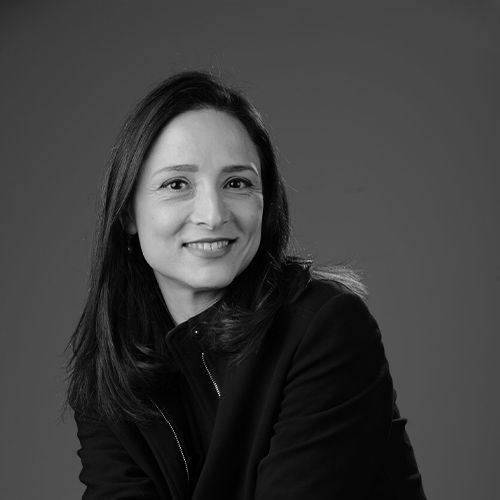

Nesrine Changuel is an experienced product coach and trainer with more than a decade of experience building globally used and loved products such as Skype, Spotify, Google Meet, and Chrome.
She is the author of the Product Delight book and is globally recognized for her focus on emotional connection and user delight. With a background in research and a PhD from Bell Labs in collaboration with UCLA, she brings deep technical expertise to human-centered products. From pioneering video experiences at Skype to creating emotionally engaging features for Google Meet and Chrome, Nesrine has made it her mission to help teams build products users truly love.
Today, she teaches, speaks, and trains companies around the world on how to create delightful, emotionally resonant products. She lives in Paris.
Recommended Reading
Product Delight: How To Make Your Product Stand Out With Emotional Connection, by Dr. Nesrine Changuel.
Product leaders often measure success in terms of retention, revenue, and growth. In this episode of Product Momentum, Nesrine Changuel explains that the most successful products achieve those outcomes by creating meaningful emotional connections with users. Nesrine’s experience includes leadership roles at Skype, Spotify, Google Meet, and Google Chrome. But these days, she is perhaps best known for her book, Product Delight.
Nesrine will explore these and other topics at the ITX Product + Design Conference, June 24-25 in Rochester NY. On conference Day 1, she will conduct a workshop that delves into her Product Delight framework, guiding attendees on how to design products that users will not only use – but will come to love, remember, and recommend to others.
During this conversation, Nesrine discusses what she has learned from product teams since the book’s release and explains why delight is not simply a design tactic, but a business strategy that transcends industries.
Product Delight Extends Beyond Design
One of Nesrine’s biggest discoveries during her global book tour was the widespread misunderstanding of what product delight actually means. Many practitioners associate delight with visual design, animations, or clever interface surprises. This view is too narrow, she says. Nesrine defines delight as the overall feeling users experience while interacting with a product.
“Product delight is the entire experience,” she adds. “It’s actually the feeling that the user enjoys while using the product.” It extends well beyond aesthetics to focus on creating experiences that improve how users feel while accomplishing their goals.
Emotional Connection Creates Measurable Outcomes
Among Nesrine’s key challenges was helping product and business leaders recognize the fact that user emotions directly influence business performance. Emotional design has long been familiar to designers and marketers, but many product organizations still prioritize operational metrics above customer sentiment.
Nesrine was able to connect the dots between delight and business performance by demonstrating that “the delight itself can actually double retention, referral and revenues.” By framing emotional connection through the lens of retention, referrals, and revenue growth, she demonstrated that delight is not a soft concept. Rather, it is a practical approach that can strengthen both customer loyalty and business results.
Adding Delight to Your AI Product – Emphasize the Human Aspect
On conference day 2 – Keynote Day – attendees will be treated to brand new content from Nesrine: how to add delight into your AI product.
“I’ve been very quiet about AI over the last couple of months,” Nesrine shared. “I’ve always believed in the humanization of product and the human aspect, but now the product is the conversation. So how can we add delight in these kinds of experiences? That’s something new that I’m going to be talking about” at the ITX Product + Design Conference. As product teams continue navigating AI-driven technological change, core product principles remain unchanged: products that make people feel understood, respected, and supported are more likely to earn user trust, loyalty, advocacy – along with long-term success.
- [04:25] How writing a book is like a box of chocolates. When I was writing the book, there were some uncertainties about how it would be perceived….kind of like eating a chocolate egg, you have no idea what’s inside.
- [05:33] Emotional connection is a universal topic that spans industries. When the book came out, I received a lot of feedback that actually related to the topic and the framework — even from completely diverse industries.
- [12:21] The ITX Product + Design Conference, June 24-25. I’m really excited to be in Rochester, NY for this event to come. It’s always a pleasure to teach the Product Delight method. It’s going to be special because I want to make it as actionable as I can; I want to make sure that I inspire people.
- [13:54] Nesrine’s day 2 keynote to include brand new content. I’m going to talk for the very first time about something I have not spoken about before — how to add delight and the human aspect into your AI product.
- [15:56] Just because it’s harder for mature, well-established companies to integrate delight into their products doesn’t mean they shouldn’t try. Please don’t ignore delight; rather, to remain established and successful, you need to add those elements of delight in your product anyway.
- [17:58] Even busy PMs should make time for delight. Even when I was a “regular” PM sitting on a backlog on fire with so many conflicting priorities, I tried not to let that stop us from trying to incorporate any element of delight into our roadmap.
Podcast: Play in new window | Download
Sean Murray [00:00:08] Yeah, time is really flying, but it’s really flying for you because you’ve been kind of traveling around the world promoting your book. Tell us, oh, kind of just traveling around and promoting your book, Product Delight.
Nesrine Changuel [00:00:20] Well, it is a very intense experience. I mean, it was like a lot of discovery throughout the entire journey. Like when I was writing the book itself, there’ve been of course some uncertainties about how this would be perceived, how this will land among the product community. And you know this kind of like a chocolate egg when you open, you have no idea. It was a little bit like that. What surprised me in a very positive way is that People perceive the topic in a very deep way, and almost quite personally. Of course, it feels like the emotions that are in the book are speaking to everyone in every industry.
Sean Murray [00:01:00] What did you learn from the product community about your concept? Were there things where like, hey, in my next version of this book, I’m gonna update these things or I wanna expand on something?
Nesrine Changuel [00:01:11] Yeah, so when I wrote the book, I was highly and very much inspired by my own experience itself. Like I’ve been building product that are globally used and loved by many people, like from Skype, Spotify, Google Meet and Google Prom. So to be honest with you, that shaped a lot of my thinking, but also shaped a love the content of the book. And the thing that I was a little bit worried about is like how would that concept and how would that framework apply to other industries and other type of products. The type of industry that got interested in the topic has been extremely different and diverse which was a proof for me that talking about emotional connection is a topic that is universal but also like connect all industries together.
Sean Murray [00:01:55] You are coming to Rochester soon for our ITX Product and Design Conference, what can people expect from your workshop?
Nesrine Changuel [00:02:01] By the way, I’m really excited for this event to come. It’s always a pleasure to teach this method. I’ve been teaching it at different places and different countries so far, and coming to the conference is a pleasure, of course, and it’s gonna be quite special because what I’m obsessed about while giving my workshop is I wanna make it as much actionable as I can, meaning that it’s true that most of my talks are about inspiration, because I wanna to make sure that I inspire people.
Dan Sharp [00:02:29] And then the second day of the conference, you get to be up on the main stage giving a keynote. Yeah, any sneak peek that you can offer.
Nesrine Changuel [00:02:36] I’m going to talk for the very first time about something I have not spoken about before, which is how to add the light in your AI product. So I’ve been very quiet about AI over the last couple of months. So like I really believed in the humanization and the human aspect, but now the product is the conversation. I mean, if you see how you’re using Claude or how you using ChatGPT, the product itself is becoming the conversation itself. And so how can we add delight in these kind of experiences? That’s something new that I’m going to be talking about.
Sean Murray [00:03:23] Dan, we just caught up with Nesrine Changuel. She was on the pod over a year ago, right before her book, Product Delight, hit the market. She’s been on an international book tour and learning a lot in the process.
Dan Sharp [00:03:33] Yeah. So much fun getting to catch up with her and I’m excited. We get to meet her in real life when she comes to Rochester for the ITX Product and Design Conference, June 24th, 25th, uh, she’s going to be doing an amazing workshop and then doing a keynote on the main stage. She’s got some really cool stuff coming out. So it’s going be great.
Sean Murray [00:03:52] First time she’s talking about this topic, it’s gonna be awesome. We look forward to seeing you there. Hey, Nesrine, you’re back. Welcome back to the Product Momentum Podcast.
Nesrine Changuel [00:04:09] Thank you. I can’t believe it’s almost a year since we chatted on this podcast.
Sean Murray [00:04:14] Yeah, time is really flying, but it’s really flying for you because you’ve been kind of traveling around the world, promoting your book. Tell us, kind of just traveling around and promoting your Book, Product Delight.
Nesrine Changuel [00:04:25] Well, it is a very intense experience. I mean, I, uh, it was like a lot of discovery throughout the entire journey. Like when I was writing the book itself, there’ve been, of course, some uncertainties about how this would be perceived, how this will land among the product community. And you know, this kind of like a, like a chocolate egg when you open, you have no idea it was a little bit like that. And, uh to be honest with you, I enjoyed every single moment of that. From the launch date, like the date the book was completely out on Amazon till like the other days and months that follow that. Because what surprised me in a very positive way is that people perceive the topic in a deep way and almost quite personally. Of course, it feels like the emotions that are in the book are speaking to everyone and every industry. So maybe that’s made the success of the book itself.
Sean Murray [00:05:21] That’s awesome. What did you learn from the product community about your concept? Were there things where like, hey, in my next version of this book, I’m gonna update these things or I wanna expand on something?
Nesrine Changuel [00:05:33] Yeah. So when I wrote the book, I was highly and very much inspired by my own experience itself, like I’ve been building product that are globally used and loved by many people, like from Skype, the Spotify, Google Meet, and Google Chrome. So to be honest with you, that shaped a lot of my thinking, but also shaped a lot the content of the book. And the thing that I was a little bit worried about is like, how would that concept and how would that framework apply to other industries and other type of product? And so, when the book went out… I’ve got and received a lot of feedbacks that actually relate to the topic and relate it to the framework, even if they are completely from other industry. Just to give you maybe an example of what I’m talking about. I was giving workshop about product light to companies that build project tracking software for constructions and also gave the same workshop for companies that built software for baby showers list. And, I mean… The type of industry that got interested in the topic has been extremely different and diverse, which was a proof for me that talking about emotional connection is a topic that is universal, but also like connect all industries together.
Dan Sharp [00:06:47] I’d like to, I would love to hear more about that. And, you know, maybe just like what you’ve learned as somebody who develops product, having suddenly having this exposure to the broad world of software development kind of industry agnostic.
Nesrine Changuel [00:07:01] Yeah, so the first thing that I learned is that there have been a lot of misconceptions. When I started talking about Delight, a lot people came for curiosity as well, like, what does this person mean with product Delight? And they just didn’t come with zero knowledge, they came with bias and misconception. And I realized that there are three key misconceptions that I noticed throughout different events and different like community gathering and networks. The first one is that a lot of people connect the light to the esthetic element. They think of the light as the confetti, as the design, as the Easter eggs and everything that are visual. And to be honest with you, this is very different from my own definition of product light. Product light is the entire experience. It’s actually the feeling that user would experience while using the product. It doesn’t have to do anything with the design itself or like the visual itself. So that’s the first misconception. The second misconception is some people also connect the light to gamification. They actually think that, uh, I mean, if I add a lot of gamification in my product, that would delight my customers. And I was there saying, actually, it’s the exact opposite. I mean to be honest, if i’m scrolling forever on Instagram and I’m getting like a notification saying, Hey, you should probably use your time in a better way. That’s the light. You see what I mean? So the light is about, again, making people feel good while using the product. However, gamification is about making people stay in the product, which is a complete different aspect. And just to finish with the misconceptions, I mean, the third one, which was very strong, a lot of people connected the light to B2C. And so the fact that I ended up speaking in big companies like Muro or Atlassian and those are like B2B product was a proof that We live in a world that people are also expecting their emotion to be honored in a B2B space. That’s why, like I’ve been talking a lot about B2H, which is business to human, and as long as the product is used by a human being, then of course they deserve their emotion to be honored. And these are the key learning. I mean, I learned that people are coming with misconception. I was really honored to try to at least clarify these and make sure that no, again, we need to build product that make people feel good.
Sean Murray [00:09:22] Yeah, I I’m gonna cheat because Dan and I also like have a consulting responsibility So like this the idea of like making people feel good while using the product but not necessarily making them Like feel like they’re in a game or achieving something with the product and this concept of like B to H I really love those. I want to know what were some of the barriers that you had to break down in order to get people to understand those concepts a little bit more at the level that you’re trying to the level that you are trying to raise awareness to.
Nesrine Changuel [00:09:54] Yeah, I think it was really important to speak product people language and give them the metrics that they all care about. I mean, let’s be honest, the concept of emotional connection is not new. When we talk about emotional connection, this is a very well covered topic in design. Designers knows exactly what it means to build like emotional design. When it comes to marketers, the same, like the very best marketing campaign are those who taps into users’ emotion. I mean think of Coca-Cola or Disney. I mean how they do marketing and ads. It’s all about emotions. The problem is that most people who actually came to my talks, et cetera, they came with this concept of, I mean, emotions are not our priority in our business and our strategy and our everyday life. So for me, I had that mission of making all those different functions talk the same language and like make sure that we achieve that goal of emotional connection. And so to achieve that, It was very important for me. To evoke and talk about the metric that business and product people care about. And these are usually retention, revenue, referral, and luckily, and that’s also proven by science and a lot of example, the light itself can double retention, referral and revenues. And so I think that was the thing that really was more like an eyes-opening for those people and say okay I care about revenue referral and retention so I should probably give it a try.
Dan Sharp [00:11:23] I think you said something there that really resonated in the, uh, the, the emotional connection piece, right? And we have this concept of advocacy and like you think about like your product you’ve used that like, you don’t feel anything, you, don’t feel anything when you stop using it either, right. Like, yeah, but, but if you care or like, Oh, this is great. Like you’re going to tell your friends about it, right, you’re gonna, you gonna pay for it. Um, so I think unlocking in that framework is just like, it’s a really powerful message for me as a product person.
Sean Murray [00:11:49] Yeah, I also love the way that the metrics that you’re talking about really actually tie back to, do tie back, to business outcomes, right? Absolutely, yeah. Yeah, so that’s it, right, just the whole, your workshop is gonna go the whole gamut of, hey, concept to, we’re gonna, you know, create amazing business change. Just a small set of topics to cover in one workshop, right. You are coming to Rochester soon for our ITX product and design conference, what can people expect from your workshop?
Nesrine Changuel [00:12:21] By the way, I’m really excited for this event to come. It’s always a pleasure to teach this method. I’ve been teaching it at different places and different countries so far, and coming to the conference is a pleasure, of course, and it’s gonna be quite special because what I’m obsessed about while giving my workshop is I wanna make it as much actionable as I can, meaning that… It’s true that most of my talks are about inspiration because like, I want to make sure that I inspire people. I want make sure people get hooked into this kind of topic and at least give them the appetite to try it out for their product. But when it comes to workshop, we get hands dirty. I mean, it feels weird to say hands dirty in delight, but I mean let’s use the term. So we alternate between like concept, learn about the framework, the different steps, and then try out, try these concepts. On like group activities and it’s funny because for my workshop some people decide to take like a case studies others decide to work on their own products so we can apply those concepts on their own product and get out of the workshop with concrete ideas of how you can add more delight in your own product. And that’s completely up to the audience how they want to practice and how they want to implement this concept during the exercise sessions.
Dan Sharp [00:13:42] That’s gonna be a tremendous workshop. And then the second day of the conference, you get to be up on the main stage giving a keynote. Yeah, any sneak peek that you can offer. I’m really pumped here, you have to say.
Nesrine Changuel [00:13:54] I’m going to talk for the very first time about something I have not spoken about before, which is how to add delight in your AI product. So I’ve been very quiet about AI over the last couple of months. So like I really believed in the humanization and the human aspect, but now the product is the conversation. I mean, if you see how you’re using cloud or how you using The product itself is becoming the conversation itself. And so how can we add the light in these kind of experiences? That’s something new that I’m going to be talking about.
Sean Murray [00:14:30] Well, we love being brave and talking about things and that you are gonna bring a new concept to us for the first time. The keynote day is really one of my favorite days of the year. We get 200 people in the ballroom, in the big space. There’s a lot of moving around and we’ve got some new concepts this year. So around like the way that we’ve designed the ball room space. So we’re pretty excited for that. But we really appreciate you bringing kind of like, like a learning by doing method to your workshop because that’s what The workshop day, people are really looking for those opportunities, not just to like learn directly from somebody, but to actively do something where they’re either following a scenario or they’re using their own experience of their own products against the concepts that they’re learning. And it’s a huge day for everybody that gets to attend. So really appreciate you being a part of that. And we’re also excited to have you in Rochester, New York during the International Jazz Fest. So I don’t know what your schedule is, but the streets will be shut down, right? People will be outside having a good time. Over the weather cooperates this year, but it’s gonna be a great experience. One last thing that I wanted to touch on is as you are moving between different international audiences, right? Because you are based in France, right, you’re gonna be coming to the U.S. Do you notice anything, like any regional differences about the approach to product or the approach to like producing things that delight people?
Nesrine Changuel [00:15:56] I don’t think it’s a matter of country or like a cultural aspect. It’s a manner of maturity of the company that I want to talk about. So yes, I was giving talks and a workshop at different level and different like much industry from different stages and maturities. And what I noticed is that most companies that are quite mature and they are very well established struggle to add the lights. Rather than like those that are like more in a startup phase where they want to add that delight concept as soon as possible and brand and like a build that brand and personality that will like immediately connect with people at the emotional level. At least that’s what I noticed so far. Even if I still believe that whether you are mature or not, there’s some concept. I mean, I developed the framework. I spent a lot of years working on that framework to make sure that it’s actually actionable for all industries. Even if it’s easier when it’s built from the start, I mean, think about Slack or like those companies that were born with the light in mind. Of course, this will help a lot with the adoption and retention. But if you’re established, you’re already like in a good state because you have a good customer base and you’re ready successful in your space, but you need to stand out in order to maintain them. And so that’s why. It’s not because you’re established that you should ignore the light, but rather in order to keep being established and like be, keep being successful, you need to add those elements of the light in your product anyway.
Dan Sharp [00:17:32] Almost like companies that are kind of starting up their, their delight native, if you will, um, so I’m, I’m curious with that. Are you, you mentioned that the struggle, uh, of a large established company, bringing delight in, what about the tension of a company, right? That that’s building a product. They’re building delight in and losing that, like, how do they make sure that they maintain that focus over time and don’t become a large company that’s kind of lost delight as one of their core principles.
Nesrine Changuel [00:17:58] Well, in my case, I had a different way of building Delight, whether at Spotify or at Google. And both experiences are extremely different, by the way. For example, at Google, I have a very special role where I was actually the product leader for Delight. I know that very rare companies do hire an entire job and an entire team for building Delights. But for me, it was a special moment where I really had to focus on that, make it my own priority, and there was no priority conflict. So let’s not think too much about that. At Spotify, on the other hand, like I was a regular PM sitting on a backlog on fire with so many priorities conflicting with each other’s, but that did not stop us from always like challenging ourselves and having look at the roadmap and say is there any element of the light in my roadmap not this quarter I should definitely catch up and make sure that this doesn’t remain and I want to make sure I will bring that the light in regular basis so what made Spotify successful and what is making it successful or other companies by the way you might think of is the fact that they think about the light as a continuous way it’s not like enjoy on top of utility from time to time. It’s about having it as part of a culture. I mean, I call it today the culture of delight. So pushing your employees and your teams and your product teams to make sure and think about delight and also even challenge their roadmap and ask like, are there elements of delight in your roadmap? If not, I mean don’t punish them, but at least show that you care because this is how you establish a culture of the light. And so whether you have like a complete dedicated delight role, In that case. Good for you or not, there are still always options to think delight and think emotionally within your product.
Sean Murray [00:19:52] Yeah, I Really like the concept of building delight into your culture. And Dan, I would like the reference of like delight native. You know, we hear so much about AI native and being built for speed. Can you also be, can you be built for, speed and also have delight built into your cultural and how do we balance the two of those? I think that’s going to be a big part of product development moving forward. Um, you as, when you come to Rochester, right, people are going to to be excited to see you. What’s the best way to approach you at a conference?
Nesrine Changuel [00:20:23] Well, I’ll be around, most two days. So I hope, I mean, we’ll see if I will be wearing pink so it will be easy or not, but for the first day it’s gonna be mainly the workshop, but I will make sure to be, like for all the networking events, they will be able to reach out. And of course the second day I’ll be there for the keynote, there will be a panel. So I think people will easily get to me and I will myself available for that. In the meantime, even before the event, if they wanna reach out for questions or requests or whatever, they can reach out on LinkedIn. That’s the easiest way for me to answer all your requests. And I’m very, very much looking forward for this event.
Sean Murray [00:21:04] We are very excited to have you. Dan is campaigning for us to be the ones to intro you on the stage. So be prepared for our shenanigans before you get up there to talk. But we’re so excited to see you in Rochester. Thank you for being with us today. I cannot wait.
Dan Sharp [00:21:21] And just congrats on congrats in your book tour and all the work you’ve been doing following up, yeah, polishing a book, writing a book super hard, then having the bucket out there even harder.
Nesrine Changuel [00:21:31] Yeah, and I don’t know if all people know that there will be books as well during the conference. So maybe I don’t know if we keep that surprise. It’s not a surprise anymore, but there will be books.
Sean Murray [00:21:41] All right. That’s amazing. Well, thank you so much for being with us today. It’s always a pleasure.